When we think about body fat, we usually focus on the number on the scale or how our clothes fit. But from a metabolic standpoint, fat is not just a single, uniform substance. It is a highly active, dynamic system, and where your body stores it matters far more than how much of it you have.
If you look at the human body as a complex machine, fat plays different roles depending on its location. The three most critical types to understand are subcutaneous fat, visceral fat, and fatty liver (ectopic fat).
1. Subcutaneous Fat: The Visual Blanket
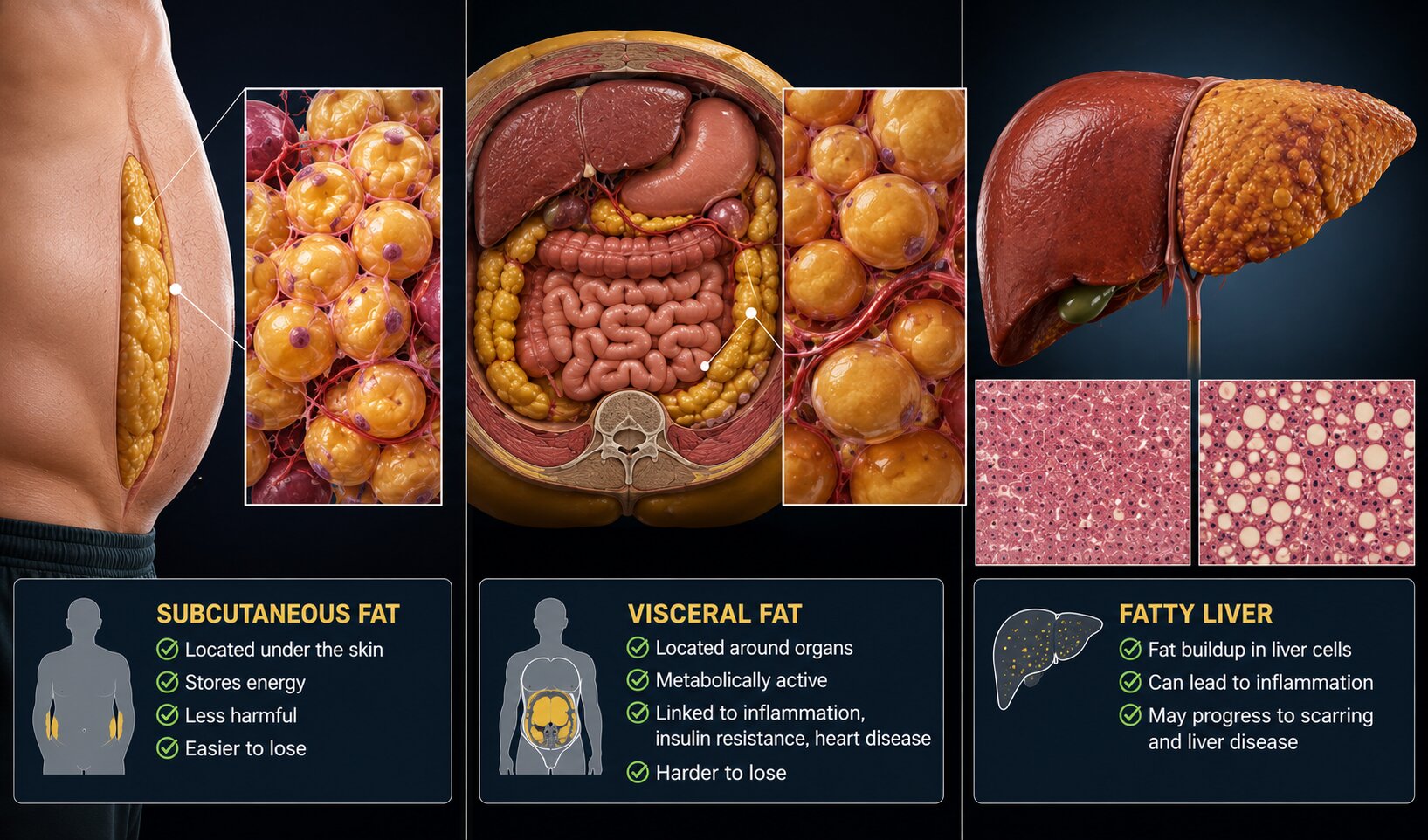
Subcutaneous fat is the layer of fat sitting directly underneath your skin. If you can pinch it on your stomach, thighs, or arms, you are holding subcutaneous fat.
Its Main Job
-
Insulation and Energy: It acts as a shock absorber to protect your muscles and bones, keeps you warm, and serves as a long-term energy reserve.
-
Metabolic Safety Valve: Think of subcutaneous fat as your body’s preferred storage locker. When you consume excess calories, a healthy metabolism tries to store them here first.
While carrying too much subcutaneous fat can put structural stress on your joints, it is relatively benign metabolically. It does not actively damage your organs; it simply sits quietly under the surface.
2. Visceral Fat: The Hidden Instigator
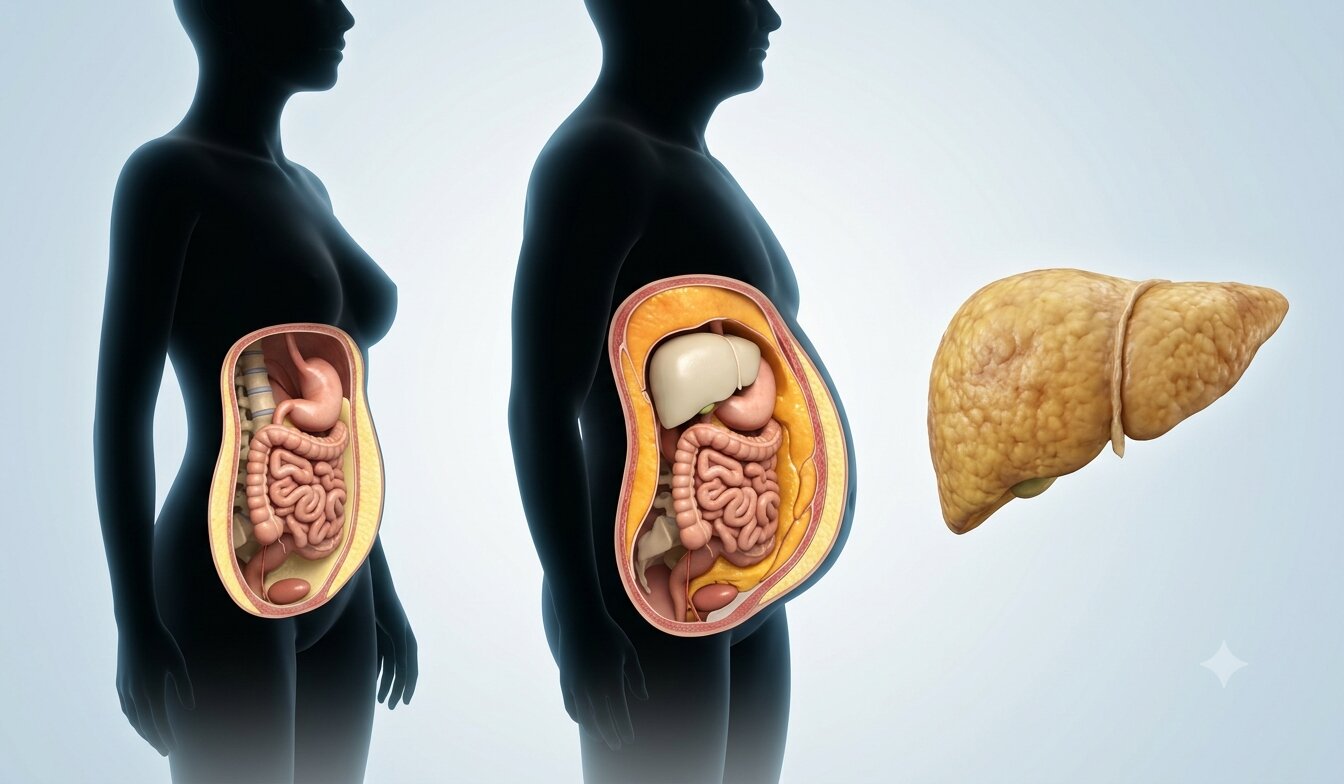
As shown in the internal cross-sections, when the “subcutaneous storage locker” runs out of space, or if genetic and hormonal factors dictate it, the body begins packing fat deeper inside the abdominal cavity. This is visceral fat.
Visceral fat wraps around your vital internal organs, including your stomach, intestines, and kidneys. Because it sits behind a wall of firm abdominal muscle, it pushes the belly outward, creating a firm or hard “beer belly” rather than a soft, pinchable one.
Why It’s Dangerous
Visceral fat does not just sit there; it behaves like an active, dysfunctional organ. It constantly secretes inflammatory proteins called cytokines and releases free fatty acids directly into the portal vein leading straight to your liver. This chronic, low-grade inflammation significantly elevates the risk of:
-
Type 2 diabetes
-
Cardiovascular disease
-
Systemic insulin resistance
3. Fatty Liver: The Overflow Zone
When visceral fat overflows, or when the diet is heavy in compounds the liver struggles to process efficiently (like alcohol or high amounts of refined fructose), the body enters a state of ectopic fat deposition—meaning fat is stored right inside organs that are not meant to hold it. The primary casualty here is the liver.
A healthy liver contains a tiny amount of fat, but when fat accounts for more than 5% to 10% of the liver’s total weight, it is classified as Fatty Liver Disease.
The Functional Crisis
The liver is your body’s main chemical processing plant, responsible for filtering toxins, managing cholesterol, and regulating blood sugar. When liver cells (hepatocytes) become choked with fat droplets, the entire system slows down.
-
The Progression: Initially, this is a silent condition (Steatosis). However, if left unchecked, the fat causes cellular stress, leading to inflammation and cellular damage (Steatohepatitis). Over years, this can trigger scarring (Cirrhosis), which permanently impairs liver function.
The Core Differences at a Glance
| Feature | Subcutaneous Fat | Visceral Fat | Fatty Liver |
| Location | Directly under the skin | Deep inside the abdominal cavity | Inside the cells of the liver |
| Texture | Soft, jiggly, and pinchable | Firm, hidden behind the muscle wall | Internal cellular infiltration |
| Metabolic Risk | Relatively low | High (drives systemic inflammation) | Critical (disrupts metabolic function) |
| Primary Driver | General caloric surplus | Stress, high sugar, genetics | Fructose, alcohol, severe insulin resistance |
The Silver Lining: The De-Fatting Priority
The human body follows a very strict “first in, last out” rule when clearing these fat stores, which works completely to your advantage.
When you introduce a caloric deficit, reduce refined sugars, or increase physical activity, your body desperately wants to protect its vital organs. As a result, it burns fat in reverse order of danger: it clears fat from the liver first, mobilizes deep visceral fat second, and burns through stubborn subcutaneous fat last.
Even a modest reduction in total body weight (around 5% to 10%) can completely empty out a fatty liver and drastically drop visceral fat levels, radically transforming your internal metabolic health long before you see dramatic changes in the mirror.