Sugar seems simple. It tastes sweet, provides energy and appears in everything from apples and milk to soft drinks and birthday cakes.
But not all sugars are chemically identical.
Glucose, fructose and sucrose may contain roughly the same number of calories, but your digestive system processes them differently. They affect blood glucose, insulin, the liver and appetite in different ways—and understanding those differences can help you make better food choices.
Think of them as three travelers arriving at the same airport. They may all eventually contribute energy, but they take different routes through the body.
Meet the Three Sugars
Glucose: The Body’s Preferred Fuel
Glucose is a monosaccharide, meaning it consists of a single sugar molecule. It is commonly called blood sugar because it circulates in the bloodstream and supplies energy to cells.
Your body obtains glucose not only from sweets, but also from carbohydrate-rich foods such as:
- Rice
- Bread
- Potatoes
- Pasta
- Oats
- Beans
- Fruits and vegetables
During digestion, many carbohydrates are broken down into glucose. The glucose enters the bloodstream, causing blood glucose levels to rise.
The pancreas then releases insulin. Insulin acts like a key, helping glucose move from the blood into muscle, fat and other cells, where it can be used for energy or stored for later. Glucose is considered the body’s main source of energy.
Some glucose is stored in the liver and muscles as glycogen. When you have not eaten for several hours or begin exercising, your body can break down this glycogen and release energy.
In other words, glucose is not merely something found in candy. It is a central part of normal human metabolism.
Fructose: The Sweetest Natural Sugar
Fructose is also a monosaccharide, but its structure differs from glucose. It occurs naturally in:
- Fruits
- Honey
- Some vegetables
- Sugar cane
- Sugar beets
Fructose is usually sweeter than glucose, which means a smaller amount may create the same perceived sweetness.
Unlike glucose, fructose does not immediately produce the same rise in blood glucose or insulin. After absorption, much of it undergoes initial processing in the small intestine and liver. The liver can convert fructose into glucose, glycogen, lactate or fat, depending on the amount consumed and the body’s energy needs.
This is where fructose gets its controversial reputation.
When someone repeatedly consumes large quantities of fructose—particularly through sugar-sweetened beverages and other calorie-dense foods—the liver receives a rapid supply that may promote triglyceride production and fat accumulation. High fructose intake has consequently been studied in connection with elevated triglycerides, fatty liver and other metabolic problems.
But this does not mean that eating an apple is equivalent to drinking a soft drink.
That distinction is crucial.
Sucrose: Glucose and Fructose Holding Hands
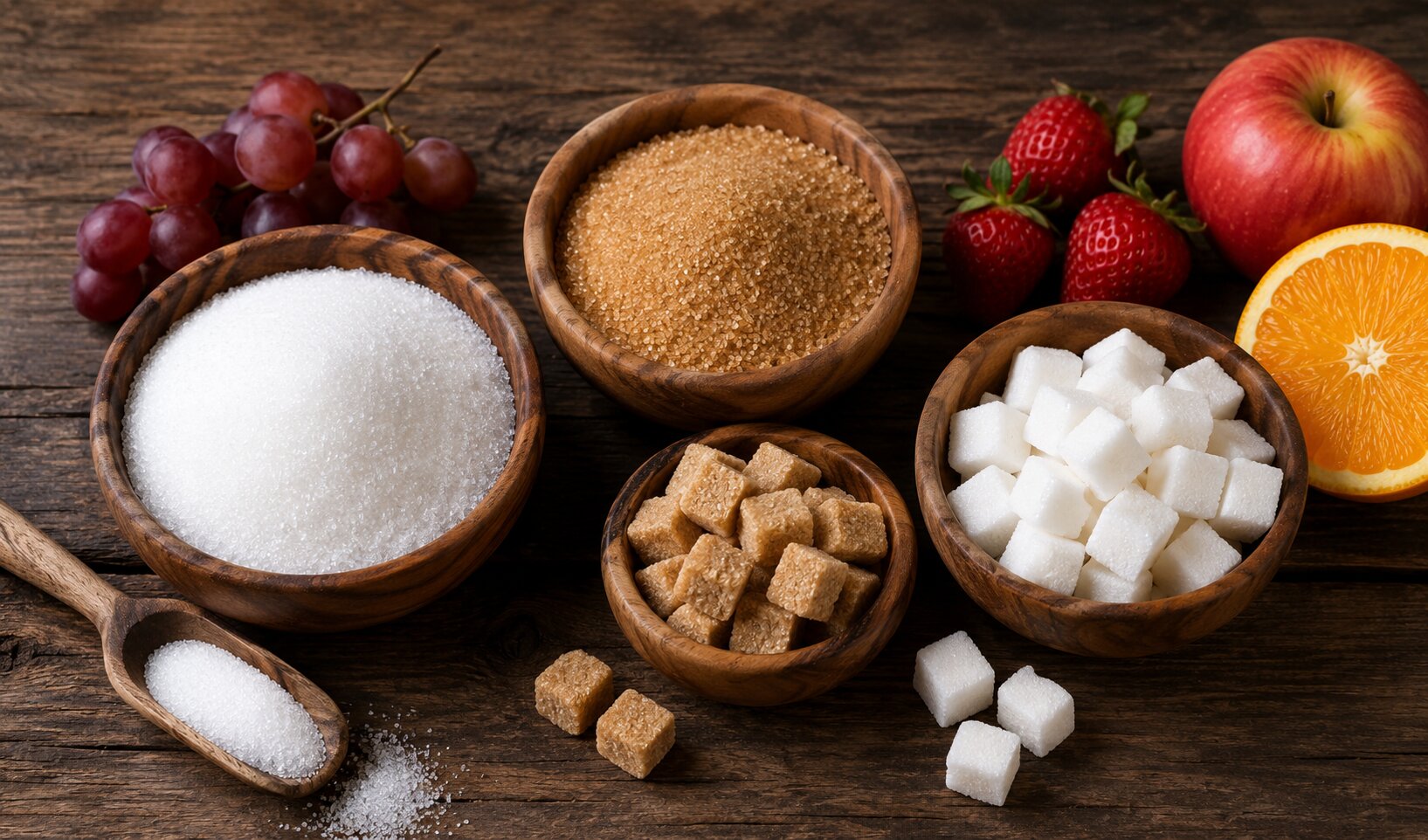
Sucrose is ordinary table sugar—the white or brown sugar commonly added to coffee, tea, desserts and baked goods.
Unlike glucose and fructose, sucrose is a disaccharide, meaning it consists of two sugar molecules chemically joined together:
One glucose molecule + one fructose molecule = one sucrose molecule
Before your body can absorb sucrose, an enzyme in the small intestine called sucrase splits it into its two components. The glucose and fructose then follow their respective metabolic pathways. The U.S. Food and Drug Administration describes sucrose as an exact one-to-one combination of glucose and fructose.
This means that when you eat 20 grams of sucrose, you are effectively consuming approximately:
- 10 grams of glucose
- 10 grams of fructose
Sucrose therefore raises blood glucose because half of it is glucose and because some of its fructose component may later be converted into glucose.
A Side-by-Side Comparison
| Characteristic | Glucose | Fructose | Sucrose |
|---|---|---|---|
| Type | Monosaccharide | Monosaccharide | Disaccharide |
| Basic structure | One sugar molecule | One sugar molecule | Glucose joined to fructose |
| Common name | Blood sugar | Fruit sugar | Table sugar |
| Major processing | Used by cells throughout the body | Initially processed largely by the intestine and liver | Split into glucose and fructose |
| Immediate blood-glucose effect | Generally higher | Generally lower | Moderate to high |
| Insulin response | Stronger | Smaller immediate response | Produces a response because it contains glucose |
| Common sources | Starches, fruits, glucose syrup | Fruits, honey and added sweeteners | Table sugar, sweets, desserts and processed foods |
| Main concern when overconsumed | Blood-glucose spikes and excess calories | Triglyceride and liver-fat production, especially in large amounts | Combines the effects of glucose and fructose |
How to Make Smarter Sugar Choices
You do not have to memorize the biochemistry of every sweetener. A few practical habits can dramatically reduce unnecessary sugar exposure.
Choose whole fruit more often than juice
Whole fruit provides fiber and is more filling. Juice—even 100% juice—can deliver sugar more rapidly.
Pay attention to beverages
Soft drinks, sweetened coffee, energy drinks, sports drinks and sweetened teas can contain large amounts of added sugar.
Read the “Added Sugars” line
The Nutrition Facts label separates total sugar from added sugar. This helps distinguish naturally occurring sugar from sweeteners added during manufacturing.
Do not be distracted by attractive names
Cane sugar, organic sugar, brown rice syrup, honey, agave nectar and fruit-juice concentrate are still sources of sugar. “Natural” does not mean metabolically invisible.
Combine carbohydrates with fiber, protein or healthy fat
For example, eating fruit with unsweetened yogurt or a small portion of nuts may produce greater fullness than consuming fruit juice by itself.
Retrain your sense of sweetness
Gradually reducing sugar in coffee, tea and other foods can make heavily sweetened products taste excessive over time.
The Bottom Line
Glucose, fructose and sucrose are closely related, but they are not identical.
Glucose circulates as blood sugar and serves as a major fuel for the body’s cells.
Fructose is a naturally occurring sugar processed initially to a large extent by the intestine and liver. It is not inherently poisonous, but large and rapidly consumed quantities may contribute to triglyceride production and liver fat.
Sucrose is table sugar—a molecule made from equal parts glucose and fructose. Your digestive system splits it apart before absorption.
The healthiest approach is not to fear every gram of sugar. It is to distinguish naturally packaged sugar from concentrated added sugar.
An apple is more than fructose.
A bowl of oatmeal is more than glucose.
But a large sugary drink may be little more than a rapid delivery system for glucose, fructose and excess calories.
When it comes to sugar, the molecule matters—but the amount, speed and food surrounding it matter even more.