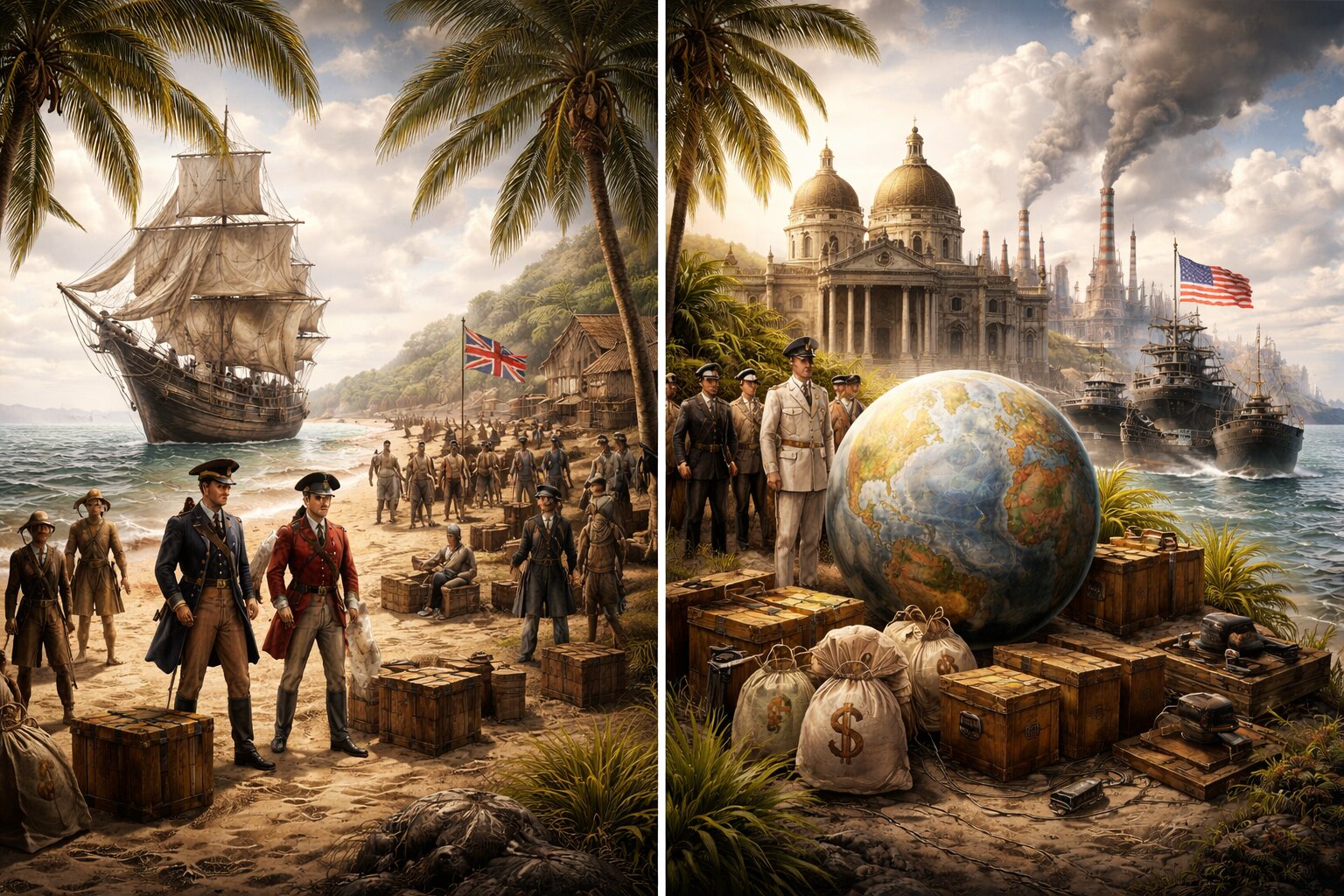
Colonialism and Imperialism are closely related, but they’re not the same thing.
Think of colonialism as the method and imperialism as the bigger goal.
- Colonialism
Definition: Direct control over another territory by settling people there and exploiting it for resources.
Key Feature: Physical presence — settlers, administrators, and military control.
Example:
Britain colonising Australia, sending settlers and establishing British laws.
Spain colonising the Philippines.
- Imperialism
Definition: A broader policy of extending a country’s power and influence, which can be done through colonialism, military force, economic pressure, or political influence.
Key Feature: Doesn’t always require settlement — can be indirect control.
Example:
The United States influencing Latin America through the Monroe Doctrine and economic dominance (often called neo-imperialism).
The British Empire ruling India — initially through the East India Company (economic/political), later as a colony.
Quick Analogy
Imperialism = The goal: “We want to control and benefit from this place.”
Colonialism = The tool: “Let’s settle here, run the government, and exploit resources directly.”