Imagine your arteries as pristine, flexible highways designed to transport oxygen-rich blood smoothly to every corner of your body. When you are young, these highways are slick, wide open, and incredibly resilient.
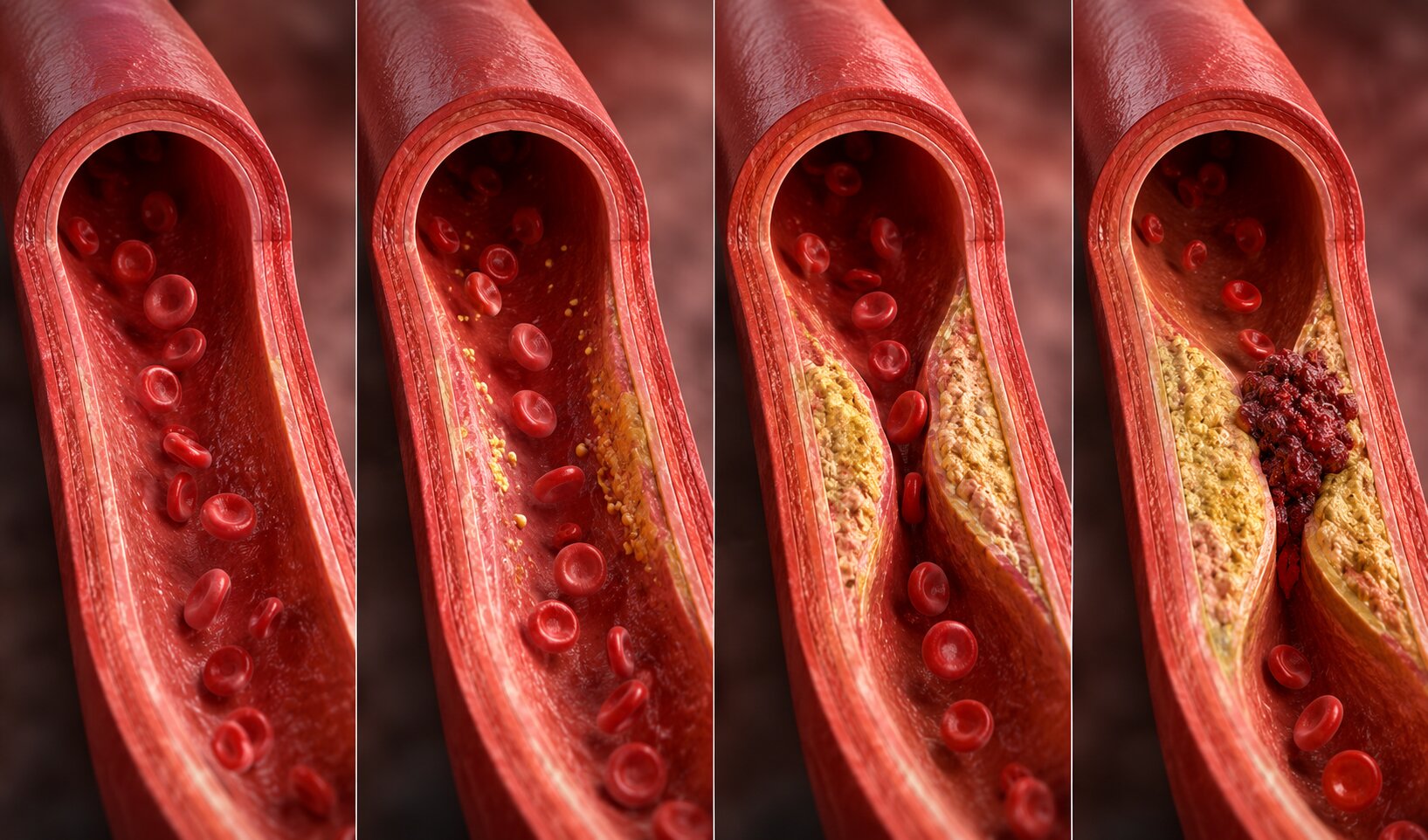
But over decades, a silent, microscopic process can transform these flexible tubes into stiff, clogged pathways. This process is called atherosclerosis (the medical term for the hardening and narrowing of the arteries due to plaque buildup).
How does a smooth blood vessel turn into a congested pipeline? It doesn’t happen overnight. It is a slow, multi-stage biological drama.

The 4 Stages of Plaque Development
Step 1: The Microscopic “Nick” (Endothelial Injury)
The innermost lining of your artery is a single layer of ultra-smooth cells called the endothelium. Think of it like Teflon—nothing is supposed to stick to it.
However, life throws things at this lining that can scratch or damage it. Common culprits include:
-
High blood pressure (hypertension): The constant, high-pressure pounding of blood physically strains the cells.
-
Toxins from smoking: Chemical irritants enter the bloodstream and chemically damage the lining.
-
Excess LDL (“bad”) cholesterol: High levels of circulating fats can easily become trapped in the artery wall.
Step 2: The Invasion (Fatty Streak Formation)
Once the endothelium is damaged, it becomes “sticky” and permeable. LDL cholesterol slips through the cracks and settles underneath the lining.
Once inside, this cholesterol oxidizes (reacts with oxygen) and turns highly toxic to the surrounding tissue. Recognizing an invasion, your immune system sends in white blood cells called macrophages (literally “big eaters”) to clean up the mess.
These macrophages gorge themselves on the oxidized cholesterol. They eat so much that they literally balloon, die, and get stuck, transforming into bloated, yellowish cells known as foam cells. A collection of these dead, fat-filled cells forms a fatty streak—the very first visible sign of plaque.
Step 3: Building the Wall (Plaque Growth & Fibrous Cap)
As the body tries to contain this growing toxic waste dump of dead foam cells and cholesterol, it initiates a healing response.
Smooth muscle cells from the deeper layers of the artery migrate to the surface and spin a tough, fibrous mesh of collagen over the fatty pool. This is called a fibrous cap.
Over time, calcium deposits are added to the mix, turning the soft fatty streak into a hard, calcified plaque. While the fibrous cap does a great job of sealing the dangerous cholesterol pool away from your flowing blood, it also causes the artery to lose its elasticity and narrow.
Step 4: The Danger Zone (Rupture and Clots)
For years, this process can remain completely silent. However, the constant rush of blood past the narrowed area can slowly wear down the fibrous cap.
If that cap becomes too thin or brittle, it can rupture.
When the cap tears, the highly reactive, fatty inner core of the plaque is suddenly exposed to the bloodstream. The body reacts to this exposure the same way it reacts to a paper cut: it rushes to form a scab.
-
Platelets immediately clump together at the site, forming a rapid blood clot (thrombus).
-
Unlike a scab on your skin, a blood clot inside a narrow artery can completely block the flow of blood in seconds.
The Ultimate Consequence: If this blockage occurs in a coronary artery (feeding the heart), it causes a heart attack. If it occurs in an artery leading to the brain, it causes a stroke.
Can You Stop or Reverse This?
While severe, calcified plaque is incredibly difficult to melt away entirely, early-stage plaque (like fatty streaks) can actually be halted or even partially reversed.
| Strategy | Biological Action |
| Manage LDL Cholesterol | Starves the plaque of its building blocks, allowing the body to slowly clear out soft cholesterol. |
| Control Blood Pressure | Stops the mechanical tearing of the endothelial lining. |
| Exercise & Healthy Diet | Boosts nitric oxide production, which keeps the artery lining flexible, slick, and resistant to damage. |
By understanding that plaque is not just “dirt in a pipe” but a dynamic, inflammatory biological process, we can make lifestyle choices that keep our microscopic highways wide open and flowing smoothly.