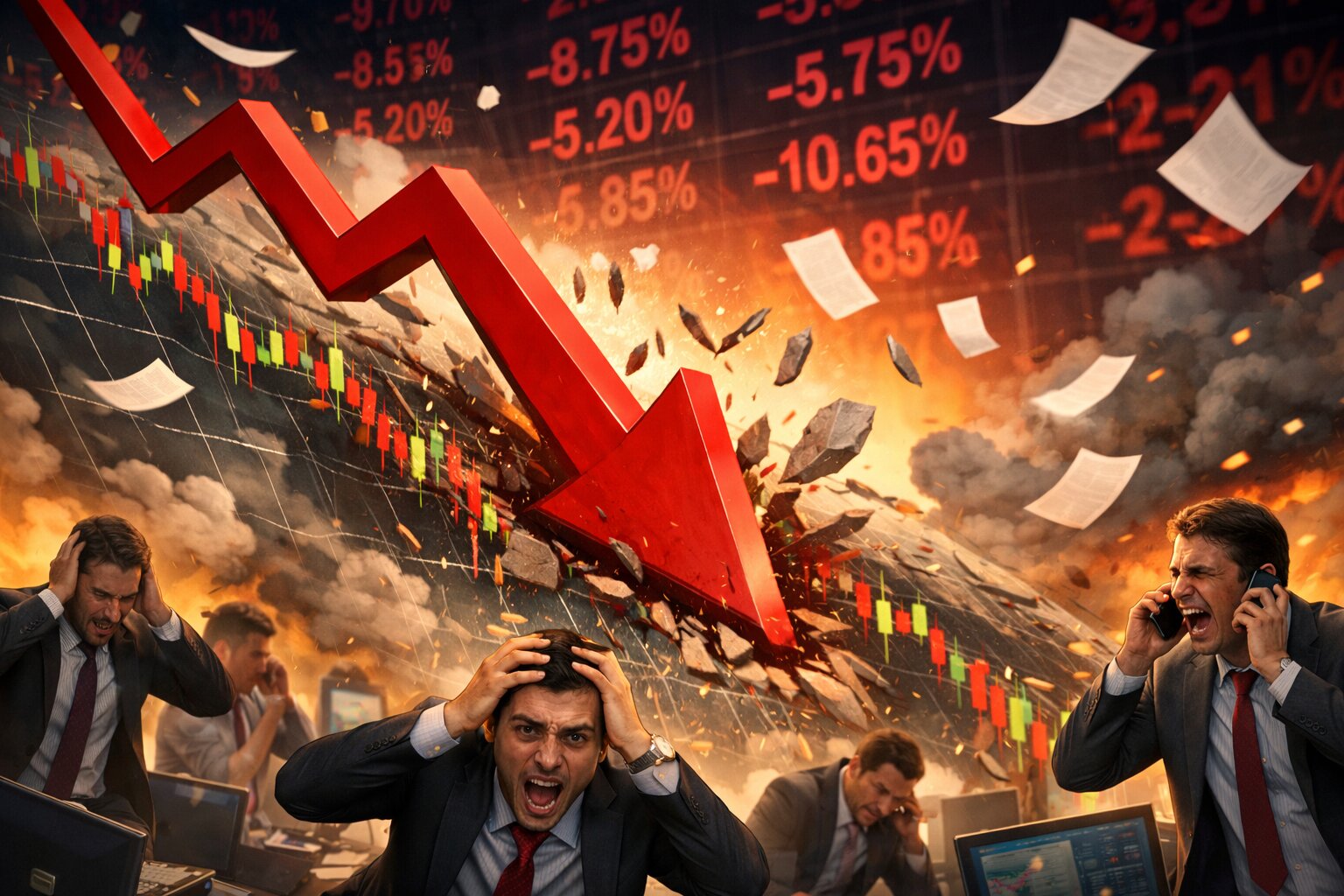
🔴 Why a Stock Might Crash Suddenly
(Sharp drop: 10%–50%+ in days or weeks)
1️⃣ Earnings Shock
If results miss expectations badly:
- Revenue miss
- EPS miss
- Gross margin compression
- Weak guidance
Even if numbers look “good,” they can fall short of expectations.
Example:
- A company grows 25% but analysts expected 35%.
- Stock drops 20% in a day.
2️⃣ Guidance Cut
Forward guidance matters more than past earnings.
If management says:
- “Next quarter will be slower”
- “We’re seeing demand weakness”
- “Margins will compress”
Markets price in the future — not the past.
3️⃣ Accounting or Fraud Issues
Examples:
- Restatements
- SEC investigations
- Auditor resignation
- Short-seller reports
Look at what happened to:
- Enron
- Wirecard
Those were collapse-level crashes.
4️⃣ Liquidity or Debt Problems
If company:
- Can’t refinance debt
- Violates loan covenants
- Has cash burn + no access to capital
This is common in small caps.
5️⃣ Secondary Offering / Dilution
If a company suddenly announces:
- New stock offering
- Convertible debt
Shareholders get diluted → stock drops.
Common in early-stage companies.
6️⃣ Macro Shock
External events:
- Fed rate hikes
- Geopolitical war
- Pandemic
- Banking crisis
Example:
- 2020 COVID crash
- 2022 rate hikes crushed fintech & growth stocks
7️⃣ Regulatory Hit
Especially relevant in:
- Fintech (SOFI)
- Healthcare (LifeMD)
- Crypto
- Pharma
If regulators change rules → revenue model collapses.
8️⃣ Insider Selling / CEO Exit
If:
- CEO resigns unexpectedly
- CFO leaves
- Heavy insider selling
Market reads it as: “Something is wrong.”
9️⃣ Algorithmic / Forced Selling
Sometimes not fundamentals at all:
- Margin calls
- Hedge fund blowups
- ETF rebalancing
- Stop-loss cascade
- Short attack
Liquidity dries up → stock gaps down.
Small caps are especially vulnerable.
🔵 Why a Stock Goes Down Gradually
(Slow bleed over months or years)
This is more dangerous — because people hold hoping it comes back.
1️⃣ Slowing Growth
Revenue growth:
- 50% → 30% → 20% → 10%
Valuation multiple compresses.
Even if profitable, stock can drop 50%.
2️⃣ Multiple Compression
If P/E was 60 and market decides it deserves 20.
Example:
- Growth stock in 2021 → crushed in 2022.
Even with good earnings.
3️⃣ Rising Interest Rates
Higher rates:
- Hurt fintech
- Hurt tech
- Hurt high P/S companies
Future cash flows get discounted more heavily.
4️⃣ Competitive Pressure
If a stronger competitor enters:
Example:
- Block, Inc. vs traditional processors
- Fiserv dominating certain markets
Margins get squeezed slowly.
5️⃣ Sector Rotation
Money rotates:
- Out of growth → into value
- Out of small caps → into mega caps
- Out of fintech → into AI
Stock drifts lower even if business is fine.
6️⃣ Story Breaks
Sometimes narrative fades.
If investors believed:
- “This is the next Amazon”
But growth normalizes…
The excitement premium disappears.
7️⃣ Gradual Dilution
- Stock-based compensation
- Repeated capital raises
Share count rises → EPS stagnates.
8️⃣ Institutional Distribution
Smart money sells quietly over months.
Volume looks normal, but stock trends down.
🧠 The Psychological Layer
Markets are:
- 50% fundamentals
- 50% psychology
Reasons include:
- Overvaluation → gravity
- Fear contagion
- Herd behavior
- “Sell the news”
- Loss of momentum
- Retail panic
⚠️ Red Flags You Should Always Watch
Given your investing style (individual growth + options):
- Revenue growth slowing sharply
- Gross margins shrinking
- Cash burn increasing
- Debt refinancing risk
- Repeated equity offerings
- Insider selling cluster
- CEO tone change on earnings calls
🔎 Important Distinction
Temporary Drop
- Macro driven
- Sector rotation
- Overreaction
Structural Decline
- Business model broken
- Competition permanent
- Debt spiral
- Fraud
Knowing the difference is where real money is made.