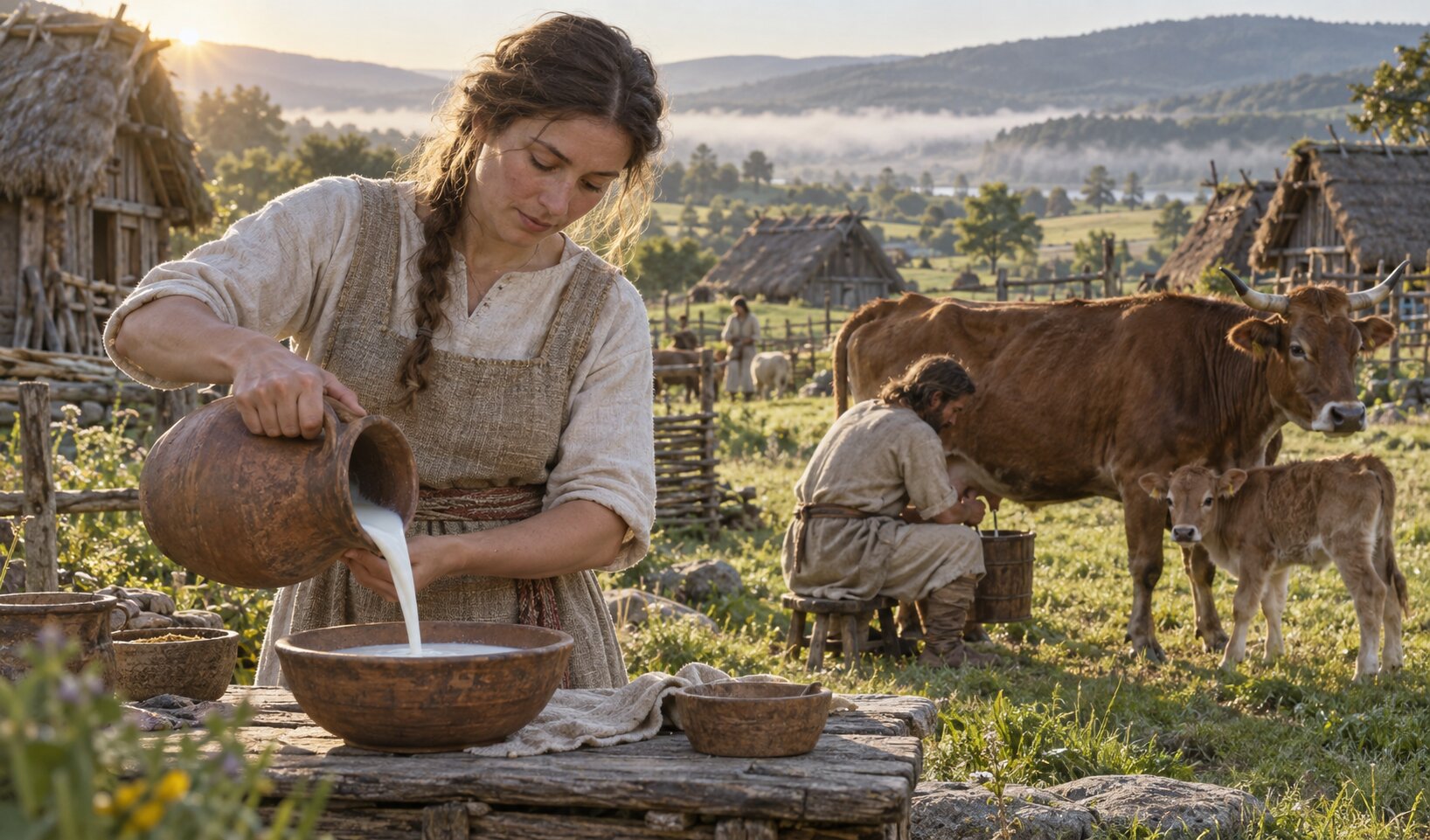
For most mammals, milk belongs to infancy. After weaning, production of lactase—the enzyme that breaks down milk sugar—declines. Many humans follow that same developmental pattern.
But some populations evolved lactase persistence, allowing adults to keep digesting lactose. Dairy farming changed the environment in which natural selection operated: people created a new food source, and inherited variants that helped them use it became advantageous.
The surprising part is that milk consumption came first.
A 2022 study examined roughly 7,000 pottery-fat residues from more than 550 archaeological sites, alongside ancient genetic evidence. Europeans were using milk thousands of years before lactase persistence became common. Simply consuming more milk did not adequately explain the genetic variant’s spread. Research study
Well supported: adult lactose digestion has a genetic basis, and natural selection strongly favored lactase persistence in some dairying populations. This is an example of gene–culture coevolution: cultural practices change which inherited traits are advantageous.
Plausible but debated: famine and disease intensified that advantage. Researchers proposed that digestive problems from lactose became especially dangerous during malnutrition or infection. Their models supported this explanation, but archaeological proxies cannot establish precisely which pressures drove selection. Researchers’ explanation
Our ancestors did more than adapt to the environments they encountered. By keeping dairy animals, they helped create new conditions that shaped the evolution of their descendants.


