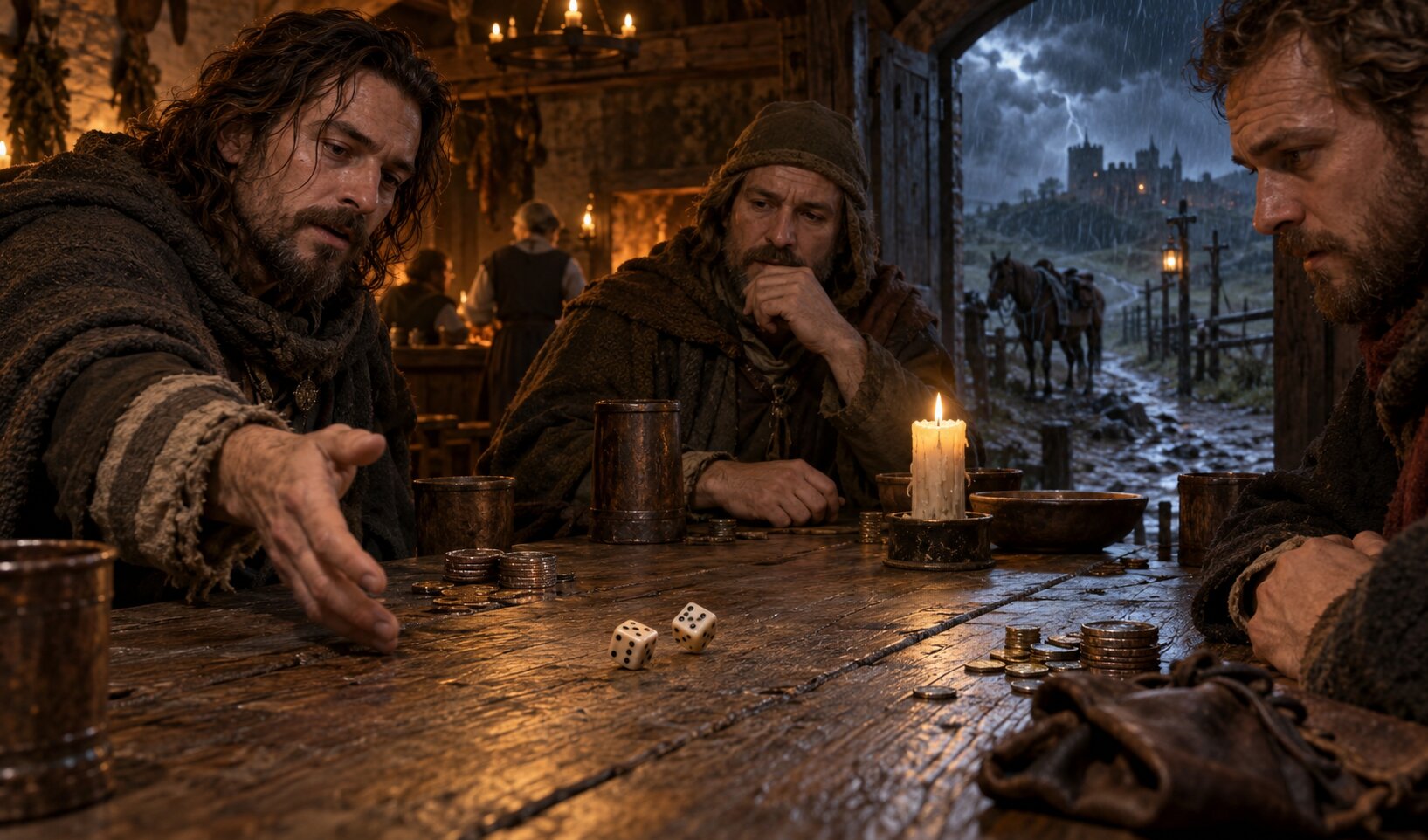
“Hazard” Began With a Roll of the Dice
Today, a hazard is something dangerous: a slippery floor, a chemical spill, or a reckless driver. But the word originally belonged at a gambling table.
Hazard entered English through Old French hasard, the name of a dice game. Its deeper origin is uncertain, but it probably came through Spanish from the Arabic al-zahr or az-zahr, traditionally interpreted as “the die.”
In the medieval game of hazard, players wagered money on unpredictable rolls of dice. Because victory depended on chance rather than skill, the word soon expanded beyond the game. A hazard became an uncertain event, a risk someone willingly accepted, or an unpredictable turn of fortune.
Only later did its darker meaning dominate. Since risks can end badly, hazard gradually came to mean a source of danger itself. What began as the uncertainty of a dice roll became anything capable of causing injury, loss, or disaster.
An older sense survives in the phrase “hazard a guess.” When you hazard an answer, you are not necessarily doing something dangerous—you are metaphorically placing a bet despite being uncertain.
The French word hasard still means chance, while Spanish azar can mean chance, fate, or misfortune. English kept the risk but increasingly emphasized the danger.
So every warning about a workplace, traffic, or health hazard carries the memory of gamblers watching dice tumble across a table, waiting to discover what fortune had decided. Merriam-Webster, Online Etymology Dictionary


