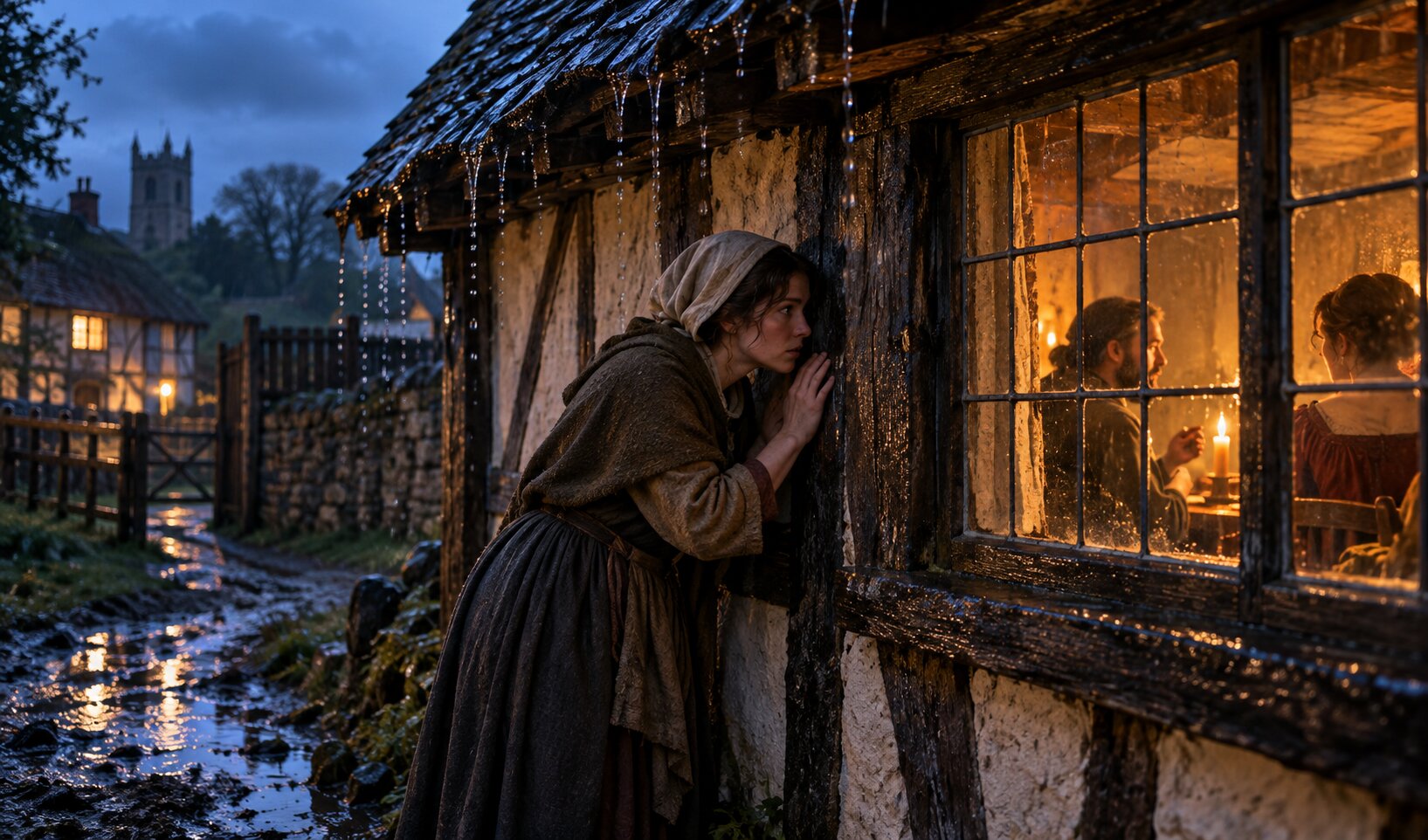
“Eavesdrop” Began Beneath a Dripping Roof
Long before hidden microphones and tapped phones, an eavesdropper needed only a quiet place beside someone’s house—and perhaps protection from the rain.
In Old English, yfesdrype referred to the ground around a house where water dripped from the eaves, the projecting edges of the roof. The later Middle English word eavesdrop still named this narrow, often muddy strip of land.
Someone hoping to overhear a private conversation could stand there, close to a wall or window, and listen to the people inside. By the fifteenth century, such a person was called an eavesdropper: literally, someone standing within the roof’s dripping zone. Online Etymology Dictionary
Here is the unusual twist: eavesdropper appeared before the verb eavesdrop. Around 1600, English speakers worked backward from the name of the listener and created the verb for what that person was doing. Merriam-Webster
The word later escaped the side of the house. It expanded to secret listening of every kind, from overheard conversations to electronic surveillance.
So the next time an app seems to be eavesdropping, remember its linguistic ancestor: a curious stranger standing in the mud beneath a dripping medieval roof.


