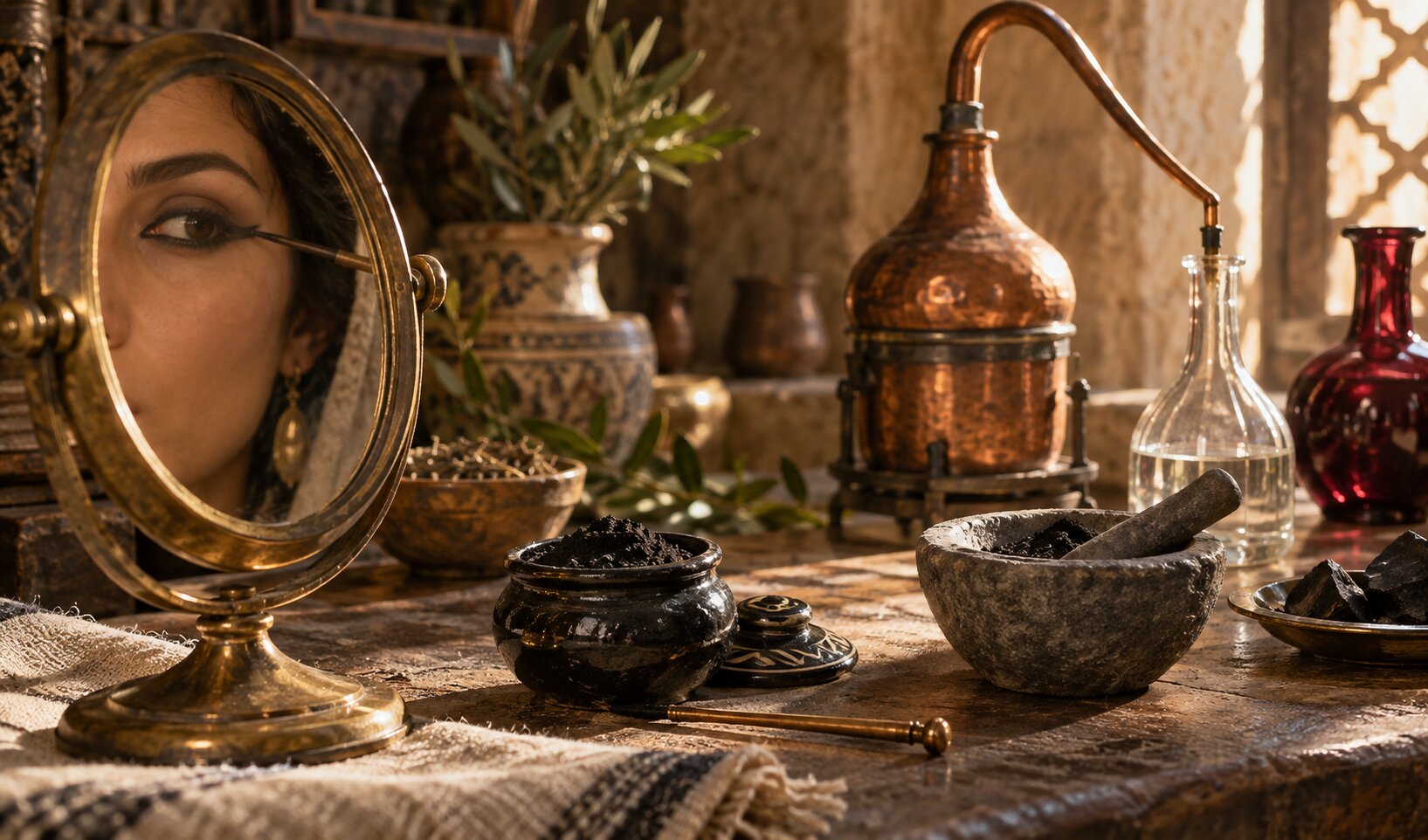
“Alcohol” Was Originally Eye Makeup
Today, alcohol usually means the intoxicating ingredient in beer, wine, and spirits. But the word began with something completely dry: a finely powdered cosmetic.
It ultimately comes from the Arabic al-kuḥl. The prefix al- means “the,” while kuḥl referred to kohl—a dark antimony-based powder traditionally applied around the eyes.
The word entered Medieval Latin through scientific and alchemical writing. European scholars gradually broadened its meaning from kohl to any substance ground into an extremely fine, purified powder.
Then came a remarkable transformation. Alchemists also purified liquids through distillation, so alcohol began describing the concentrated “essence” of a substance. Distilled wine was therefore called “alcohol of wine.” Eventually, the phrase was shortened, and alcohol became the ordinary name for the intoxicating component itself.
Modern chemistry expanded the word again: an alcohol is now any member of a large family of organic compounds containing a particular hydroxyl group. The drinkable variety is specifically ethanol; other alcohols can be toxic.
Here is the memorable surprise: the words alcohol and kohl are linguistic relatives. A term that once belonged beside an ancient cosmetic container now appears on wine labels, medical disinfectants, and chemistry textbooks.
And despite a popular internet claim, alcohol does not mean “body-eating spirit,” nor is it related to ghoul. Its true journey—from eyeliner to purified essence to intoxicating liquid—is already strange enough. Merriam-Webster, Oxford English Dictionary


