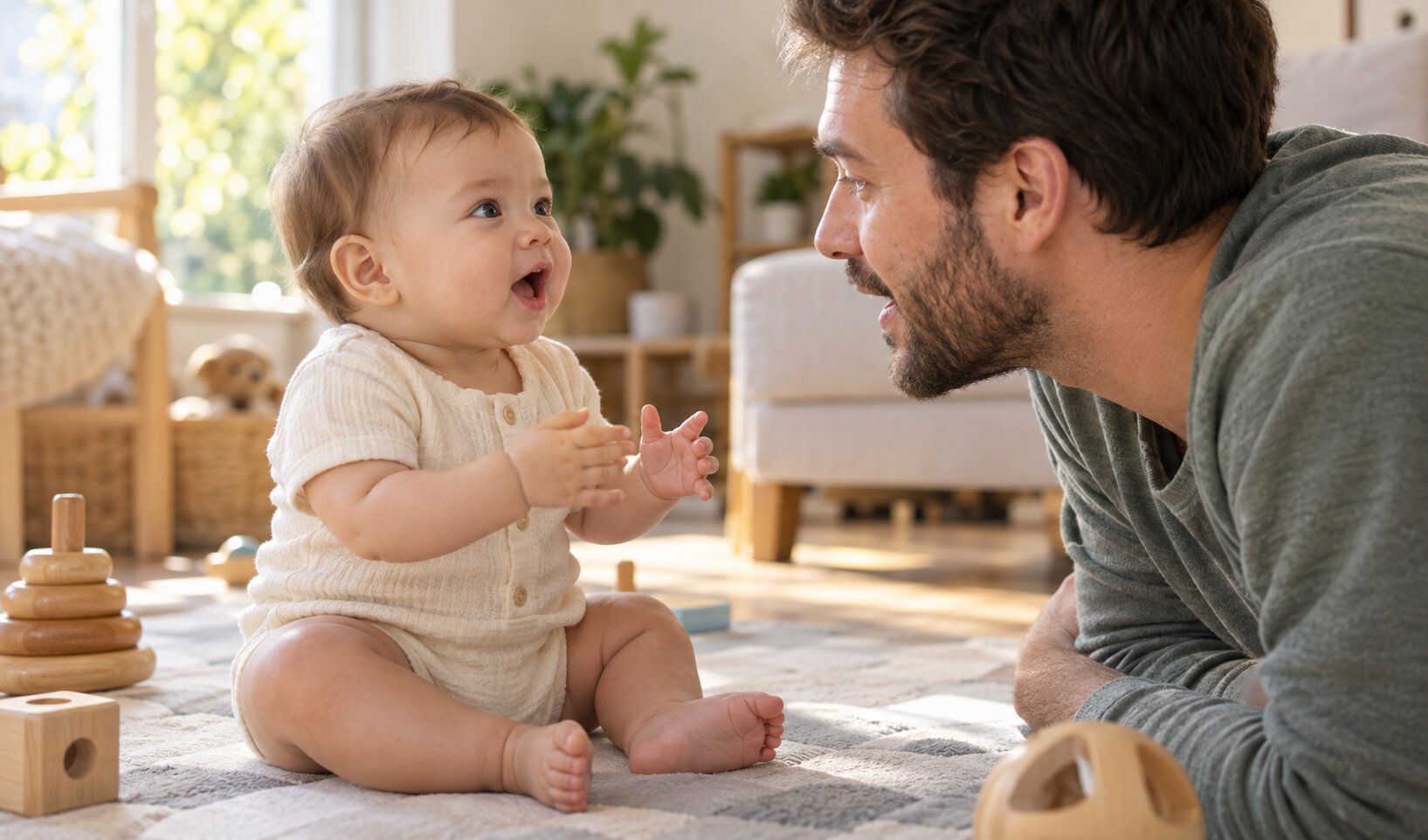
Months before saying “mama,” babies begin producing repetitive sounds such as ba-ba-ba and da-da-da. This may sound meaningless, but babbling appears to be a form of structured practice.
Each vocalization teaches the infant how movements of the jaw, tongue and lips create particular sounds. Babies also hear the result, compare it with surrounding speech and gradually favor sound patterns used in their language.
The importance of feedback became clear in a comparison of hearing and profoundly deaf infants. Hearing babies generally produced well-formed consonant–vowel syllables within their first ten months. Infants who could not hear speech vocalized too, but developed canonical syllables later and less consistently—evidence that hearing one’s own voice helps shape babbling. Hearing study
An even more revealing discovery came from babies learning sign language. Deaf infants exposed to signing produced repetitive, rhythmically organized hand movements using a limited set of sign-like forms. Researchers described this as manual babbling: the hands were rehearsing language much as other babies’ mouths do. Sign-language study
Well supported: babbling is organized, influenced by linguistic experience and connected to later speech development. It is not merely random noise.
Plausible but debated: natural selection created babbling specifically as a risk-free training period for language. It may instead arise from broader infant tendencies to explore movements, repeat interesting sensations and attract social responses from caregivers.
Babbling may serve all these functions simultaneously. Long before a baby possesses words, the brain is already experimenting with one of humanity’s most complicated motor skills: turning movement into language.


