Age by itself does not make anyone wise.
It simply reveals what kind of habits a person has been practicing for years.
Some people grow older and become calmer, deeper, and easier to learn from.
Others grow older and become rigid, defensive, and locked into themselves.
The difference often comes down to one powerful trait.
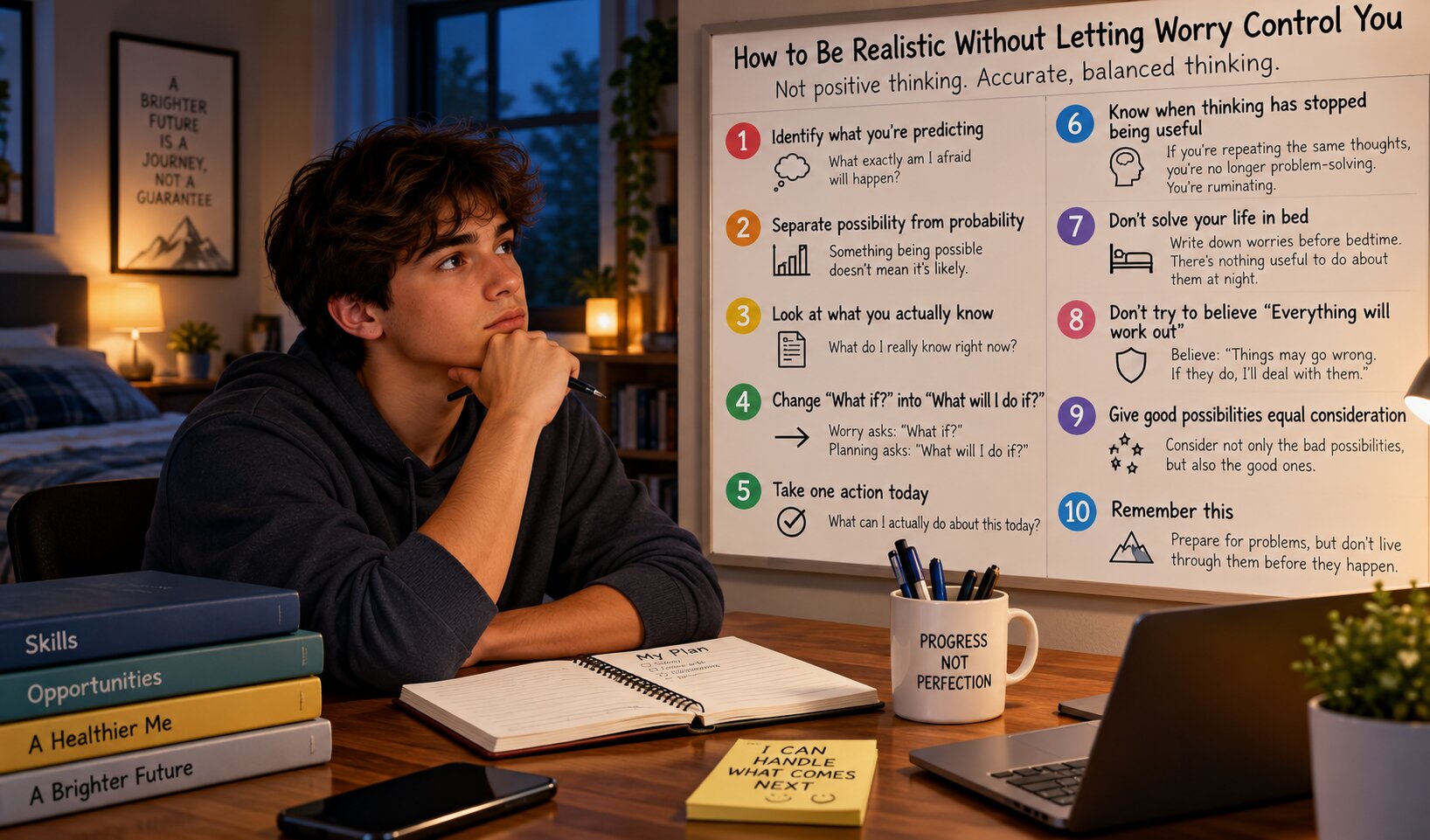
Distress Tolerance!!
It is the ability to sit with discomfort.
The Trait Most People Overlook
Most people assume wisdom comes from experience alone.
But experience means very little if a person never reflects on it.
A person can go through loss, failure, rejection, change, and conflict for decades and still learn almost nothing.
Another person can go through the same things and come out humbler, stronger, and sharper.
What separates them is not just intelligence.
It is Distress Tolerance.
Can they sit with shame without becoming defensive?
Can they face uncertainty without rushing into false certainty?
Can they hear something painful without immediately rejecting it?
That is the trait that slowly turns age into wisdom.
Why Discomfort Matters So Much
Wisdom is not built in comfortable moments.
It is built in the moments that test the ego.
A failed plan.
A painful truth.
A hard conversation.
A public mistake.
A changing world that no longer moves the way you expected.
Those moments either open a person up or close them down.
If someone treats every uncomfortable moment like a threat, they will spend their life protecting themselves instead of growing.
They will blame faster than they reflect.
They will argue faster than they listen.
They will cling faster than they adapt.
That is how age turns into stubbornness instead of wisdom.
Two Men Who Lost Their Jobs
Imagine two men lose their jobs in their forties.
The first man is shaken, but he reflects on what happened, accepts the hit to his pride, learns new skills, and slowly rebuilds.
The second man cannot bear the blow, so he blames younger workers, the economy, office politics, and everyone except himself.
Ten or twenty years later, the first man often becomes humbler and wiser.
The second man often becomes bitter and rigid.
Both suffered.
Only one used the suffering to grow.
Two Women and Their Promotion
Imagine two women who both get passed over for a promotion.
The first woman feels disappointed and angry, but she sits with it long enough to ask hard questions.
Was there something she missed?
Does she need a new skill?
Was her communication weaker than she thought?
Should she stay, or is it time to move on?
The second woman cannot bear that kind of self-examination.
She tells herself the whole thing was politics, everyone is incompetent, and there is nothing she could have done differently.
Years later, the first woman is usually wiser.
The second is usually more bitter.
The event was the same.
The response was different.
Intelligence Is Not Enough
Some very smart people become extremely rigid with age.
In fact, intelligence can sometimes make the problem worse.
A smart person can come up with endless reasons to defend old habits.
They can explain away criticism.
They can justify poor behavior.
They can use logic as armor.
That is why knowledge alone does not produce wisdom.
A person may be educated, experienced, and highly articulate, yet still be emotionally childish.
Meanwhile, another person with less status or less raw intelligence may become far wiser simply because they are more open to correction, change, and discomfort.
Wisdom is not about sounding smart.
It is about staying teachable.
How Stubbornness Quietly Forms
People rarely wake up one day and suddenly become rigid.
It happens slowly.
They avoid difficult truths.
They refuse to admit mistakes.
They take disagreement personally.
They cling to familiar opinions because those opinions make them feel safe.
After years of doing this, their mind loses flexibility.
At that point, they no longer examine life honestly.
They react to everything through pride, fear, and habit.
That is why some older people feel so impossible to reason with.
It is not because time made them wise.
It is because time hardened whatever they never dealt with.
Fathers and Their Adult Sons
Think of a father whose adult son chooses a career path he does not respect.
One father says, “I do not fully get it, but explain it to me.”
The other says, “This generation has no sense.”
The first father may still have concerns, but he can sit with them without turning them into control.
The second father cannot handle the discomfort of not being right or not being in charge.
So he retreats into judgment.
That is how wisdom and rigidity begin to separate.
One stays curious.
The other stays threatened.
Why Wise People Feel Different
Wise people are not always the quietest people in the room.
They are not always the nicest either.
They can be firm, direct, and even intense.
But they usually have one quality that stands out.
They do not panic when reality challenges them.
They can pause before reacting.
They can admit when something hurt their pride.
They can handle complexity without reducing everything to simple slogans.
They do not need to be right every second to feel strong.
That is why being around them feels different.
You do not feel trapped inside their ego.
You feel the space of a person who has allowed life to teach them.
The Trap of Always Protecting Yourself
Defensiveness feels useful in the moment.
It protects pride.
It preserves identity.
It helps a person avoid embarrassment.
But long term, it becomes a prison.
A person who is always protecting themselves cannot learn much.
Every correction feels like an attack.
Every disagreement feels like disrespect.
Every new idea feels like a threat.
That person may look confident from the outside.
But inside, they are often just fragile.
Real strength is not the ability to avoid discomfort.
It is the ability to survive it without losing openness.
How Age Becomes Wisdom
Age becomes wisdom only when experience is processed honestly.
Failure must be examined.
Pain must be faced.
Loss must be absorbed.
Embarrassment must be survived without turning into bitterness.
That is why some people become softer and deeper with time.
They let life revise them.
They do not spend every hard moment trying to defend the image they have of themselves.
They let life expose their blind spots.
They let other people challenge them.
They let discomfort do its work.
That is what makes them wiser.
The Real Bottom Line
Distress Tolerance could turn age into wisdom.
It is the ability to sit with discomfort without running, denying, getting angry, blaming, or hardening.
Without that trait, age often becomes stubbornness.
With it, age becomes depth.
That is why some people grow older and become a source of clarity.
And others simply become louder versions of who they already were.