For nearly 1,500 years, the pyramid walls were mute.
After the fall of Roman Egypt in the 4th–5th century CE, knowledge of how to read Egyptian hieroglyphs vanished.
By the Middle Ages, people could see hieroglyphs everywhere—but no one alive could read them.
Temples, tombs, pyramids—structures across Egypt were covered in writing that might as well have been abstract art.
What People Thought Hieroglyphs Were
For centuries, scholars believed hieroglyphs were:
- Mystical symbols
- Secret philosophical codes
- Magical pictures encoding wisdom, not language
Even educated thinkers treated them like allegory rather than writing.
That assumption blocked progress.
A Famous Wrong Turn
A Greek author named Horapollo wrote a book claiming hieroglyphs were symbolic metaphors.
For example:
- A bird = soul
- A snake = eternity
Beautiful.
But completely wrong.
Europe believed this theory for more than 1,000 years.
Napoleon’s Egyptian Campaign
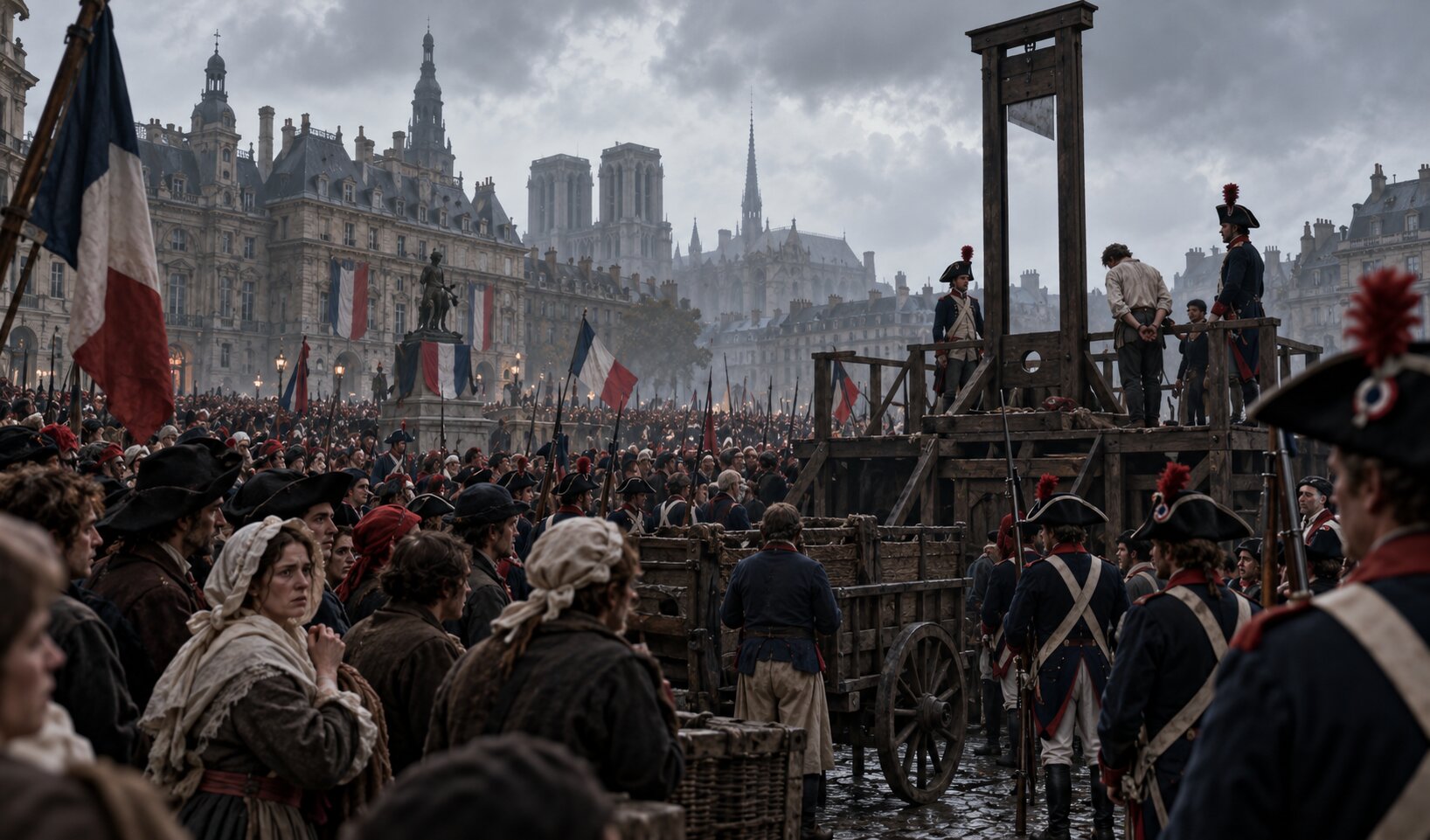
In 1798, cannon smoke rolled across the Mediterranean as Napoleon Bonaparte sailed toward Egypt.
This was not just a military gamble. Napoleon wanted glory, yes—but he also wanted immortality through knowledge.
He brought with him not only soldiers, but engineers, linguists, artists, and scientists. If France could not merely conquer Egypt, it would understand it.
A year later, in 1799, while reinforcing a crumbling fort near the Nile delta, a French officer noticed something unusual embedded in the rubble.
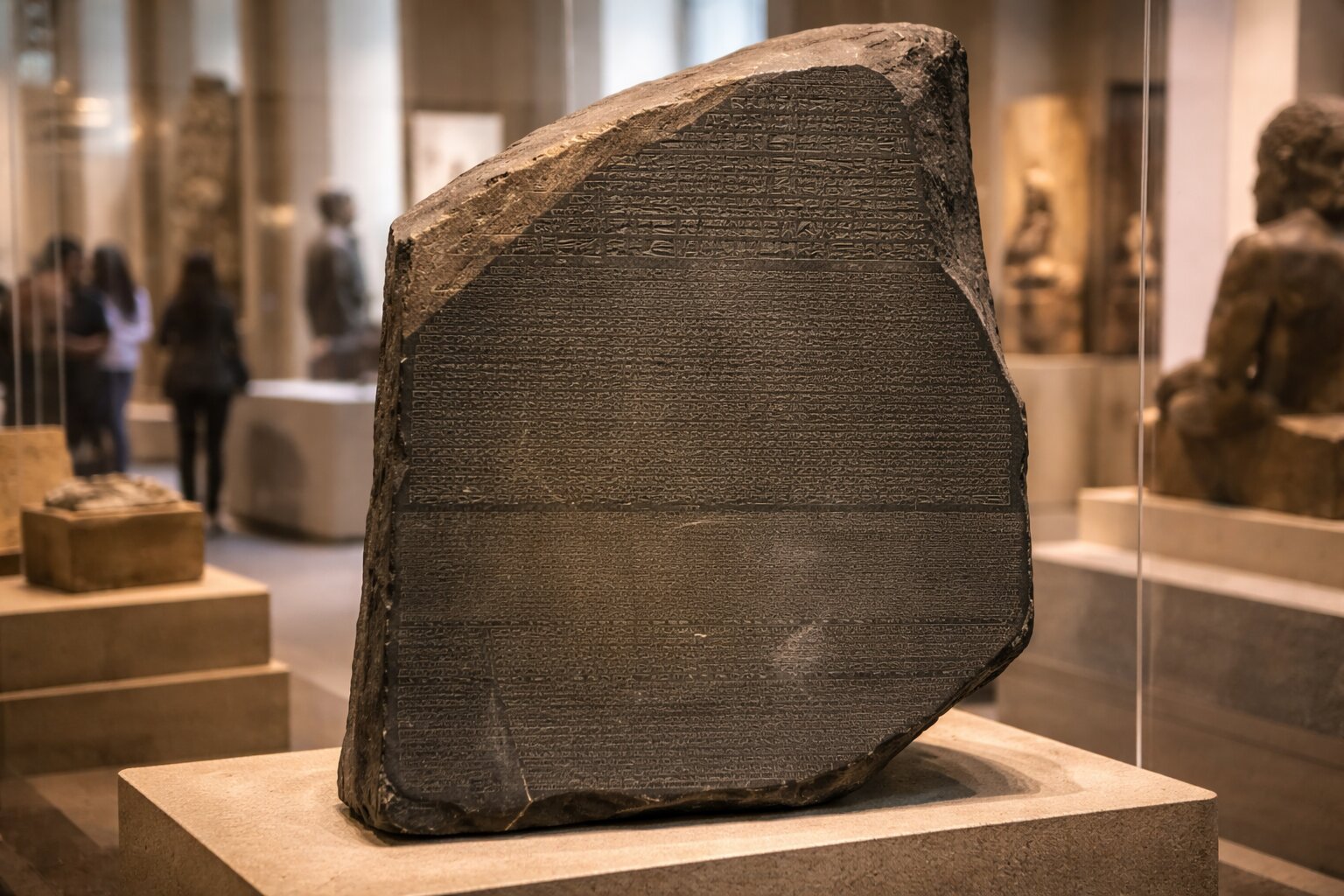
A dark stone. Smooth. Inscribed.
Not rubble at all—but writing.
No one realized yet that they had just uncovered the most important translation tool in human history.
A Stone with Three Voices
The slab was found near the town of Rosetta (modern Rashid).
It wasn’t large or ornate. No gold. No statues. Just text—dense and deliberate.
But the scholars froze when they looked closer.
Three scripts.
One above the other.
At the bottom: Ancient Greek—clear, readable, familiar.
In the middle: Demotic Egyptian—used in everyday life.
At the top: Egyptian hieroglyphs—sacred symbols no one had been able to read for nearly 1,500 years.
This wasn’t decoration.
It was repetition.
The same message written three times.
The stone was later named the Rosetta Stone.
A Prize Passed Between Empires
Napoleon’s campaign eventually collapsed. The British defeated the French, and like many spoils of war, the stone changed hands.
By 1802, it was in London, placed in what would become its long-term home—the British Museum.
But possession was not the same as understanding.
For decades, Europe stared at the hieroglyphs the way one stares at a locked door with no key—certain meaning lay behind it, but utterly unreachable.
Most scholars believed hieroglyphs were pure symbols—pictures representing ideas, not sounds.
If that were true, decoding them would be nearly impossible.
They were wrong.
The Man Who Listened Differently
Enter Jean-François Champollion, a linguistic prodigy who could read dozens of languages and had one obsession: Egypt.
Champollion noticed something others ignored.
Royal names.
In the Greek text, the decree honored a young ruler: Ptolemy V. If the texts were truly the same, that name had to appear in the hieroglyphs too.
And it did—inside oval shapes called cartouches.
Champollion made a radical leap:
“What if hieroglyphs sometimes represented sounds, not ideas?”
He tested it.
Letter by letter. Symbol by symbol. Comparing Greek names with Egyptian signs.
The results fit.
Again.
And again.
And again.
In 1822, Champollion burst into his brother’s office, shouted “Je tiens l’affaire!” (“I’ve got it!”), and collapsed from exhaustion.
A Twist of History
History added a quiet irony to the story.
- Napoleon Bonaparte was defeated at Waterloo in 1815.
- He was exiled by the British to Saint Helena, a remote island in the South Atlantic.
- He died there in 1821.
1822—the year Champollion deciphered hieroglyphs—came just one year after Napoleon’s death.
So when Champollion announced that hieroglyphs could finally be read, the man whose Egyptian campaign had accidentally set everything in motion never lived to see it.
What Does the Rosetta Stone Actually Say?
The inscription is a royal decree issued in 196 BCE during the reign of Ptolemy V, a Greek ruler of Egypt.
In plain terms, it says:
- The king is great and deserves honor
- Priests should support him
- Taxes and temple duties are adjusted
- The decree should be displayed publicly in all temples
No deep philosophy—mostly bureaucracy and royal propaganda.
But historically?
Priceless.
The stone had finally spoken.
When Egypt Found Its Voice Again
With that breakthrough, tombs began to talk.
Temple walls revealed:
- Prayers and curses
- Tax records and laws
- Love poems and medical texts
- The names of kings who had ruled thousands of years before Moses and before Homer
The Rosetta Stone did not simply translate a decree.
It resurrected an entire civilization.
For the first time since late antiquity, Ancient Egypt could explain itself—in its own words.
Why This Story Still Matters
The Rosetta Stone teaches a quiet but uncomfortable lesson.
Civilizations do not disappear when buildings fall.
They disappear when language is lost.
And sometimes, recovering thousands of years of meaning does not require brute force—but patience, humility, and the courage to question what everyone else assumes is obvious.
A forgotten stone.
Three scripts.
One stubborn human mind.