You’re walking on a trail.
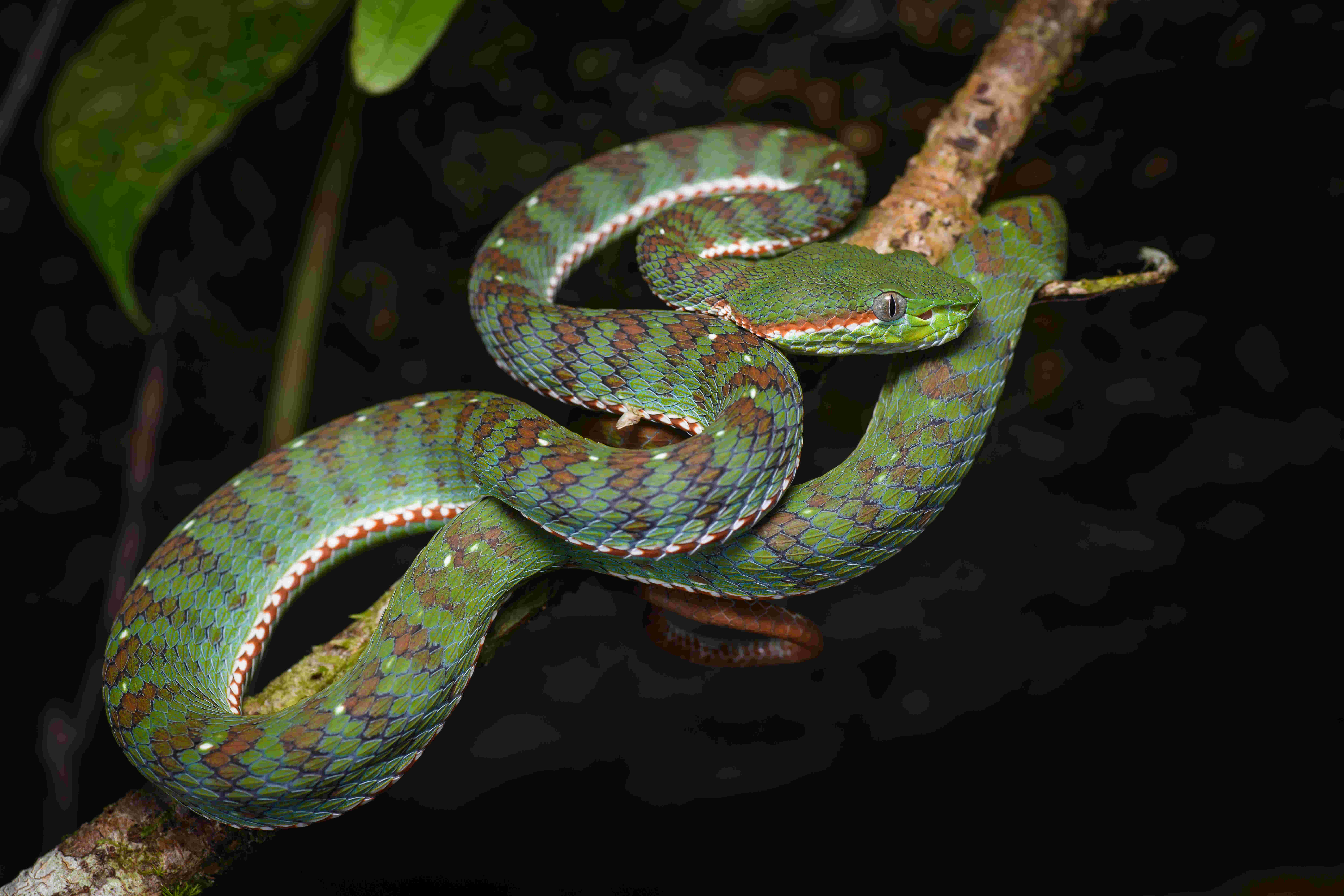
Something long and curved lies across the path.
Your heart jumps. Muscles tighten. You freeze.
Then you realize — it’s just a rope.
Why did your body react as if death was inches away?
Because in some ways, it was.
Not today. But 100,000 years ago.
The Brain That Kept You Alive
Humans did not evolve in climate-controlled offices or suburban neighborhoods. We evolved in tall grass, forests, and rocky terrain — environments where venomous snakes were silent, efficient killers.
Those who:
- Detected snakes faster
- Hesitated less
- Avoided contact instinctively
Survived.
Those who didn’t?
Didn’t pass on their genes.
Over thousands of generations, natural selection shaped something remarkable: a brain that recognizes snake-like patterns faster than almost anything else in nature.
Researchers have found:
- Humans detect snake shapes more quickly than flowers or neutral objects.
- Even infants, with no prior exposure, show heightened attention to snake imagery.
You weren’t “taught” to fear snakes.
You were preloaded.
The Millisecond Decision: Fear Before Thought
When you see something long, curved, and irregular on the ground, your brain doesn’t call a committee meeting.
It bypasses rational analysis.
The amygdala — the brain’s alarm center — activates in milliseconds.
Before your conscious mind says,
“Wait, that’s just a stick,”
Your body has already prepared to:
- Jump
- Run
- Fight
This is not weakness.
It’s ancient efficiency.
Your nervous system evolved for speed, not accuracy.
Better to mistake a stick for a snake
than a snake for a stick.
The Evolutionary Software Still Running
In Evolutionary Psychology: The New Science of the Mind, evolutionary psychologist David Buss explains that humans evolved “domain-specific” fear systems.
We are not equally afraid of all dangers.
Consider this:
- Snakes → instinctive fear
- Spiders → common fear
- Guns → no automatic evolutionary fear response
Guns are far more deadly today. But they’re evolutionarily recent.
Snakes? They were there for millions of years.
Your brain is running ancient survival software on modern hardware.
Culture Turns Up the Volume
Biology starts the signal.
Culture amplifies it.
Across civilizations, snakes have symbolized:
- Evil
- Deception
- Danger
- Forbidden knowledge
Religious texts, mythology, and films reinforce what evolution began.
The serpent becomes more than an animal.
It becomes an archetype.
Biology whispers.
Culture shouts.
But Not Everyone Is Afraid
Interestingly, fear intensity varies.
People raised in:
- Rural areas
- Farming communities
- Regions where snakes are common
Often show reduced fear.
Exposure reshapes reaction.
The bias may be biological —
but the strength of fear is partly learned.
This tells us something powerful:
Instinct sets the default.
Experience edits the script.
The Stoic Perspective: Old Code, New World
If you’ve read Marcus Aurelius or studied Stoicism, you recognize this tension.
Your body reacts to a primitive danger in a modern environment.
A snake behind glass is not a threat.
Yet your pulse may still spike.
The Stoic move is not to eliminate fear.
It’s to recognize:
“This response once protected my ancestors.
Today, I choose whether it controls me.”
Awareness upgrades the software.
The Bigger Lesson
The fear of snakes isn’t random.
It’s evidence that your brain is ancient, efficient, and built for survival.
It reminds us of something humbling:
We are modern professionals
with Stone Age wiring.
The rope on the trail isn’t just a rope.
It’s a reminder that evolution still lives inside you.
And sometimes, the most irrational fears are simply outdated instincts doing exactly what they were designed to do.