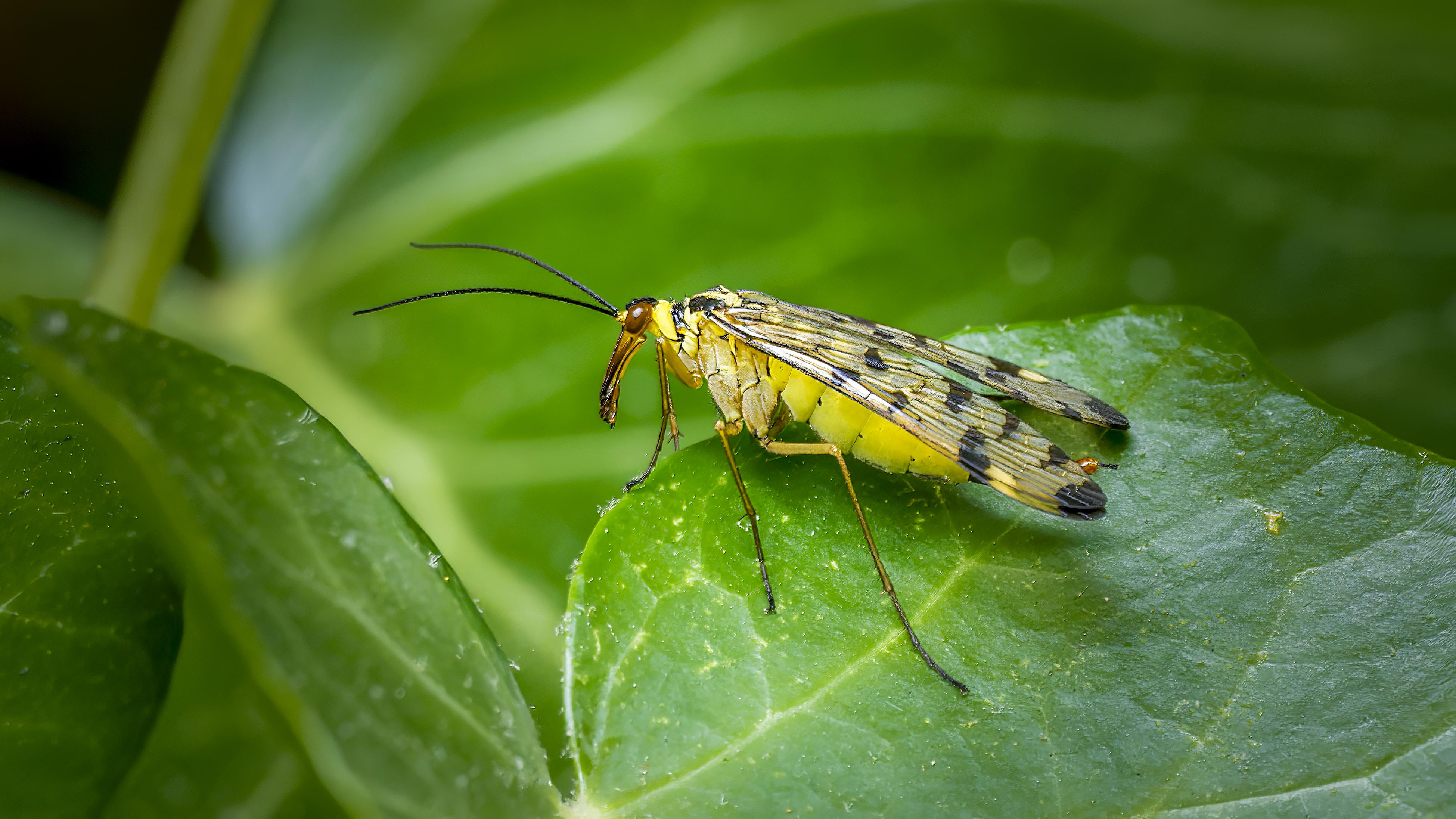
In the World of Romance, Nothing Is Free
In a quiet patch of forest, a drama unfolds that would make even the most seasoned dating coach smile.
A male scorpionfly approaches a female. He doesn’t bring poetry. He doesn’t bring promises. He brings a dead insect.
If the gift isn’t impressive enough, she refuses to mate.
If it is, she begins eating while he copulates.
And here’s the evolutionary twist: the male carefully holds onto the meal as she eats—just in case she tries to grab the prize and leave before he has finished transferring his sperm. The full process takes about twenty minutes. So males have evolved a remarkable strategy: they select a prey item that takes the female approximately twenty minutes to consume. Too small a gift, and she ends the encounter early. Too large, and he wastes valuable resources.
Welcome to the mating system of the scorpionfly.
The Scorpionfly’s Negotiated Romance
In species like the scorpionfly (genus Panorpa), mating is a transaction structured by evolutionary incentives:
- Female strategy: Extract maximum resources.
- Male strategy: Ensure complete sperm transfer.
- Conflict: Each wants optimal benefit at minimal cost.
The female refuses to copulate without a “nuptial gift,” usually a freshly caught insect. While she consumes the meal, the male mates with her. But the interaction is not one of pure cooperation—it’s one of strategic alignment and tension.
If the gift is consumed too quickly, she may terminate copulation early, reducing the amount of sperm he transfers. From her perspective, shorter mating means:
- Access to multiple mates
- Increased genetic diversity for offspring
- Greater control over reproductive choice
From his perspective, incomplete copulation means:
- Lower paternity certainty
- Wasted effort and risk
So evolution solves the problem with timing. Males select prey sized to match the twenty-minute window needed for full sperm transfer. Nature, it seems, has engineered a biological stopwatch.
This Isn’t Romance. It’s Evolutionary Economics.
The scorpionfly courtship system is a clear case of what evolutionary biologists call sexual selection and sexual conflict. Both sexes are cooperating, but under competing pressures.
The male invests energy hunting.
The female evaluates the investment.
Each attempts to maximize reproductive payoff.
This is not unlike market behavior.
And this is where humans enter the picture.
Humans and the Subtle Art of the “Nuptial Gift”
Humans don’t exchange dead insects (at least not usually). But we absolutely engage in costly signaling.
- Expensive dinners
- Jewelry
- Career success
- Social status
- Emotional investment
- Time and attention
In evolutionary psychology, these are known as costly signals—investments that are hard to fake and therefore credible indicators of value.
Just like the scorpionfly’s insect, a human “gift” serves two purposes:
- Signal commitment or resource capacity
- Secure continued engagement
When someone plans a thoughtful date, invests time in communication, or demonstrates financial stability, they are—at least partly—engaging in an evolved signaling system.
Sexual Conflict in Humans: More Subtle, Same Logic
Unlike scorpionflies, humans have complex social norms, moral systems, long-term pair bonding, and contraception. But beneath culture lies evolutionary architecture.
Male Perspective (evolutionarily speaking):
- Increase reproductive opportunities
- Ensure paternity certainty
- Signal capability
Female Perspective:
- Secure resources and protection
- Evaluate genetic quality
- Maintain autonomy in mate choice
This doesn’t mean modern relationships are crude transactions. It means our emotional and behavioral patterns evolved under reproductive pressures.
Even phenomena like:
- “Ghosting”
- Strategic dating
- Long courtships
- Engagement rings
- Prenuptial agreements
… can be viewed as evolved strategies to manage risk, commitment, and reproductive investment.
The Twenty-Minute Rule and Human Timing
The scorpionfly male chooses a gift that lasts exactly as long as he needs.
Humans do something similar with timing:
- Delayed intimacy
- Gradual emotional escalation
- Long-term investment before marriage
- Structured dating norms
We instinctively understand that timing matters.
Move too fast? Trust isn’t built.
Move too slow? Opportunity fades.
Evolution shapes pacing.
Female Agency: Then and Now
One striking aspect of the scorpionfly system is female control. The female decides:
- Whether the gift is sufficient
- Whether copulation continues
- When to end the interaction
Humans often debate agency in relationships, but biologically, female mate choice has always been powerful across species.
In many animals—including humans—female selectivity drives male competition. The “gift” evolves because the chooser demands it.
When Strategy Becomes Exploitation
Sometimes a female scorpionfly attempts to seize the gift and escape early—a strategy to gain resources without granting full reproductive benefit.
The male counters by holding onto the prey during mating.
This tug-of-war illustrates a deeper evolutionary principle:
Cooperation persists only when incentives align.
When incentives diverge, strategy emerges.
Humans experience similar dynamics:
- Emotional exploitation
- Financial exploitation
- Mismatched expectations
- Strategic commitment or withdrawal
We call it drama. Evolution calls it conflict resolution under reproductive constraints.
What Makes Humans Different?
Despite the parallels, humans differ profoundly:
- Long childhood dependency
- Pair bonding and social monogamy
- Cultural institutions (marriage, law, religion)
- Moral reasoning and empathy
Human relationships extend far beyond reproduction. Love, companionship, shared meaning, and personal growth transcend evolutionary utility.
But evolution still whispers beneath the surface.
The Bigger Lesson
The scorpionfly reminds us of something fundamental:
Romance is never purely romantic. It is strategic, negotiated, and shaped by invisible biological pressures.
Yet humans possess something the scorpionfly does not:
Conscious reflection.
We can recognize our instincts—and choose how to act.
We can transform evolutionary negotiation into genuine partnership.
We can turn transaction into trust.
Final Thought: From Dead Insects to Diamond Rings
A male scorpionfly times his gift to twenty minutes.
A human proposes with a ring.
Different forms. Same underlying signal:
“I am investing in you.”
The difference is that humans can choose whether that investment is merely strategic—or deeply meaningful.
And that choice makes all the difference.