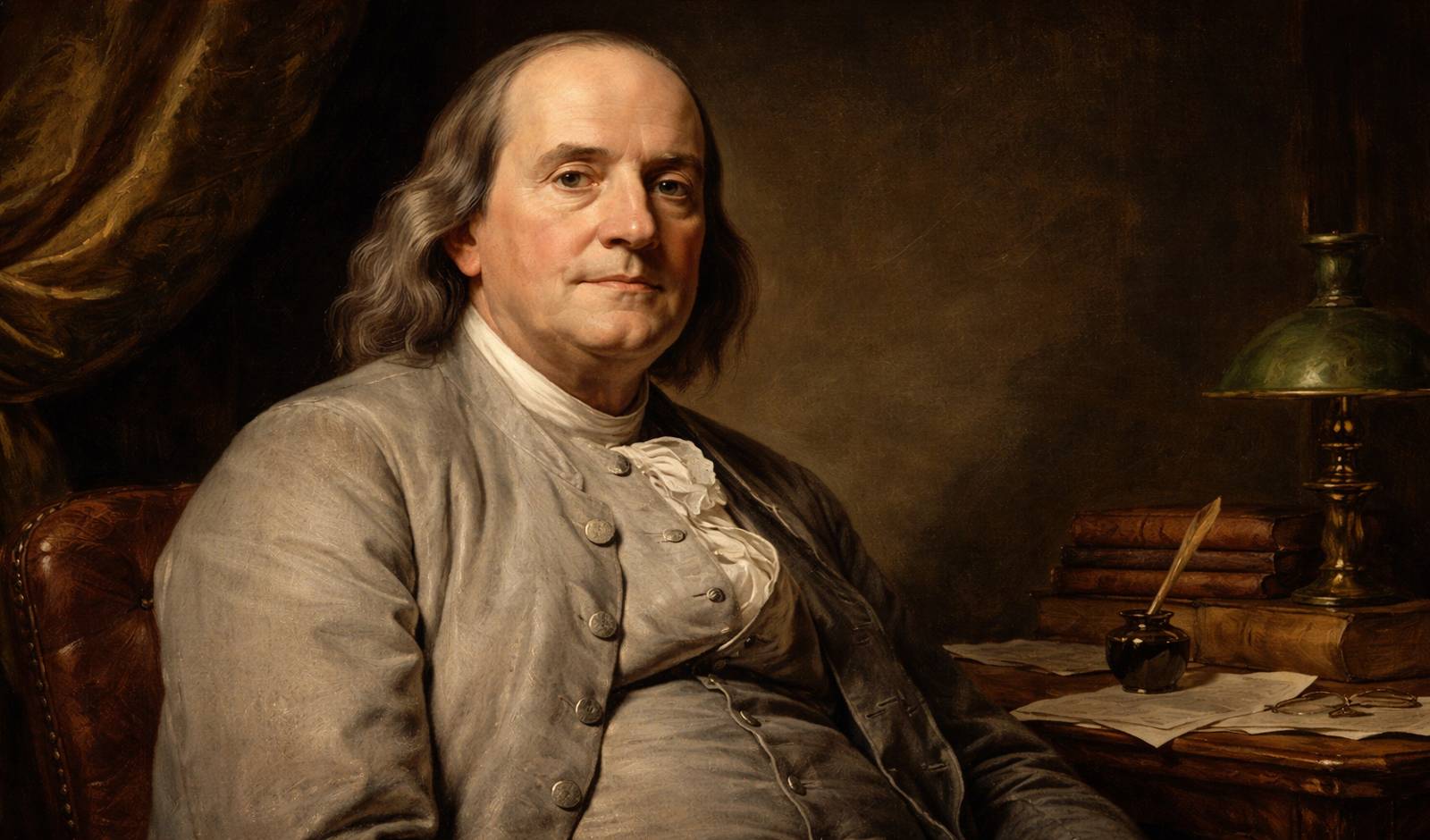
Franklin’s 13 Virtues — Explained with Real-Life Examples
1. Temperance — Control your consumption
**Meaning:** Don’t overindulge in food, drink, anger, or stimulation.
**Example:**
You stop scrolling your phone at 10:30 PM even though you want “just one more video.”
2. Silence — Speak only when useful
**Meaning:** Avoid gossip, pointless talk, or interrupting others.
**Example:**
In a meeting, you resist correcting someone just to show you know more.
3. Order — Structure your life
**Meaning:** Organize time, tasks, and environment.
**Example:**
Instead of reacting to emails all day, you schedule focused work blocks.
4. Resolution — Do what you decide
**Meaning:** Once you commit, follow through.
**Example:**
You said you’d exercise at 6 AM. Alarm rings. You get up.
5. Frugality — Spend with purpose
**Meaning:** Spend only on what creates value.
**Example:**
You buy a book that improves your skills instead of a gadget you’ll forget in a week.
6. Industry — Avoid wasting time
**Meaning:** Be productive and intentional with effort.
**Example:**
You start your hardest task first instead of cleaning your inbox for two hours.
7. Sincerity — Be honest and fair
**Meaning:** No manipulation, no hidden agendas.
**Example:**
You give direct but respectful feedback instead of flattering someone you disagree with.
8. Justice — Do no harm
**Meaning:** Don’t harm others through action or neglect.
**Example:**
You correct an error that benefits you financially but harms your company.
9. Moderation — Avoid extremes
**Meaning:** Don’t overreact emotionally.
**Example:**
Someone criticizes your work. You pause instead of replying defensively.
10. Cleanliness — Maintain order in body and space
**Meaning:** Physical and mental hygiene.
**Example:**
You clean your desk before starting work so your mind isn’t cluttered.
11. Tranquility — Don’t be disturbed by trivialities
**Meaning:** Stay calm about small annoyances.
**Example:**
Traffic is bad. Instead of complaining, you listen to an audiobook.
12. Chastity — Self-control in impulses
**Meaning:** Control desires rather than being controlled by them.
**Example:**
You don’t send an angry text when upset. You wait.
*(Franklin meant this broadly — impulse control, not just sexuality.)*
13. Humility — Don’t let ego run your life
**Meaning:** Stay grounded even when successful.
**Example:**
You let someone else take credit for a project because the outcome matters more than recognition.
The Hidden Insight Most People Miss
Franklin didn’t expect perfection.
He expected:
* Slips
* Weakness
* Human error
His innovation wasn’t the virtues.
**It was the tracking system.**
He believed:
> What gets measured improves.
Two centuries before productivity science.
The Real Philosophy Behind the List
Franklin’s virtues aren’t moral rules.
They’re **performance principles.**
They optimize:
* Decision making
* Reputation
* Emotional control
* Productivity
* Influence
* Long-term success
In modern language:
**They’re a personal operating system.**