A “Daisy” Is the Day Opening Its Eye
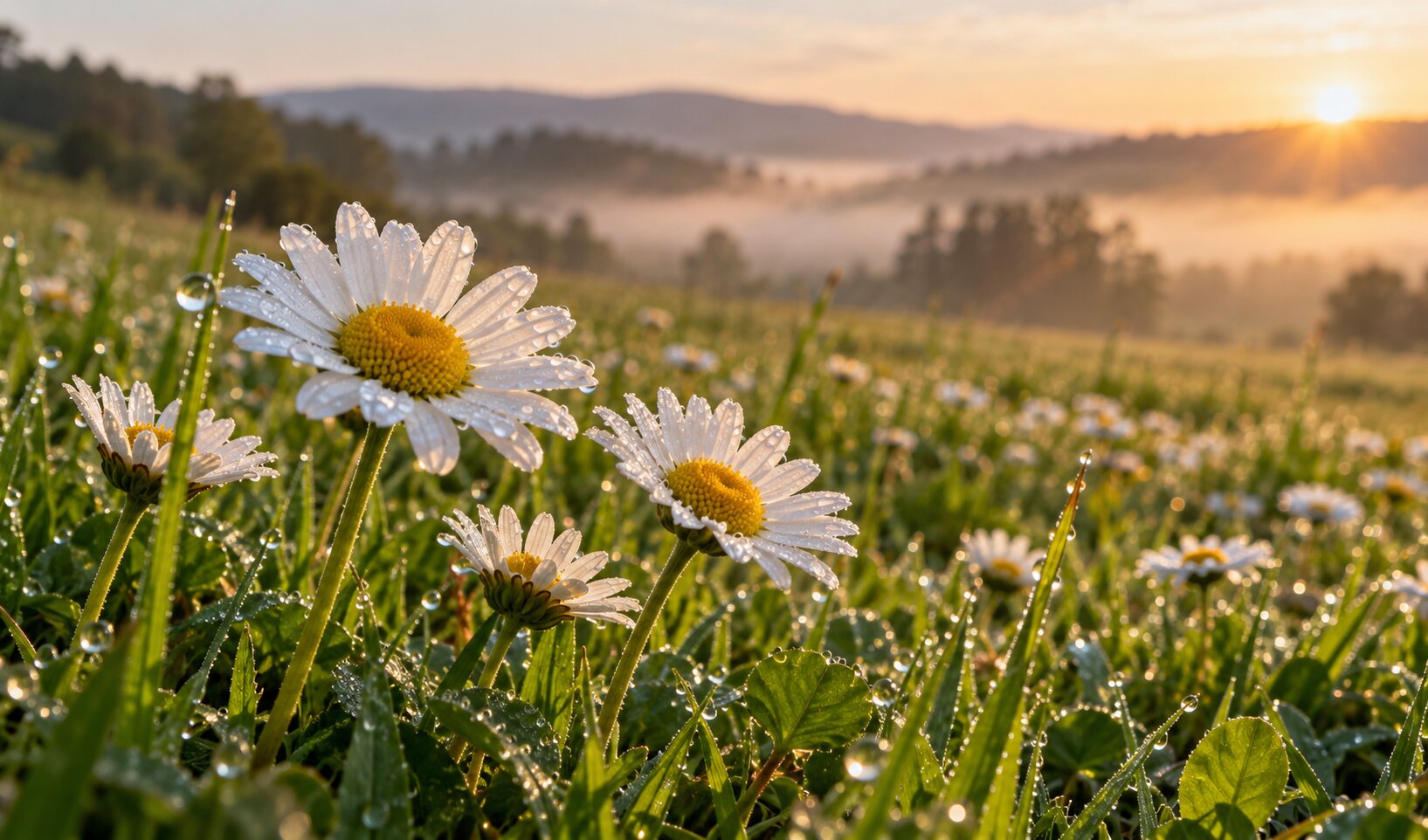
A daisy looks like a tiny sun on a stalk. But its name imagines something even lovelier: an eye waking up with the daylight.
The word comes from Old English dæges ēage, meaning “day’s eye.” Dæges meant “of the day,” while ēage meant “eye.” The common daisy opens its flower head in daylight and closes it at night—almost as though a lawn were waking up and going to sleep. oxfordlearnersdictionaries.com
Over centuries, everyday pronunciation squeezed those two words together. Middle English forms such as daiseie eventually became our compact daisy. The original picture grew harder to hear, while the name spread to other flowers with a similar appearance. By the eighteenth century, people also used daisy for something exceptionally charming or excellent. A flower had become a compliment. Etymology, Origin & Meaning
Here is a modern surprise: flowers helped name a way of connecting computers. A daisy chain begins as flowers linked stem to stem; in technology, the same image describes devices connected one after another. A childhood pastime became an engineering metaphor. herbaria.plants.ox.ac.uk
So the next time you notice daisies scattered across the grass, imagine the ground looking back: a whole meadow of little eyes, opening to greet the day.


