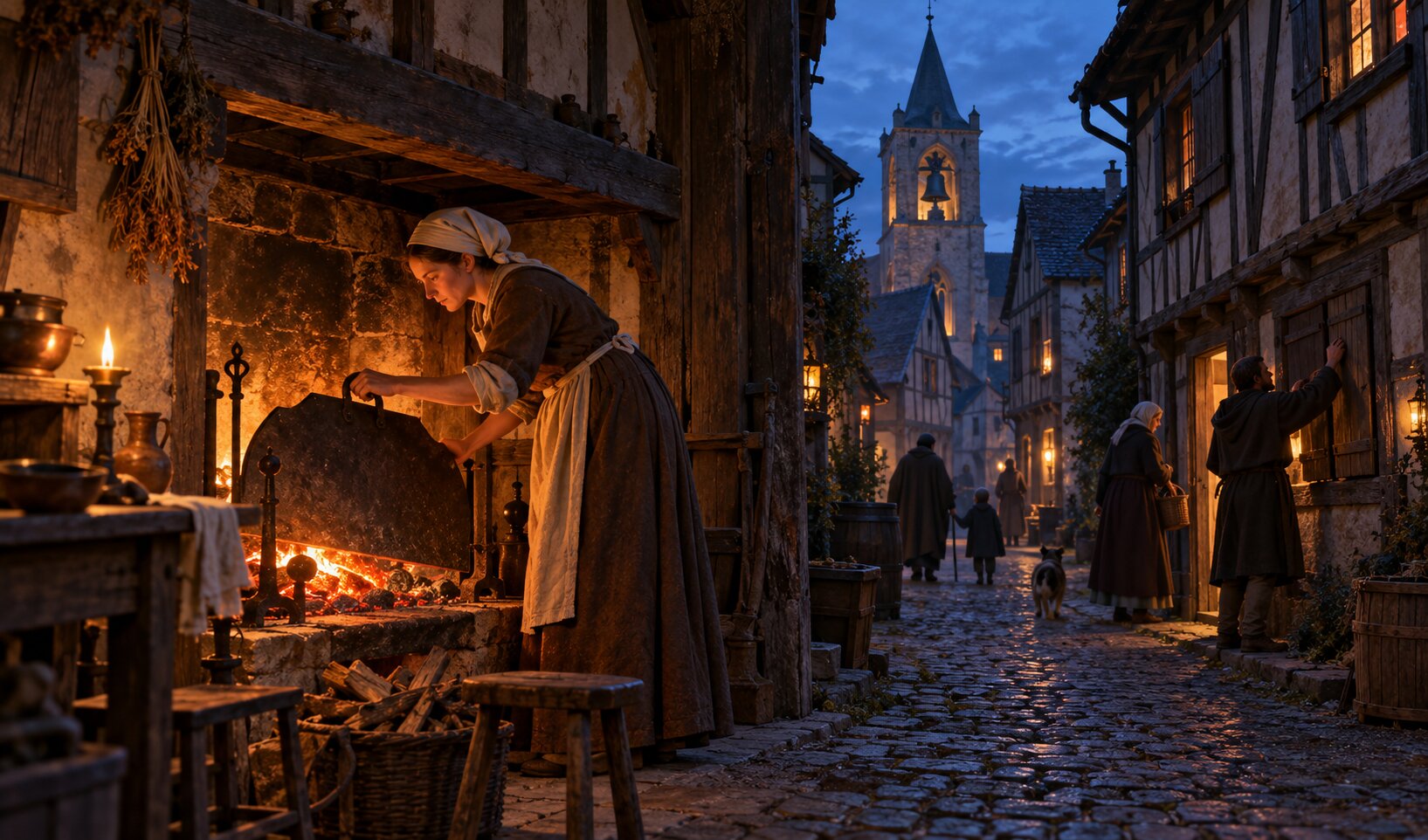
“Curfew” Originally Meant “Cover the Fire”
Today, a curfew tells people when they must return home or stay off the streets. But the word originally gave a very different instruction: cover your fire.
It comes from the Anglo-French coverfeu, related to the French couvre-feu. The expression combines covrir—“to cover”—with feu—“fire.”
In medieval towns, homes were built largely from wood and stood close together. Families cooked and heated their houses with open hearths. A single unattended ember could start a fire that swept through an entire neighborhood.
To reduce that danger, an evening bell was rung, warning residents to cover or extinguish their fires before sleeping. The bell—and eventually the time at which it sounded—became known as the curfew.
The meaning then shifted from fire prevention to public control. Town authorities used the evening bell to signal that gates were closing, businesses should stop operating, or certain people must leave the streets. Over time, curfew came to mean any rule requiring people to be indoors after a specified hour.
Here is the memorable connection: the French word feu, hidden inside curfew, comes from the same Latin family as focus. Latin focus originally meant a household hearth before it developed the modern sense of a central point of attention.
So a teenager’s midnight curfew carries the echo of a medieval bell saying: “Cover the fire before it burns down the town.” Merriam-Webster


