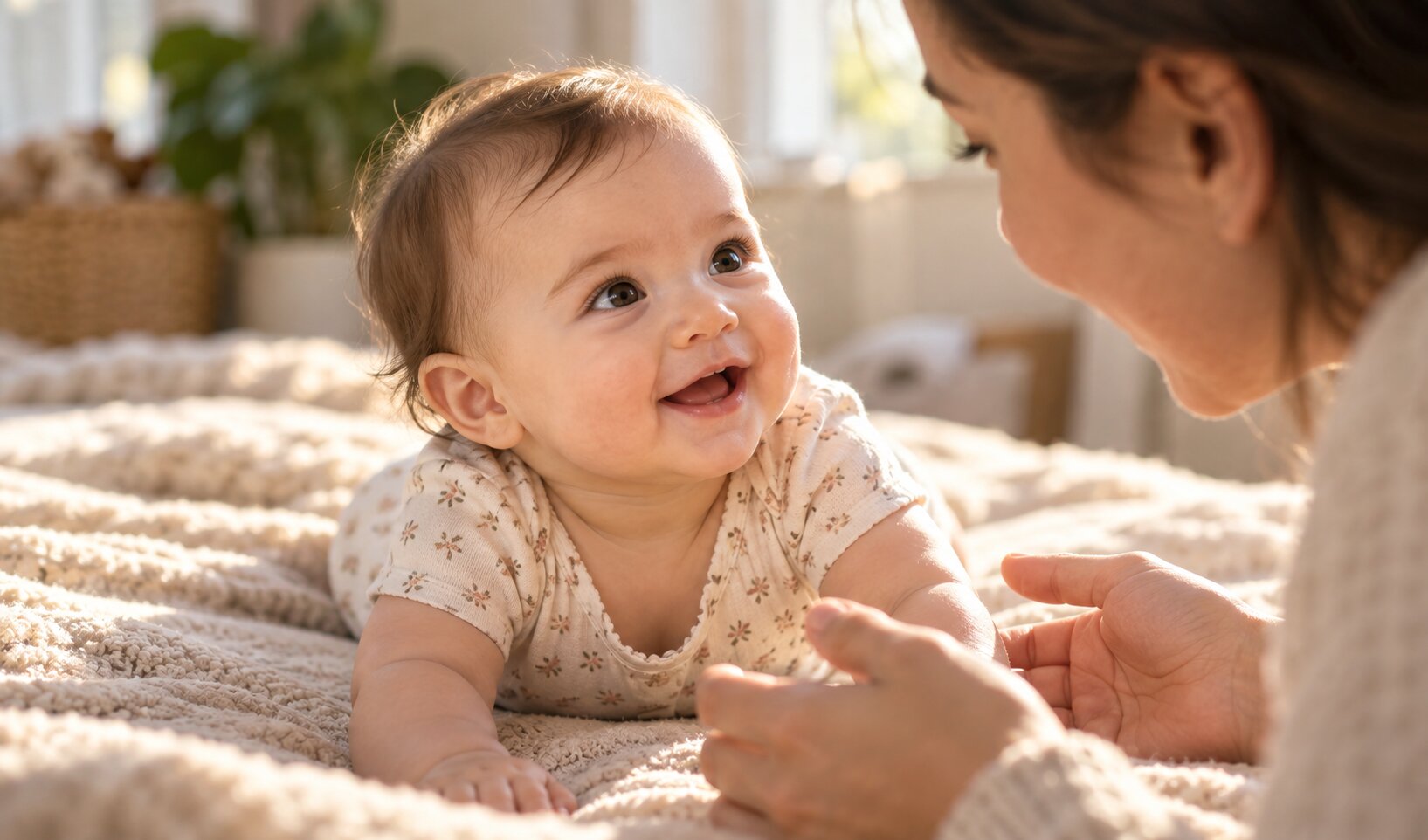
A baby’s oversized eyes, round cheeks, small nose and high forehead form what scientists call the baby schema. These features do more than make infants look cute—they appear to capture attention and awaken the desire to protect.
That response could solve a major evolutionary problem. Human babies are unusually helpless and require years of costly care. Infants who effectively attracted caregivers may have been more likely to survive, while adults responsive to infant cues may have raised more surviving descendants.
In a controlled experiment, researchers digitally altered photographs of 17 babies to strengthen or weaken baby-schema features. Among 122 adults, the more baby-like faces were rated cuter and inspired greater motivation to provide care. A follow-up brain-imaging experiment found that these enhanced faces produced stronger activity in the nucleus accumbens, a region involved in reward and motivation—even though the participants were women who had never given birth. Behavioral and brain study
Well supported: rounder infant faces, larger eyes and smaller noses reliably influence cuteness judgments, attention and self-reported caregiving motivation.
Plausible but debated: natural selection specifically shaped babies’ appearance as a signal that manipulates adults into caring for them. Laboratory ratings and brain activity do not prove that cuter infants receive better care or survive more often.
A 2024 review also cautioned that researchers define “baby schema” inconsistently and that the evolutionary claim lacks sufficient comparisons showing how other species respond to their own young. Critical review
Cuteness may be more than decoration—but whether it evolved as an infant’s survival strategy remains an appealing, unfinished story.


