The “Mare” in “Nightmare” Was a Demon
Despite the name, a nightmare originally had nothing to do with horses.
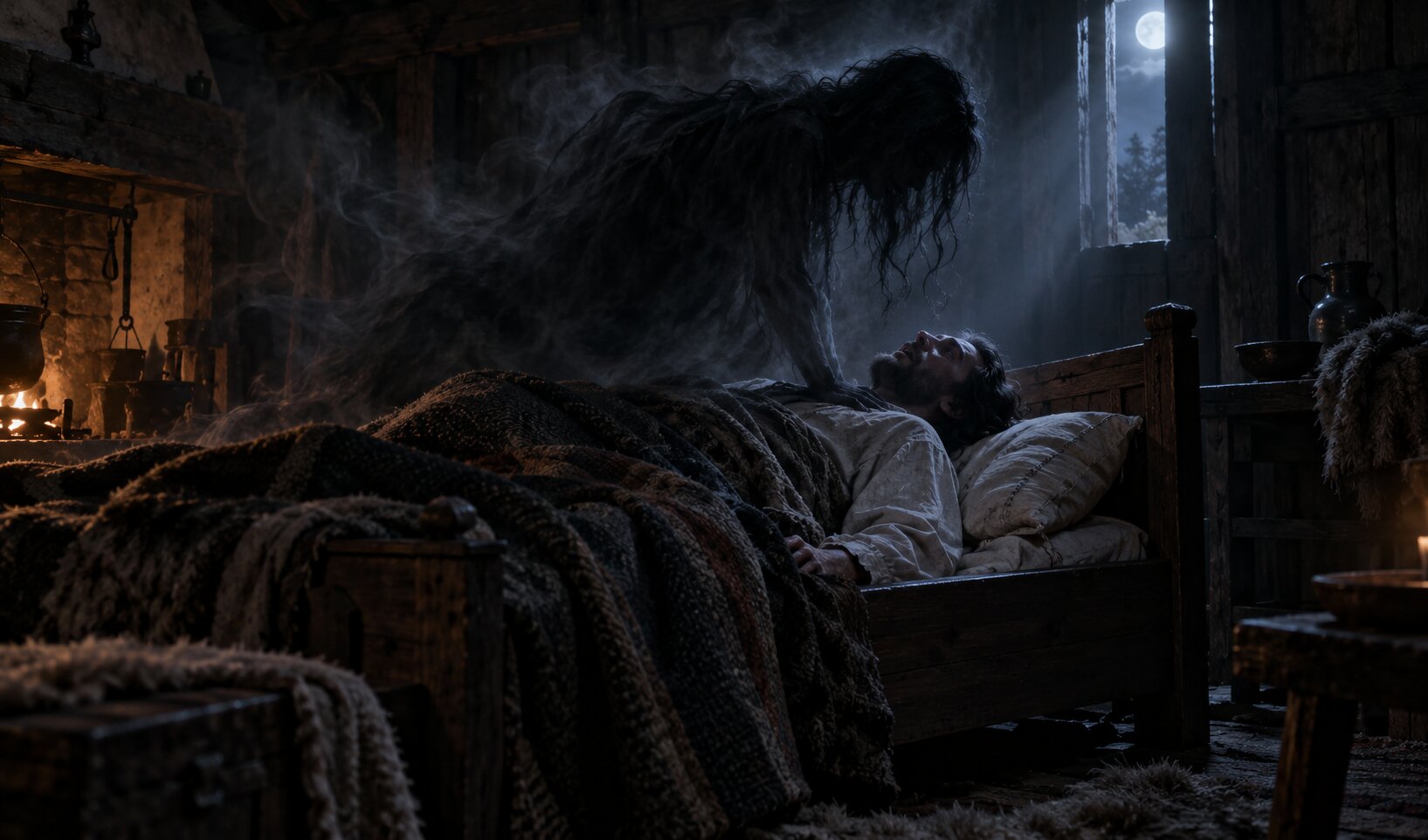
The word combines night with the Old English mære: an evil spirit believed to torment people as they slept. According to folklore, this creature perched on a sleeper’s chest, producing terrifying dreams, pressure, and breathlessness.
What people described sounds remarkably like sleep paralysis—a state in which the mind awakens while the body remains temporarily unable to move. The sensation can include chest pressure and vivid hallucinations, making a supernatural visitor seem frighteningly real.
In Middle English, nightmare referred primarily to the spirit itself or the suffocating nighttime attack. By the sixteenth century, its meaning shifted from the supposed attacker to the frightening dream it caused. Later, the word escaped the bedroom entirely: a disastrous journey, impossible project, or bureaucratic ordeal could all become a nightmare.
Here is the memorable surprise: the mare meaning “demon” is unrelated to the word for a female horse. They merely developed into identical spellings. The supernatural relative survives elsewhere, including French cauchemar, meaning “nightmare.”
So a nightmare was once not something happening inside your mind, but something believed to be sitting on top of your body—an invisible midnight visitor pressing the breath from your chest. Merriam-Webster, Oxford English Dictionary


