“Avocado” Had a Cheeky Original Meaning
The word avocado traveled across languages—and changed shape several times—before reaching the modern kitchen.
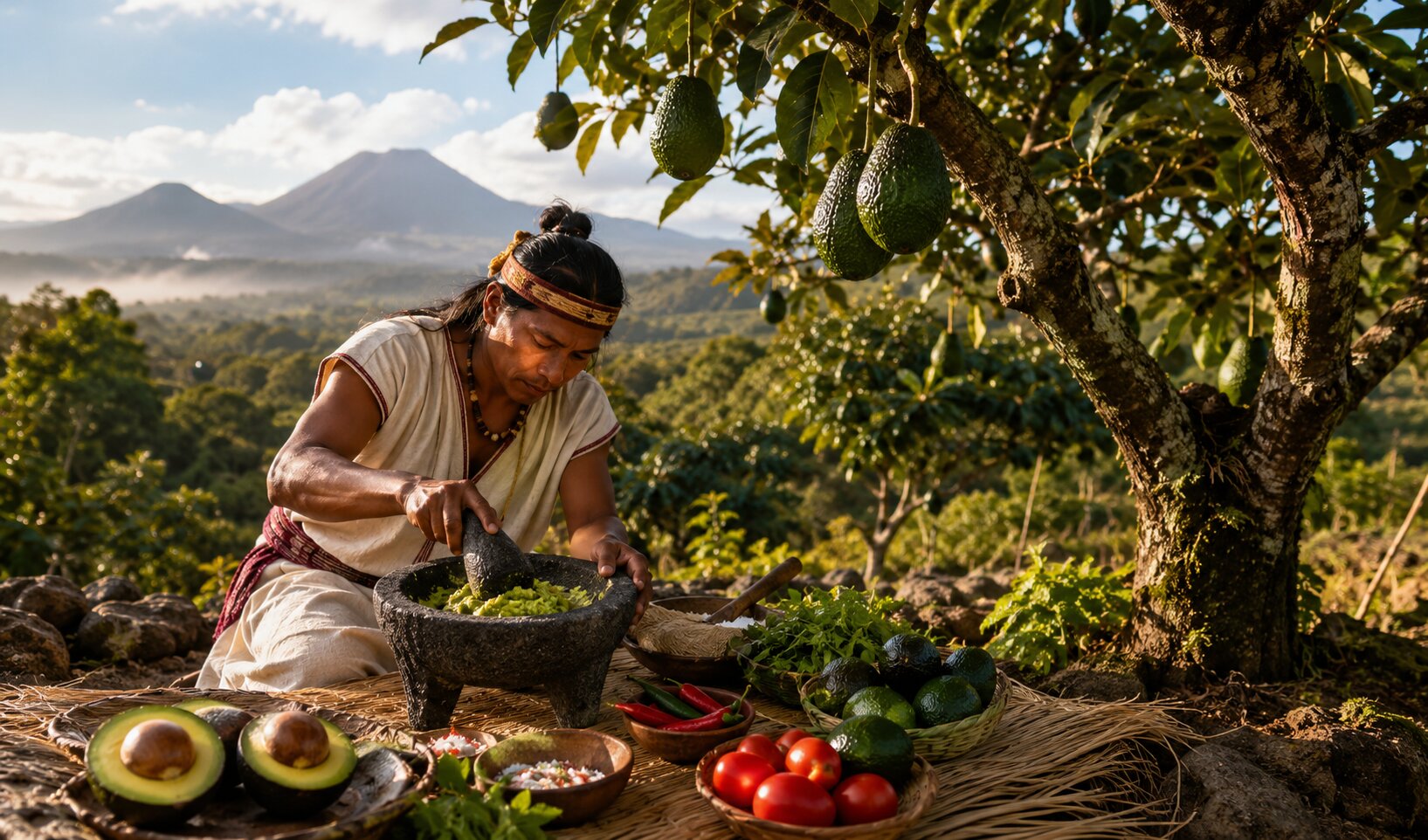
It began with the Nahuatl word āhuacatl, used by the Aztecs for the avocado fruit. But āhuacatl could also mean “testicle,” probably because of the fruit’s shape and the way avocados hang in pairs from trees.
Spanish colonists adapted the unfamiliar word as aguacate. When English speakers borrowed it, they reshaped it into avocado, possibly influenced by the older Spanish word avocado, meaning “lawyer” or “advocate.” For a time, English speakers even called the fruit an “alligator pear” because of its rough green skin and pear-like shape.
The original Nahuatl root survives in another familiar food: guacamole. It comes from āhuacamōlli, combining āhuacatl—“avocado”—with mōlli—“sauce.” Guacamole therefore means, quite simply, “avocado sauce.”
That same mōlli also survives in the Mexican dish mole.
So an avocado’s name carries an unexpectedly colorful journey: from an Aztec anatomical comparison, through Spanish pronunciation, to toast, salads, and one of the world’s most popular dips.


