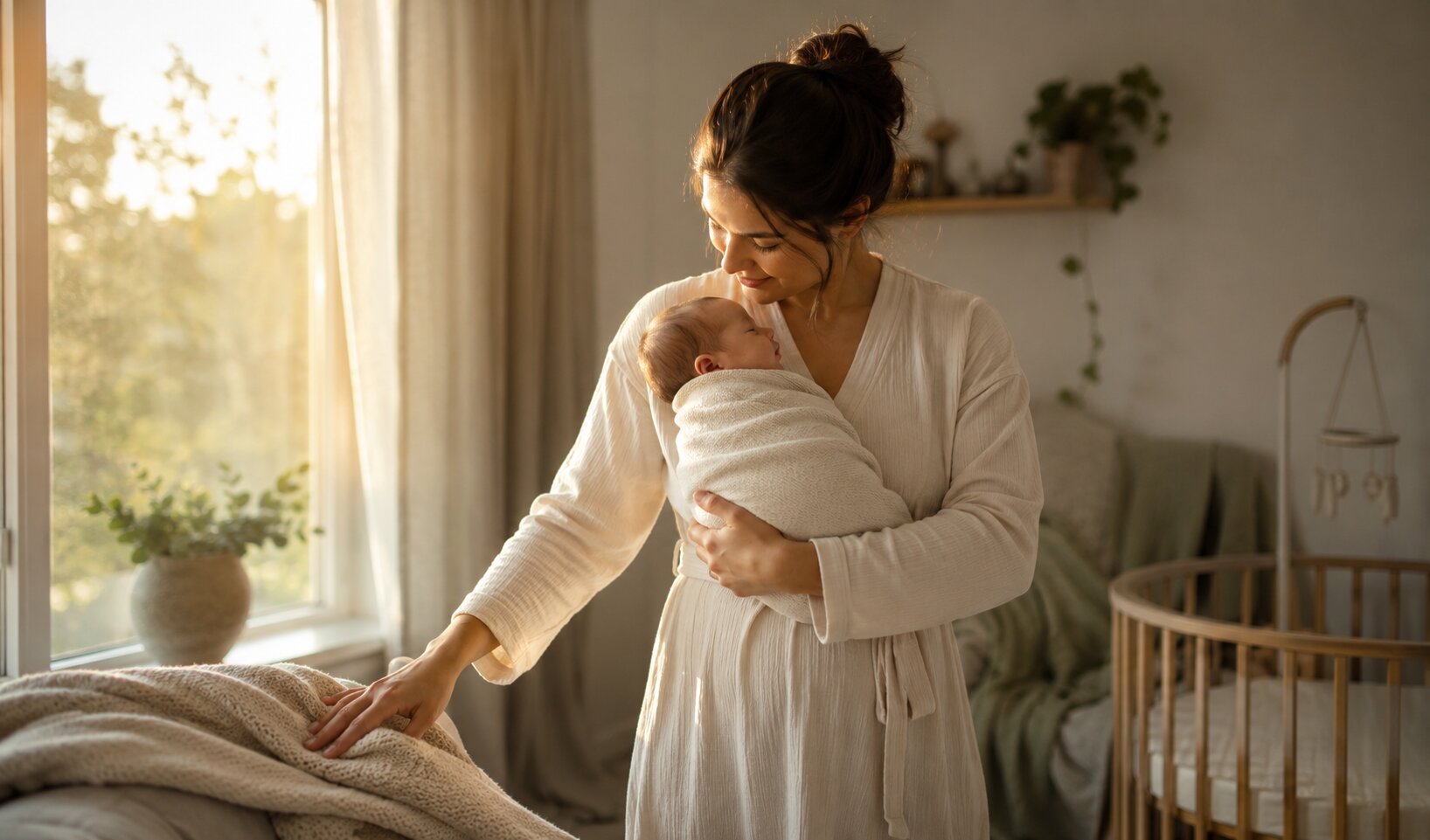
Watch parents carrying infants and you may notice a quiet human pattern: roughly two-thirds prefer the left side, regardless of whether they are right- or left-handed.
The obvious explanation is convenience—holding a baby with the left arm leaves the dominant right hand free. But left-handed people also commonly cradle leftward, suggesting something more than handedness.
Holding a baby on the left places the infant’s face mainly within the caregiver’s left visual field. Visual information from that side is processed primarily by the brain’s right hemisphere, which plays an important role in recognizing faces and emotional expressions. Left cradling might therefore help a caregiver detect subtle signs of hunger, fear, discomfort or contentment.
The strongest comparative evidence comes from 44 olive-baboon mothers. They displayed a left-cradling preference in approximately the same proportion as human mothers. Intriguingly, the bias shifted rightward among baboons living under greater social pressure, suggesting a connection between cradling position, stress and emotional processing.
Well supported: a population-level left-cradling bias exists in humans and at least some other primates, and it cannot be explained entirely by handedness.
Plausible but debated: natural selection favored left cradling because it improves emotional monitoring and bonding. Direct evidence that it increases infant survival remains limited.
The popular claim that babies are held leftward to hear the mother’s heartbeat is poorly supported. The deeper explanation may lie not in the chest—but in how ancient primate brains process emotion.