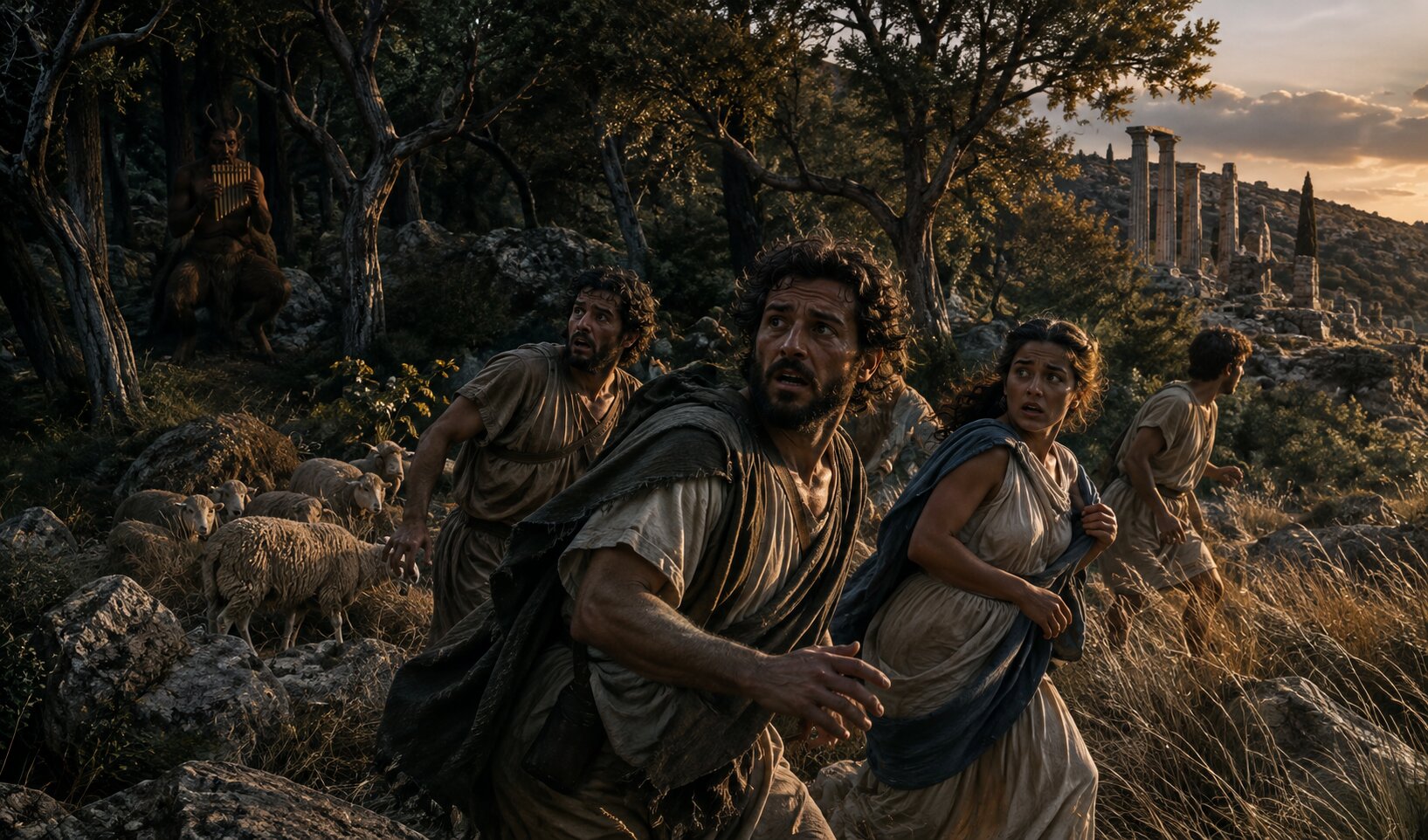
“Panic” Was the Work of a God
When panic strikes, your heart races and reason seems to disappear. Ancient Greeks believed this sudden, irrational terror might be caused by Pan, the wild god of shepherds, forests, and lonely mountain places.
The word comes from the Greek panikon, meaning “pertaining to Pan.” According to legend, Pan could frighten travelers or armies with an unexpected shout, producing such overwhelming fear that people fled without understanding why.
The Romans adopted this idea, and it eventually passed through French into English. At first, panic referred mainly to a sudden, contagious terror affecting many people—especially soldiers in battle. Over time, its meaning expanded to include any uncontrollable fear, from a financial panic sweeping through markets to an individual panic attack.
Here is the memorable surprise: although panic begins with pan-, it is not related to pandemic. Panic comes from the god Pan, while pandemic uses the Greek pan, meaning “all,” combined with demos, meaning “people.”
So a pandemic affects all the people, but panic belongs to an ancient woodland god who could supposedly terrify them with a single unseen cry.
Every time someone says, “Don’t panic,” they are unknowingly telling Pan to leave them alone.