Human babies are unusually costly. They grow large brains, remain dependent for years, and often have younger siblings who also require care. A mother raising several dependent children entirely alone would face an enormous burden.
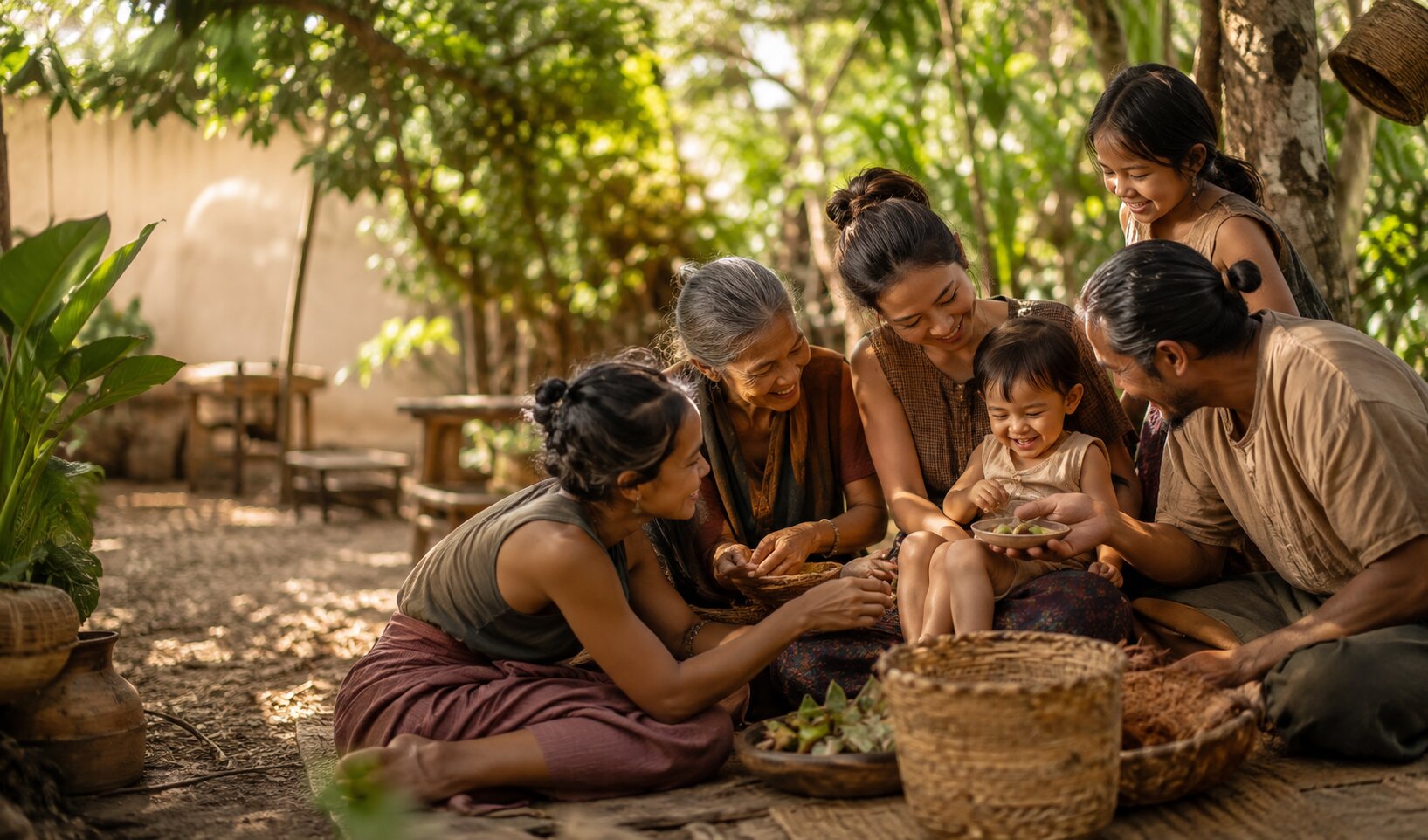
Humans solved this problem through alloparenting—care provided by fathers, grandparents, siblings and other community members. This shared investment allowed mothers to reproduce at shorter intervals while children enjoyed a long developmental period in which to learn language, social rules and complex survival skills.
The strongest evidence comes from cross-cultural research. A study of 141 non-industrial societies found that alloparental care was more common in cold, dry and unpredictable environments, where cooperation offered protection against ecological risk. Research among Agta hunter-gatherers also found that relatives provided more childcare than non-relatives, supporting the role of kin selection.
What is well established is that shared childcare is widespread and materially supports human reproduction. More debated is the fascinating proposal that dependence on multiple caregivers helped natural selection shape our exceptional empathy, social intelligence and ability to understand other minds. Shared parenting may not merely raise human children—it may have helped make us human.