If you or a loved one has recently been told that you have elevated cholesterol or a buildup of arterial plaque, the word statin has almost certainly entered the conversation. Statins are among the most heavily researched and widely prescribed medications on the planet, yet they remain shrouded in a mix of medical awe and internet misinformation.
To take complete control of your cardiovascular health, you don’t just need a prescription slip—you need a blueprint. Let’s pull back the curtain on exactly how these tiny pills transform your internal biology, how they manipulate your liver to clear out arterial traffic jams, and what you actually need to know about the side effects.

Part 1: The Biology of the Statin — How It Crushes LDL
A common misconception is that statins float around in your bloodstream, acting like miniature chemical scrub brushes that physically dissolve cholesterol particles. In reality, statins do their heavy lifting entirely inside your body’s primary chemical factory: your liver.
1. Flipping the HMG-CoA Reductase Switch
Your liver manufactures about 75% of the cholesterol circulating in your body. To do this, it relies on a vital internal worker enzyme called HMG-CoA reductase.
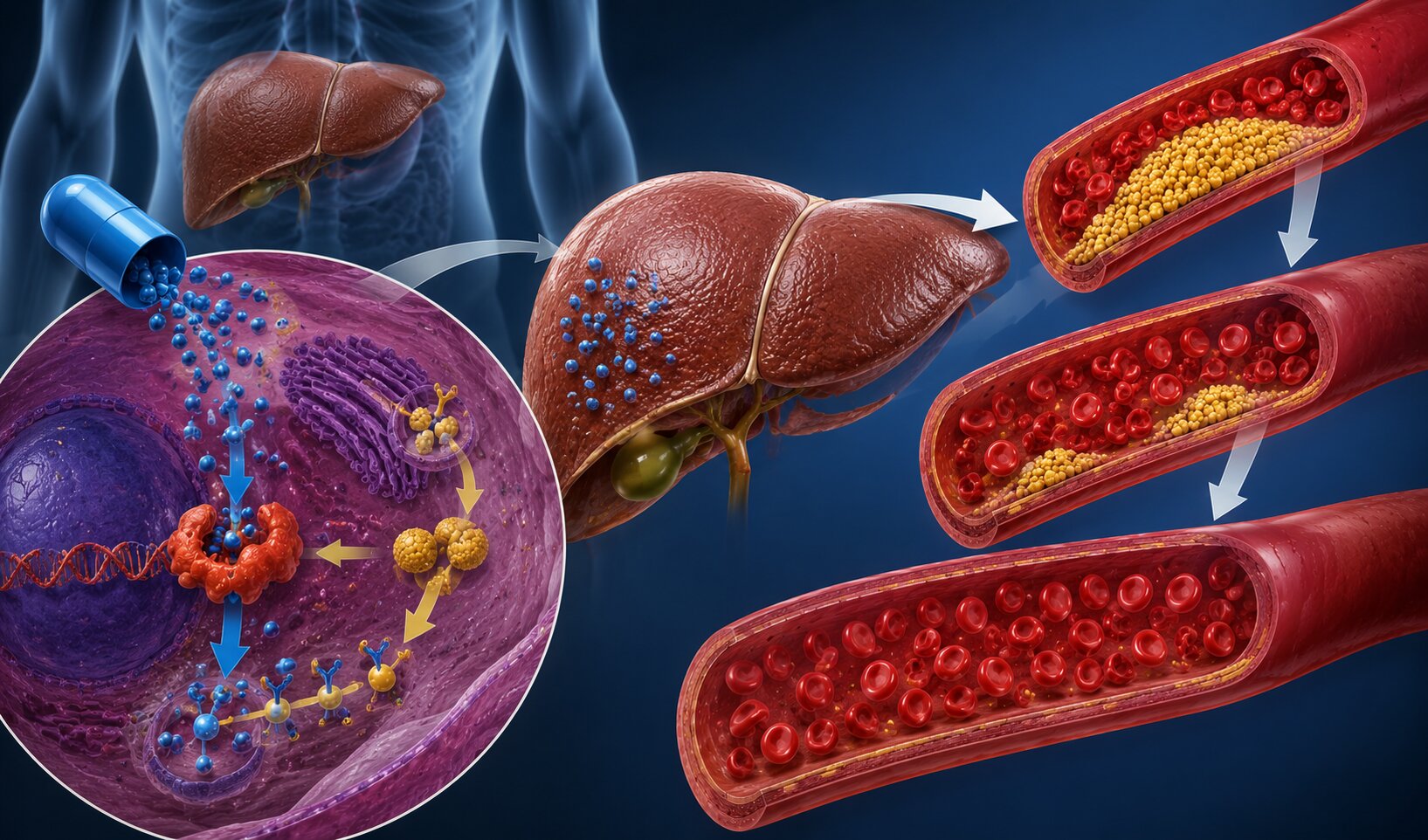
When you swallow a statin (such as Rosuvastatin or Atorvastatin), the medication travels straight to the liver and physically blocks this enzyme. By turning down the activity of HMG-CoA reductase, the statin effectively throttles the liver’s internal cholesterol production line.
2. Sprouting Millions of “Cellular Vacuums”
When the liver realizes its internal cholesterol supply is running low, it doesn’t panic—it adapts. To gather the cholesterol it needs for daily cellular chores, the liver looks outward to your bloodstream.
It begins sprouting millions of new, specialized docking ports on its surface called LDL receptors. Think of these as microscopic cellular vacuums. These receptors reach into the passing blood supply, grab hold of circulating Low-Density Lipoprotein (LDL) particles, and pull them out of traffic.
3. Stabilizing Existing Plaque
By pulling those LDL “delivery trucks” out of circulation, a statin can aggressively slash your blood LDL levels by 30% to over 60%, depending on the intensity of the dose.
More importantly, driving your LDL down to optimal double-digits (like sub-70 mg/dL) shifts your body’s strategy from preventing plaque to stabilizing it. When blood cholesterol drops dramatically, the liver begins pulling the volatile, liquid fat right out of the soft core of any existing arterial plaques. The plaque deflates, inflammation stops, and the body builds a hard, unbreakable calcified cap over the area—turning a dangerous vascular roadblock into a completely flat, harmless scar.
Part 2: Demystifying the Side Effects
Because statins are taken long-term as a protective shield for your blood vessels, understanding their potential side effects is crucial. While the internet is full of scary anecdotes, large-scale clinical data paints a much more manageable picture.
| Potential Side Effect | Frequency | What Is Actually Happening? | Management Strategy |
| Muscle Aches (Myalgia) | ~5% to 10% | Mild, symmetrical stiffness or weakness in large muscle groups (like thighs or shoulders). Truly severe muscle damage is vanishingly rare (<0.1%). | Often resolved by adjusting the dose, switching to a different statin type, or adding a CoQ10 supplement. |
| Elevated Liver Enzymes | ~1% to 2% | A temporary, mild increase in the liver’s ALT/AST enzymes as the tissue adjusts to the medication. | Doctors routinely check a baseline liver panel before you start, monitoring it to ensure your liver remains healthy and strong. |
| Blood Sugar Changes | Very Low | In individuals already close to insulin resistance, a high-dose statin can slightly raise HbA1c or fasting blood sugar. | Easily managed by doubling down on a clean, high-fiber diet and regular aerobic exercise. |
The “Statin Paradox” (A Fake Side Effect)
Many patients get worried when they take a follow-up scan a year after starting a statin and find their “Calcium Score” has gone up. This is actually a sign the medication is working perfectly.
As a statin sucks the dangerous, unstable liquid fat out of an arterial plaque, your body replaces that fat with hard, protective calcium armor. The rising calcium score doesn’t mean you are growing new blockages; it means your old, dangerous blockages are successfully turning into inert, rock-solid scars that can no longer rupture.
The Takeaway: A Lifelong Insurance Policy
Statins are not a temporary cure; they function exactly like a daily safety feature—much like wearing a seatbelt every time you drive. If you stop taking the pill, your liver’s internal thermostat simply resets, and your cholesterol will glide right back to its native baseline within a few weeks.
By combining a low-to-moderate dose statin with an aggressive, liver-clearing lifestyle (think daily cardio, weight management, and fiber-rich dinners), you gain complete control over your vascular health. You move away from medical guesswork and give your body the exact tools it needs to protect your heart, clear your micro-circulation, and keep your blood moving beautifully for decades to come.