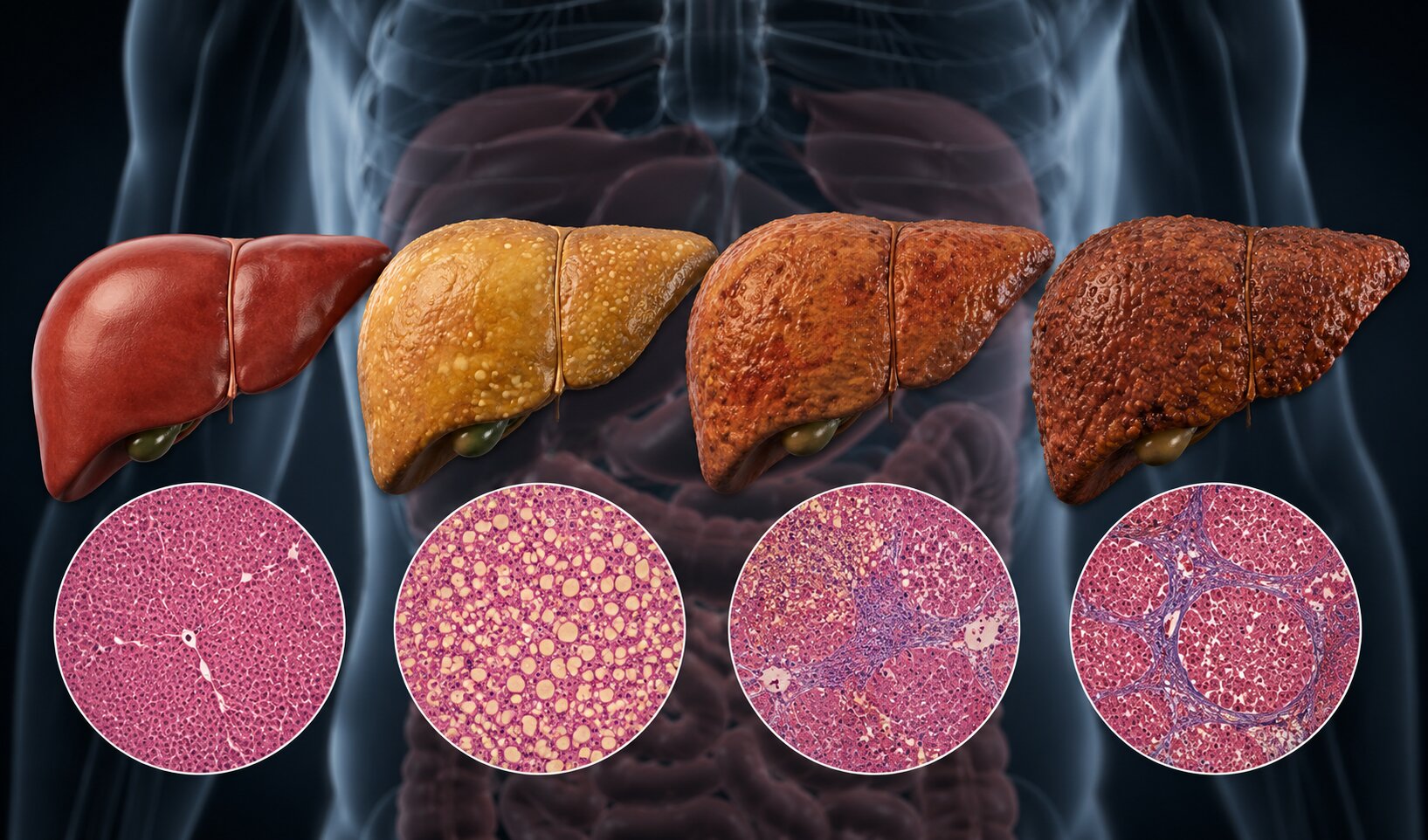
Fatty liver disease progresses through four distinct stages. It starts as a simple, silent accumulation of fat, but if left unmanaged over many years, the chronic irritation can slowly alter the physical structure of the liver tissue.
Here is exactly how a liver moves through these stages, and what it looks like from the inside out:

The 4 Stages of Fatty Liver Progress
Stage 1: Simple Fatty Liver (Steatosis)
This is the earliest stage, where extra fat droplets begin to park inside your liver cells.
-
What is happening: The liver is perfectly healthy, but fat accounts for more than 5% to 10% of its overall weight.
-
How it feels: There are absolutely no physical symptoms, and liver enzymes (ALT/AST) are usually completely normal because the cells aren’t damaged yet.
-
The Verdict: This stage is 100% reversible. By dropping weight toward your 140-pound goal, eating high-fiber foods, and doing daily cardio, you melt these fat droplets away, returning the liver to pristine condition.
Stage 2: Metabolic Dysfunction-Associated Steatohepatitis (MASH)
Previously known as NASH, this stage occurs when the sheer volume of trapped fat begins to irritate the surrounding liver cells.
-
What is happening: The fat turns toxic to the liver tissue, triggering chronic inflammation and mild swelling.
-
How it feels: The liver cells begin to crack under the pressure, leaking ALT and AST enzymes into your bloodstream. This is exactly what your doctor is checking for on your upcoming liver panel. You still won’t feel any physical symptoms.
-
The Verdict: This stage is also fully reversible. Even if inflammation is present, removing the underlying fat completely halts the irritation, allowing the liver cells to regenerate and heal perfectly.
Stage 3: Fibrosis (Scar Tissue Build-up)
If the chronic inflammation from Stage 2 goes on entirely untreated for many years, the liver tries to heal itself by laying down structural patches.
-
What is happening: The persistent inflammation forces the liver to generate stiff, fibrous scar tissue around the blood vessels and liver cells.
-
How it feels: The liver still functions relatively well because there is plenty of healthy tissue left, but the scarred areas become stiff and lose their natural flexibility.
-
The Verdict: This stage can be halted and partially reversed. If you remove the fat burden, the liver stops creating new scars, and over a long period of clean living, it can slowly dissolve and break down some of the existing fibrosis.
Stage 4: Cirrhosis (Severe, Permanent Damage)
This is the final, advanced stage that takes decades of continuous, unmanaged inflammation to reach.
-
What is happening: The smooth, soft liver tissue is heavily replaced by hard, structural nodules of dense scar tissue. The liver shrinks, hardens, and struggles to filter toxins or manufacture vital proteins like Albumin.
-
How it feels: This is the stage where physical symptoms finally appear—such as severe fatigue, easy bruising, fluid retention, or yellowing of the eyes (jaundice).
-
The Verdict: This stage is generally permanent. Treatment shifts from reversing the disease to managing symptoms, protecting the remaining healthy tissue, and preventing liver failure.