What No One Tells You About Life After Work
Retirement is often described as a beautiful sunset.
No alarm clock.
No traffic.
No boss.
No deadlines.
No Monday morning pressure.
For many people, retirement sounds like freedom.
But when the first few weeks of freedom pass, something unexpected can happen.
The silence becomes louder.
The calendar becomes emptier.
The phone rings less often.
The person who was once needed, respected, and busy may suddenly wonder, “Who am I now?”
Retirement is not just the end of a job.
It is the end of a structure, a role, a rhythm, and sometimes even a version of yourself.
That is why retirement can bring five quiet losses:
- Loss of Routine
- Loss of Identity
- Loss of Relationship
- Loss of Purpose
- Loss of Power
These losses do not always arrive dramatically.
They come softly.
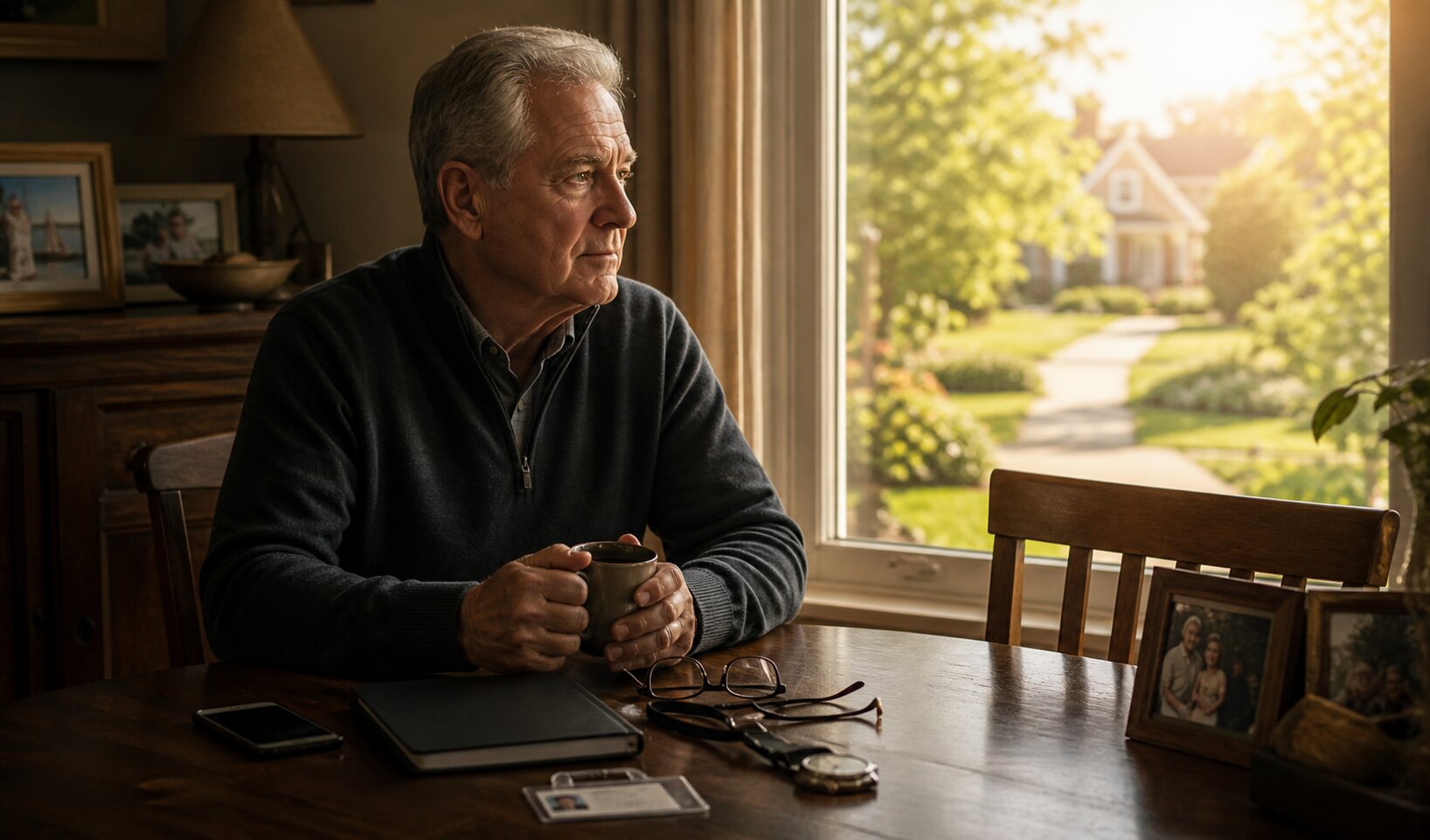
They sit beside you during morning coffee.
They appear when you realize no one is expecting you anywhere.
They whisper when you look at your phone and there are no urgent messages.
And if they are not understood, they can lead to fear, anxiety, loneliness, and even depression.
But the good news is this: these losses can be rebuilt.
Retirement does not have to be an ending.
It can become a second life, but only if we understand what is really being lost.
1. Loss of Routine: When Every Day Feels Like Sunday
For thirty or forty years, life had a rhythm.
Wake up.
Get ready.
Commute.
Work.
Meet people.
Solve problems.
Come home.
Eat dinner.
Sleep.
Repeat.
Even if the routine was stressful, it gave life a shape.
Then retirement comes.
At first, it feels wonderful.
You sleep late.
You drink coffee slowly.
You tell yourself, “I deserve this.”
And you do.
But after a while, too much freedom can become confusing.
Without structure, the day starts to float.
Breakfast happens late.
Lunch is skipped.
TV fills the afternoon.
Sleep becomes irregular.
Tomorrow begins to look exactly like today.
This is the hidden danger of losing routine: the body is retired, but the mind is still waiting for direction.
A routine is not just a schedule.
It is a psychological anchor.
It tells the brain, “This is what we do next.”
Without that anchor, many retirees feel restless, lazy, or emotionally heavy, even if they cannot explain why.
The solution is not to recreate the stress of working life.
The solution is to create a gentler rhythm.
A retired person still needs a reason to wake up.
It may be a morning walk.
It may be reading.
It may be gardening.
It may be volunteering twice a week.
It may be calling grandchildren every Sunday.
It may be going to the library, temple, church, community center, or gym.
The retired life should not be empty.
It should be intentionally designed.
Freedom without structure can become emptiness.
Freedom with structure becomes peace.
2. Loss of Identity: When “What Do You Do?” Becomes Hard to Answer
For many people, work is not just work.
It becomes an identity.
“I am a teacher.”
“I am a manager.”
“I am a nurse.”
“I am an engineer.”
“I am a business owner.”
“I am a doctor.”
“I am a database administrator.”
These titles are not just job descriptions.
They carry pride, history, competence, and social value.
Then retirement comes, and suddenly the title disappears.
At a party, someone asks, “What do you do?”
The retired person smiles and says, “I am retired.”
But inside, something feels incomplete.
For decades, the world recognized them through their work.
People needed their judgment.
People asked for their help.
People respected their experience.
Their name was attached to decisions, meetings, projects, and results.
Now, the professional identity fades.
This can feel like becoming invisible.
The painful question is not really “What do I do?”
The deeper question is, “Who am I without my job?”
That question can be frightening.
But it can also be liberating.
Because retirement gives a person a chance to discover an identity beyond productivity.
You are not only what you did for money.
You are also what you love.
You are what you teach.
You are what you protect.
You are what you create.
You are what you pass on.
A retired teacher may become a mentor.
A retired engineer may become a community problem-solver.
A retired executive may become an advisor.
A retired parent may become the emotional center of the family.
A retired worker may become a writer, gardener, traveler, volunteer, artist, or spiritual learner.
The old identity does not have to die.
It can evolve.
Instead of saying, “I used to be someone,” retirement can become the moment to say, “I am becoming someone new.”
3. Loss of Relationship: When the Work Family Disappears
Many people say, “I go to work for the paycheck.”
But that is only partly true.
Work also gives people relationships.
Morning greetings.
Lunch conversations.
Inside jokes.
Shared frustrations.
Team celebrations.
Small talk near the coffee machine.
A quick complaint about the boss.
A friendly message from a coworker.
These may seem ordinary, but they create belonging.
Then retirement removes them almost overnight.
At first, coworkers may call.
They may invite you to lunch.
They may say, “We miss you.”
But slowly, life moves on.
The company continues.
New people join.
Projects change.
Meetings happen without you.
Your name is mentioned less often.
This is not cruelty.
This is life.
But it still hurts.
Many retirees are surprised by how lonely they feel after leaving work.
They may have family, but family is not always available during the day.
Children are working.
Grandchildren are in school.
Friends may live far away.
Spouses may have their own routines.
The social world becomes smaller.
This loss can be especially hard for people whose main relationships were work relationships.
They did not realize that their office was also their social life.
Retirement requires rebuilding connection deliberately.
Friendship does not happen automatically in later life.
It must be scheduled.
It must be protected.
It must be practiced.
A retired person needs places where they are expected and welcomed.
That could be a walking group.
A book club.
A religious group.
A senior center.
A volunteer organization.
A part-time consulting circle.
A hobby class.
A community garden.
A weekly lunch with friends.
Human beings are not designed to live as isolated islands.
We need witnesses to our lives.
We need people who notice when we are absent.
We need people who ask, “How are you really doing?”
Retirement is healthier when it is not lived alone.
The workplace may disappear, but belonging must not.
4. Loss of Purpose: When the Calendar Is Full but the Heart Is Empty
Many people dream of retirement as endless leisure.
Travel.
Television.
Rest.
Golf.
Grandchildren.
Long breakfasts.
Afternoon naps.
But leisure alone cannot carry a human life forever.
After a while, pleasure without purpose can feel shallow.
A person may be comfortable, but not fulfilled.
They may be busy, but not meaningful.
They may have enough money, but still feel empty.
Purpose is different from activity.
Activity fills time.
Purpose gives time meaning.
For decades, work provided purpose, even when the job was difficult.
There were problems to solve.
People to help.
Tasks to complete.
Deadlines to meet.
Responsibilities to carry.
After retirement, that external purpose disappears.
No one assigns the mission anymore.
Now the retiree must create one.
That can be difficult because many people never had time to ask, “What gives my life meaning?”
They were too busy surviving, earning, raising children, paying bills, and building security.
Then retirement arrives and finally gives them time.
But time without direction can become a burden.
Purpose in retirement does not have to be grand.
It does not require fame, money, or a large project.
Purpose can be simple and powerful.
Helping a child care for grandchildren.
Teaching young people a skill.
Writing family history.
Volunteering at a food bank.
Visiting lonely people.
Growing vegetables and sharing them.
Learning scripture or philosophy.
Supporting a nonprofit.
Coaching someone younger.
Creating art.
Staying healthy so you can serve your family longer.
The question is not, “How do I stay busy?”
The better question is, “Who or what needs me now?”
That question can transform retirement.
Because the human heart does not only want rest.
It wants usefulness.
It wants contribution.
It wants to matter.
A retirement without purpose feels like waiting.
A retirement with purpose feels like a new assignment.
5. Loss of Power: When Control Slips Away
This may be the most painful loss.
During working years, people often have some form of power.
They make decisions.
They earn income.
They manage teams.
They control schedules.
They solve problems.
They influence outcomes.
They are consulted.
They are needed.
Retirement can reduce that sense of control.
Income may become fixed.
Health may become uncertain.
Adult children may make their own choices.
Technology may feel confusing.
The workplace no longer asks for opinions.
Society may treat older people as less relevant.
Suddenly, a person who once felt powerful may feel dependent.
This can create fear.
Fear about money.
Fear about illness.
Fear about becoming a burden.
Fear about being forgotten.
Fear about losing independence.
Fear about death.
When fear grows, anxiety can follow.
When anxiety continues, depression can quietly enter.
This is why the loss of power is not just practical.
It is emotional and spiritual.
A retired person may not say, “I feel powerless.”
They may say:
“I don’t know what is happening to me.”
“I feel useless.”
“I get irritated easily.”
“I worry all the time.”
“I don’t feel like myself.”
“I don’t want to go anywhere.”
“I feel like everyone has moved on.”
These feelings deserve compassion, not judgment.
Retirement can shake a person’s sense of control.
But power can be redefined.
In youth, power may mean position.
In midlife, power may mean income.
In later life, power can mean wisdom.
Calmness.
Influence.
Discernment.
Emotional maturity.
Spiritual strength.
The ability to bless others instead of compete with them.
The ability to guide without controlling.
The ability to simplify life.
The ability to choose peace.
A retired person may no longer run a department, but they can still shape a family.
They may no longer manage employees, but they can mentor young people.
They may no longer earn the highest salary, but they can model dignity, discipline, and gratitude.
True power in retirement is not about control.
It is about inner stability.
It is the ability to say, “I still have value, even when my role has changed.”
Retirement Is Not One Loss — It Is Many Transitions
The mistake society makes is that it treats retirement as a financial event.
Do you have enough money?
Do you have Social Security?
Do you have savings?
Do you have Medicare?
These questions matter.
But they are not enough.
Retirement is also an emotional event.
A social event.
A psychological event.
A spiritual event.
You are not only leaving a paycheck.
You are leaving a rhythm, a title, a community, a mission, and a form of power.
That is why retirement planning should not only ask, “How much money do I need?”
It should also ask:
What will my daily routine be?
Who will I spend time with?
What will give me purpose?
How will I stay useful?
How will I protect my mental health?
How will I keep learning?
How will I serve others?
Who am I becoming next?
A good retirement is not accidental.
It is designed.
A Better Way to Retire
Imagine a man named David.
For forty years, David worked as an operations manager.
He knew everyone.
He solved problems.
He answered calls before sunrise.
He complained about stress, but secretly he loved being needed.
Then he retired.
The first month was wonderful.
He slept late.
He watched movies.
He organized the garage.
He told everyone, “I am finally free.”
But by the third month, he felt strangely sad.
His wife noticed he was quieter.
His children called, but they were busy.
His old coworkers stopped updating him.
His phone was silent.
One morning, he sat with coffee in his hand and realized he had nowhere to be.
That was the moment retirement became real.
At first, David thought something was wrong with him.
But nothing was wrong.
He was grieving.
Not a person.
Not a house.
Not a tragedy.
He was grieving an old life.
Slowly, David rebuilt.
He started walking every morning.
He joined a local volunteer group.
He mentored a young man starting a small business.
He began cooking dinner twice a week.
He called two old friends every Friday.
He helped his granddaughter with math.
He stopped saying, “I am just retired.”
He started saying, “I am in a new chapter.”
His life did not become the same as before.
It became different.
And different can still be beautiful.
Final Thought: Retirement Is Not the End of Your Usefulness
Retirement removes many things.
It removes the alarm clock.
It removes the job title.
It removes daily coworkers.
It removes external deadlines.
It removes certain kinds of power.
But retirement does not remove your worth.
Your value was never only in your job.
Your dignity was never only in your salary.
Your identity was never only in your business card.
Your purpose was never only in your workplace.
Retirement is not the end of the story.
It is the chapter where you must become more intentional.
You may lose routine, but you can build rhythm.
You may lose identity, but you can discover depth.
You may lose relationships, but you can create belonging.
You may lose purpose, but you can choose meaning.
You may lose power, but you can gain wisdom.
The real question is not, “What did I retire from?”
The deeper question is, “What am I retiring into?”
Because retirement should not be a slow disappearance.
It should be a thoughtful transformation.