We live in a world that constantly tells us to chase more.
More money, more comfort, more status, more entertainment, more possessions.
Yet many people discover, often too late, that material comforts and sensory pleasures do not produce lasting happiness.
They give us only சிற்றின்பம் — small, fleeting pleasures.
They excite us for a moment, and then leave behind restlessness, dissatisfaction, and sometimes even guilt.
What, then, gives a person a deeper and more durable happiness?
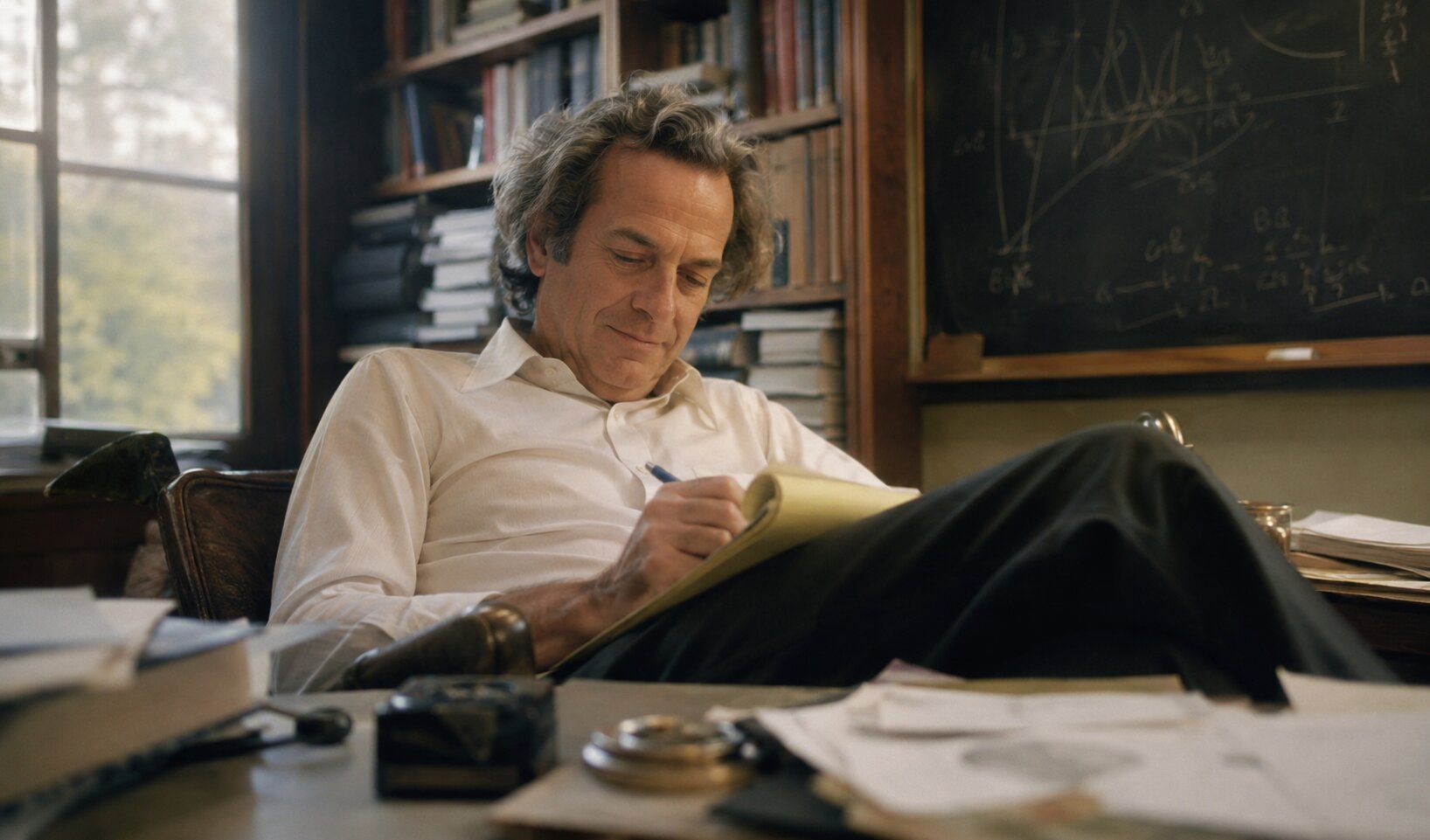
A strong answer is this: meaningful action and lifelong learning.
The Limits of Pleasure
Pleasure is real, but it fades quickly.
A new purchase, a luxury, a delicious meal, or a moment of indulgence may give us excitement, but the feeling rarely stays.
Soon the mind adjusts.
Then it asks for something else.
That is why so many people live in a cycle of anticipation, brief satisfaction, and renewed emptiness.
They postpone happiness until they reach the next milestone.
But when the milestone arrives, the joy lasts only for a few days or weeks.
Then the cycle begins again.
Why Learning Feels Different
Learning offers a different kind of happiness.
It does not depend on possession, comparison, or external validation.
The process itself is rewarding.
When you read something profound, understand a difficult idea, connect two truths, or see life more clearly than before, you experience a quiet and lasting satisfaction.
Knowledge does not frustrate us in the same way pleasure does.
It enlarges us.
It gives us depth.
It makes life richer from the inside.
With material ambition, there is always a destination that keeps moving.
With learning, there is no final destination.
There is only a beautiful and continuing journey.
Happiness in the Process, Not the Finish Line
Most people work toward goals without enjoying the path.
They believe happiness lies at the end.
Once they get the promotion, the house, the savings, or the recognition, they expect fulfillment to arrive.
But fulfillment built on achievement alone is fragile.
Learning is different because the process is the reward.
To study, to reflect, to observe, to discuss, to understand, and to grow — these are not merely steps toward happiness.
They are happiness.
That is why the pursuit of knowledge can feel endless in the best possible way.
The more you learn, the more alive you become.
Wealth Has Limits, Knowledge Does Not
Money matters.
Comfort matters.
Basic security matters.
But beyond a certain point, more wealth does not produce a proportional increase in happiness.
Its returns diminish.
A person who already has abundance may gain more, but their inner life may remain unchanged.
Knowledge does not behave that way.
The more you gain, the more your mind opens.
The more your mind opens, the more wonder you feel.
The more wonder you feel, the more you want to learn.
This is why learning can become a self-renewing source of joy.
The Tamil wisdom of the Thirukkural expresses this beautifully:
தொட்டனைத் தூறும் மணற்கேணி மாந்தர்க்குக்
கற்றனைத் தூறும் அறிவு
Its meaning is profound.
Just as water keeps springing from a sandy well the more you dig, knowledge keeps increasing the more you learn.
That is the nature of true learning.
It deepens as we continue.
Material Possessions Are Often Zero-Sum, Knowledge Is Not
Material possessions are limited.
If I give away my money, I have less and someone else has more.
In that sense, material exchange is often a zero-sum game.
Knowledge is different.
When you share an idea, you do not lose it.
You clarify it.
You strengthen it.
You often understand it better through the act of giving it away.
The person receiving it gains something, and you lose nothing.
In many cases, both people gain.
That makes knowledge a positive-sum force.
A good conversation, a book recommendation, a lesson shared with a child, or a thought written down for others can multiply value without reducing anyone else’s share.
Knowledge Has Never Been More Accessible
Acquiring wealth is difficult.
Acquiring knowledge has never been easier.
We live in an age where learning is available from the comfort of home.
Books, podcasts, lectures, documentaries, essays, interviews, courses, and thoughtful videos have made wisdom more accessible than at any other time in history.
A curious person today can build a meaningful intellectual life with very few barriers.
That is a rare privilege.
It should not be wasted.
The world offers countless distractions, but it also offers countless doors into understanding.
The question is whether we choose to enter them.
Learning Must Be Connected to Reflection
Not all entertainment enriches us.
Much of it merely fills time.
But when entertainment is connected to learning, it becomes nourishing.
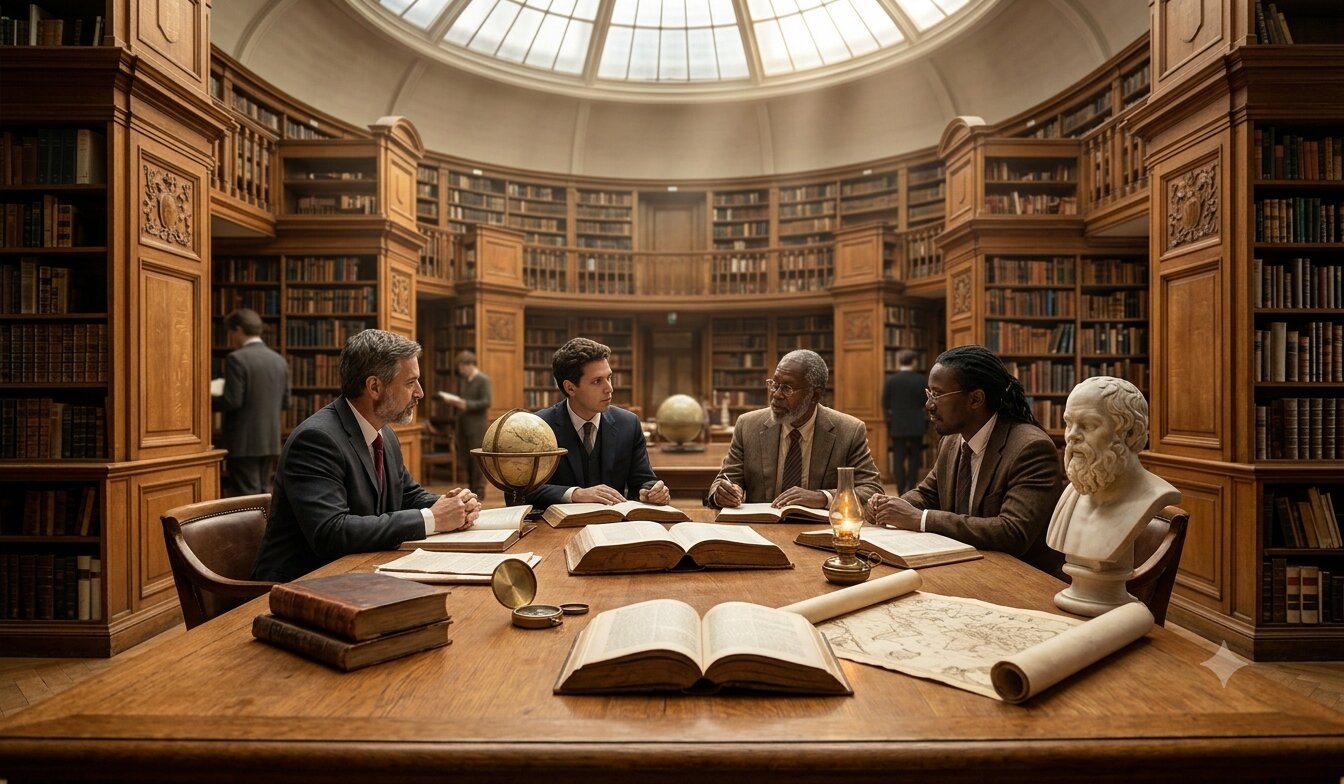
A film that deepens your understanding of history, a lecture that changes how you see the world, a novel that expands your emotional imagination, or a conversation that challenges your assumptions can all become sources of contentment.
The pattern is simple but powerful.
Be curious.
Learn through reading, study, observation, and thoughtful media.
Reflect on what you learn.
Apply it to life.
Then learn more.
That cycle leads not to emptiness, but to growth.
What Should We Learn to Live Well?
A meaningful life is not built on information alone.
It is built on the right kinds of nourishment.
To live happily, deeply, and without regret as we grow older, we should consciously enjoy and learn from the following:
Art
Literature, painting, dance, sculpture, music, and the other arts refine our inner life.
They teach us to see, to feel, and to imagine more deeply.
Spiritual Life
Spiritual inquiry helps us face suffering, ego, mortality, and meaning.
It turns the mind inward and asks what truly matters.
Philosophy
Philosophy sharpens thought.
It teaches us how to examine life rather than drift through it.
Relationships
Friendship is not an accessory to life.
It is one of its central blessings.
Deep human connection gives warmth, perspective, correction, and joy.
Nature
Nature restores proportion.
It reminds us that life is larger than ambition, anxiety, and routine.
It calms us and returns us to what is essential.
Why Knowledge Matters Even Without Immediate Use
Many people ask practical questions about learning.
Why study literature if your background is science?
Why read philosophy if it does not increase your salary?
Why explore ideas that may not have immediate utility?
Because knowledge is not always valuable in direct or measurable ways.
Sometimes its value lies in the way it enriches the collective human mind.
A truth observed, an idea preserved, an insight written down, or a reflection shared may help someone else in the future.
Human progress has always depended on this.
Scientists build on prior research.
Writers build on prior thought.
Civilizations grow because knowledge is passed on, extended, challenged, and renewed.
Even when our learning does not produce an immediate practical result, it may still become part of a larger human inheritance.
The Deeper Satisfaction of Curiosity
Human beings have an urge to know.
Curiosity is not a minor trait.
It is a deep impulse.
Knowledge satisfies that urge.
It gives the mind its proper food.
There is joy in understanding something simply because it is worth understanding.
That joy does not require material reward.
It does not need applause.
It does not depend on social status.
It is satisfying in itself.
Like ants contributing to an anthill without individual recognition, human beings often feel an inner urge to contribute to something beyond immediate personal gain.
Learning can be one form of that contribution.
It aligns us with what we are meant to do as reflective beings.
Literature and the Many Lives We Can Live
One of the greatest gifts of learning, especially through literature, is that it expands the range of life available to us.
Through imagination, we can live the lives of thousands of people.
We can suffer with them, hope with them, fail with them, and rise with them.
We can enter worlds we will never physically inhabit.
We can understand grief, love, courage, shame, sacrifice, and redemption more deeply.
That is not escapism.
It is expansion.
Sometimes philosophy can clarify life, but literature can help us survive it.
A person overwhelmed by sorrow may not always be rescued by abstract thought.
But a story, a poem, a character, or the act of writing itself can keep a person connected to life.
Literature often saves people by preserving their imagination when reality becomes unbearable.
Lasting Happiness Comes From Inner Enlargement
The happiest life is not the one with the most consumption.
It is the one with the most inward enlargement.
A person who keeps learning, reflecting, acting meaningfully, loving deeply, and engaging with art, nature, friendship, and ideas will rarely feel that life has been wasted.
Such a person may still suffer.
They may still lose, grieve, fail, and struggle.
But they will not be empty.
Their life will have density.
Their joy will have roots.
Their happiness will not depend entirely on what they own, but on what they have become.
A Better Way to Live
If we want a happy, meaningful, and high-quality life, we should not build it around accumulation alone.
We should build it around growth.
Not the growth of possessions, but the growth of mind, character, and understanding.
Pleasure has its place.
Comfort has its place.
But lasting happiness belongs to those who remain curious.
Read.
Study.
Watch thoughtfully.
Reflect deeply.
Apply what you learn.
Share it with others.
Keep going.
You may discover that the most satisfying life is not the one that glittered the most, but the one that learned the most.