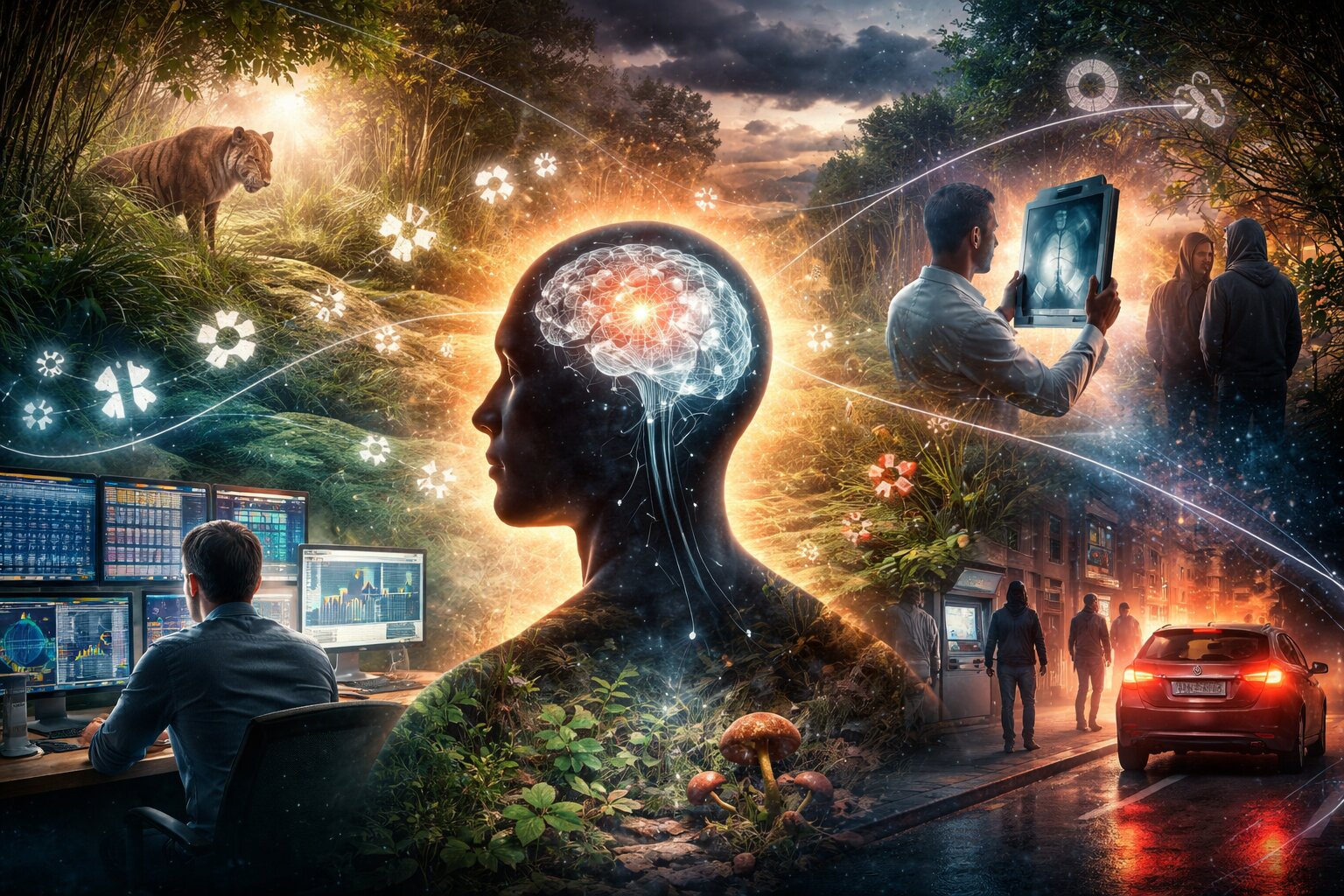
Pattern recognition is one of the most important cognitive abilities humans (and animals) possess.
It is central to intelligence, prediction, learning, and survival.
It allows us to detect structure in the world—recurring relationships, signals, causes, and dangers—and act appropriately.
Below is a clear breakdown with survival-oriented examples, both ancient and modern.
🧠 Why Pattern Recognition Is Important
Pattern recognition allows you to:
- Predict what will happen next
If you’ve seen a pattern before, you can anticipate outcomes without needing full information.
- Reduce cognitive load
Your brain groups information so you don’t need to “think from scratch” every second.
- Detect danger early
Survival depends on noticing deviations from normal patterns.
- Learn from experience
Most learning (language, math, driving, trading, etc.) is recognizing patterns and their consequences.
- Make quick decisions with incomplete data
This is crucial in high-stakes environments like driving, combat, or wilderness.
🏹 How Our Ancestors Used Pattern Recognition for Survival
Pattern recognition was literally the difference between life and death:
- Identifying predator behavior
- Hearing rustling in tall grass → pattern of a stalking predator.
- Recognizing flash of stripes → tiger.
- Realizing certain bird calls mean danger.
- Tracking animals
Hunters recognized:
- Footprint patterns
- Droppings
- Broken branches
- Time-of-day movement patterns
- Seasonal migration routes
This meant food or starvation.
- Weather and environment
- Dark clouds + sudden temperature drop → storm incoming
- Orange sky at dawn → bad weather
- Certain wind patterns → predators or competitors nearby
Survival depended on anticipating nature.
- Edible vs poisonous plants
Patterns in:
- Leaf shapes
- Smells
- Locations
- Color combinations
This prevented poisoning.
- Tribal behavior patterns
Recognizing:
- Which tribes are aggressive
- Signals of an ambush
- Territorial boundaries
This prevented conflict and death.
🚗 Modern Survival Examples
Even today, pattern recognition keeps you alive.
- Driving
You constantly recognize patterns:
- Car ahead braking early → likely slowdown
- Slight swerve → drunk or distracted driver
- Child near road + ball → risk of running into street
Good drivers are excellent pattern recognizers.
- Health
- Sudden chest pressure + left arm pain → heart attack
- Consistent fatigue + weight changes → hormonal issue
- New lump → cancer detection
Doctors are basically pattern-recognition experts.
- Fraud and Threat Detection
You notice:
- ATM reader looks different
- Email phrased unusually
- Seller’s story keeps changing
These keep you from being scammed.
- Street Smarts
Pattern recognition on the street helps you avoid danger:
- A car slowing down too much near you
- Group walking strangely behind you
- Person scanning the crowd repeatedly
- Someone matching your pace
This helps you avoid mugging or harassment.
- Investing and Trading
A huge portion of investing is:
- Recognizing chart patterns
- Identifying cycles
- Reading market psychology
- Spotting abnormal volatility or volume
Though patterns don’t always guarantee results, they guide probability.
- Career and Social Survival
- Recognizing toxic manager patterns
- Noticing people who gossip
- Understanding social cues
- Seeing which coworkers are reliable
This avoids conflict and career damage.
🔍 Psychological Importance
Pattern recognition contributes to:
- Creativity
- Problem-solving
- Emotional intelligence
- Innovation
Even language is learned through pattern detection (phonemes → words → grammar).
🧩 When Pattern Recognition Can Mislead (Biases)
Humans can over-recognize patterns (false positives):
- Superstitions
- Confirmation bias
- Seeing trends in randomness
- Gambler’s fallacy
Evolution preferred false positives (“rustle in grass = maybe lion”) over false negatives (“ignore it and die”).
🧠 Conclusion
Pattern recognition is not just a mental skill — it is a survival mechanism deeply encoded in evolution. It helps you navigate physical danger, social environments, financial situations, and everyday life with speed and intuition.