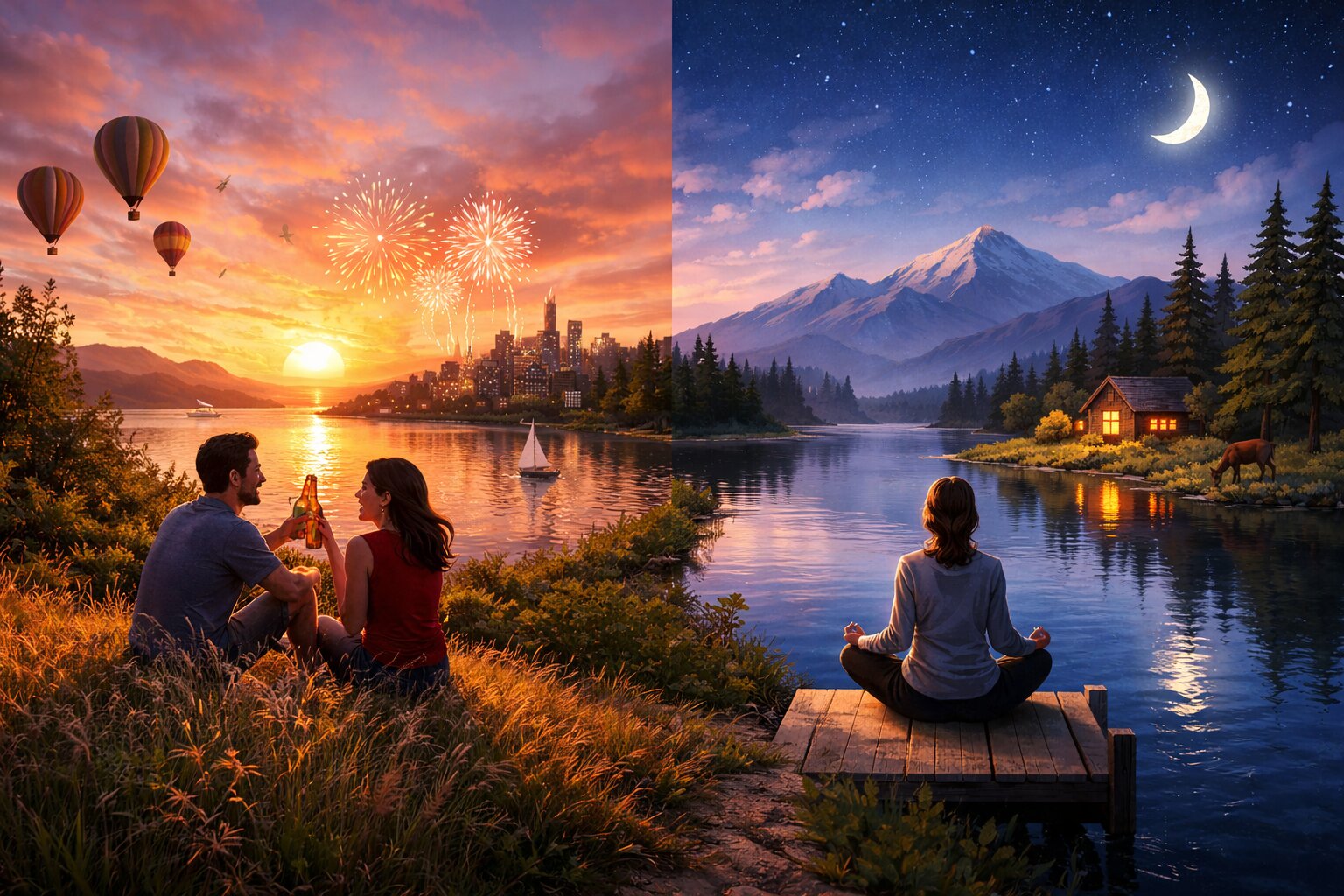
People often use contentment and happiness as though they mean the same thing, but they actually describe two very different layers of human well-being.
One gives us moments of joy, while the other gives us a lasting sense of peace.
That difference may seem subtle at first, but it can change the way we understand a meaningful life.
Core Difference
Happiness is usually a temporary emotional response to something pleasant, exciting, or rewarding.
It often depends on what happens to us.
Contentment, by contrast, is a deeper and steadier state of inner peace and acceptance.
It depends less on circumstances and more on mindset, gratitude, and emotional balance.
Happiness is like sunshine.
Contentment is like climate.
One brightens a moment, while the other shapes the atmosphere of a life.
Example 1 – Job
Happiness at work may come when you get a promotion, receive praise, or hear good news from your boss.
Contentment at work comes from knowing your effort matters, even on ordinary days when no one notices.
Happiness rises with events.
Contentment stays through seasons.
Example 2 – Relationships
Happiness in a relationship may be found in laughter, travel, romance, and memorable experiences.
Contentment appears in trust, safety, and the quiet comfort of being accepted as you are.
Happiness is spark.
Contentment is warmth.
Example 3 – Money
Happiness may come from a bonus, a new purchase, or a financial win.
Contentment comes from the feeling that what you already have is enough to live with gratitude and dignity.
Happiness says, “I got more.”
Contentment says, “I already have enough.”
Example 4 – Everyday Life
Happiness may come from your favorite team winning or from enjoying your favorite dessert.
Contentment means enjoying a quiet evening with peace, regardless of whether those little pleasures arrive or not.
Happiness is event-driven.
Contentment is attitude-driven.
Psychological View
Happiness is often linked to the brain’s pleasure and reward systems, especially the responses associated with novelty, achievement, and excitement.
That is why it can feel intense but fade quickly.
Contentment is more connected to calm, emotional stability, connection, and a lasting sense of well-being.
That is why it feels less dramatic but more sustaining.
Happiness is enjoyable like sugar.
Contentment is nourishing like a steady meal.
A person can be happy for a moment but content over time.
How They Relate
Contentment is the foundation that makes happiness feel safe and balanced.
Without contentment, happiness can become a roller coaster of highs and lows.
A person becomes overly dependent on outcomes, praise, success, or pleasant experiences.
When contentment is present, happiness can be enjoyed without fear of losing it.
Happiness is the wave.
Contentment is the ocean that holds it.
Real-Life Analogies
At graduation, happiness is the joy of the moment, while contentment is the peace of knowing you worked hard and grew as a person.
In marriage, happiness is the excitement of the wedding day, while contentment is the comfort of companionship through ordinary life.
In travel, happiness is the thrill of discovering a new place, while contentment is the serenity of returning home and feeling that you belong.
In parenting, happiness is hearing “I love you,” while contentment is the quiet fulfillment of helping a child grow through both easy and difficult days.
These analogies reveal a simple truth.
Happiness celebrates the highlight, but contentment carries the whole journey.
Philosophical View
Happiness is often outward-facing because it looks to the world for reasons to smile.
Contentment is inward-facing because it chooses peace even when the world is difficult or uncertain.
This is why many philosophical and spiritual traditions value contentment so deeply.
Buddhist thought connects contentment with freedom from craving and aversion.
Stoic thinkers such as Epictetus viewed contentment as freedom from needing life to go exactly as planned.
Together, these ideas point to the same wisdom.
Peace does not come from controlling everything around us.
It comes from learning how to stand calmly within life as it is.
Example of Both Together
Imagine a gardener.
She feels happy when flowers bloom because the moment is beautiful and rewarding.
But she feels content tending the soil even on the days when nothing spectacular happens.
She understands that some days bring sunshine and others bring rain.
Happiness colors the moment.
Contentment sustains the life.
Summary Table
Happiness is best understood as momentary joy or pleasure.
Contentment is better understood as lasting peace and satisfaction.
Happiness is usually short-lived and externally driven.
Contentment is longer-lasting and internally grounded.
Happiness feels energetic and excited.
Contentment feels calm and serene.
Happiness says, “I’m glad this happened.”
Contentment says, “I am at peace even if life does not go perfectly.”
Final Thought
Happiness is about pleasure in the moment.
Contentment is about peace with life as a whole.
Happiness makes life colorful.
Contentment makes life livable.
Together, they create a full and balanced life.
They give us joy when things go right and peace when they do not.