The Lucifer Effect: How Good People Become Cruel—and How Ordinary People Become Heroes
- Situational Power: External environments, social roles, and peer pressure shape behavior far more than innate personality traits.
- Systemic Influences: Broader political, economic, or cultural institutions create and maintain the “bad barrels” that foster corruption rather than just looking at “bad apples”.
- Dehumanization: Stripping others of their identity or viewing them as less than human makes it easier to inflict harm.
- De-individuation: Losing personal identity and a sense of individual responsibility within a group.
- Blind Obedience: Following orders from authority figures without questioning moral consequences.
- Passive Tolerance: Allowing bad behavior to continue through inaction, silence, or indifference.
Imagine volunteering for a psychology experiment and being told that, for the next two weeks, you will play the role of a prisoner.
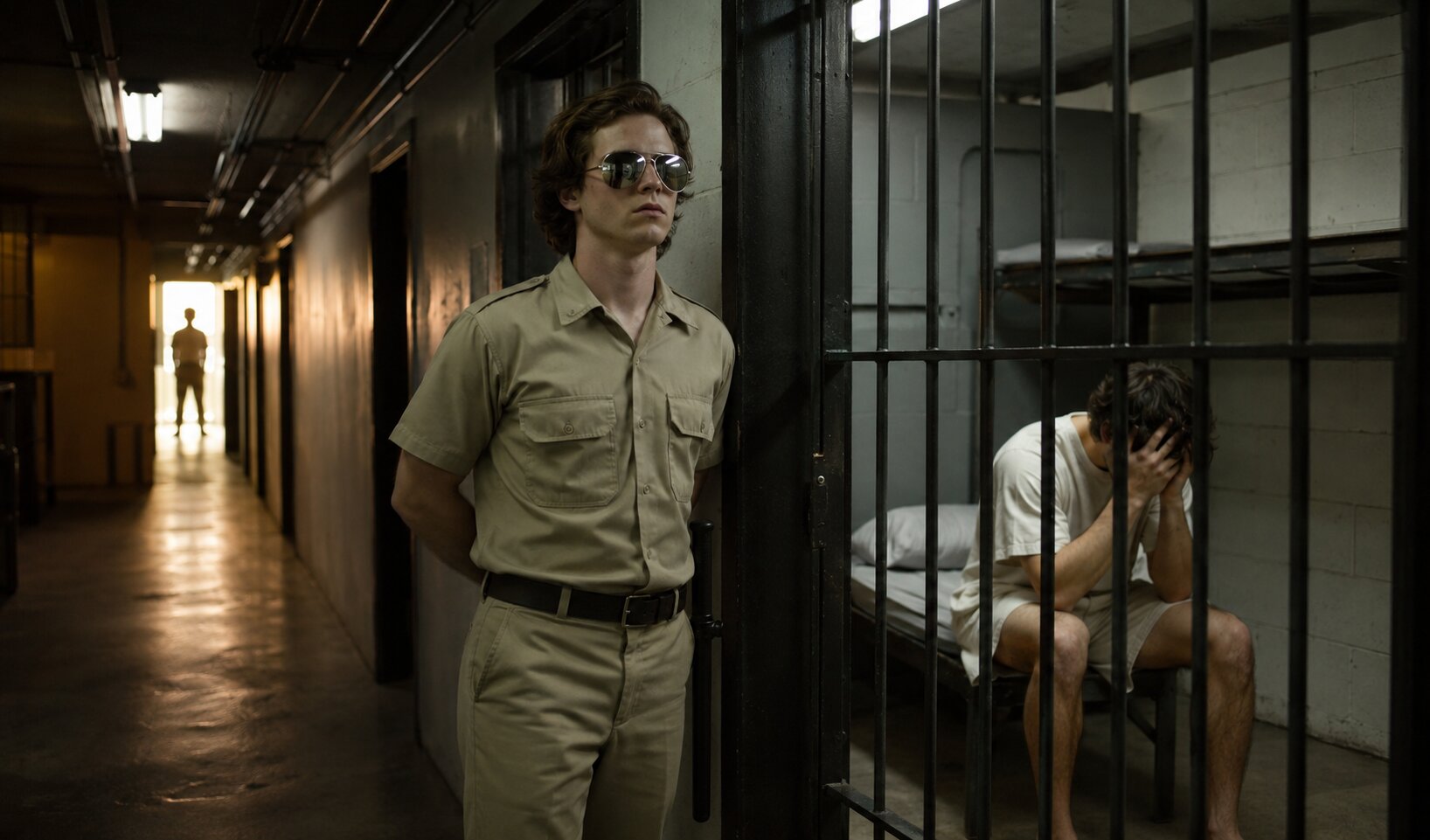
You know that the prison is not real. The guards are fellow college students. The cells are merely converted rooms in the basement of Stanford University’s psychology department. Everyone understands that it is an experiment.
Yet within a matter of days, the guards begin humiliating the prisoners. The prisoners become frightened, submissive and emotionally distressed. Some guards appear to enjoy exercising power, while others quietly watch the abuse without intervening.
The experiment becomes so psychologically disturbing that it must be stopped after only six days.
This is the unsettling starting point of Philip Zimbardo’s book, The Lucifer Effect: Understanding How Good People Turn Evil. The book asks a frightening question:
What makes ordinary people commit cruel, degrading or destructive acts?
Zimbardo’s answer challenges the comforting belief that evil is committed only by monsters, psychopaths or unusually immoral individuals. He argues that under certain conditions, ordinary people can be transformed by authority, social roles, group pressure and institutional systems.
But the book is not simply a study of human cruelty. It is also an exploration of resistance, moral courage and everyday heroism.
The Comfortable Myth of the “Bad Person”
When we hear about torture, genocide, corporate fraud or institutional abuse, our first instinct is usually to blame the individuals involved.
We call them evil, sadistic, corrupt or mentally disturbed. By separating them from ordinary humanity, we reassure ourselves:
“I would never behave that way.”
Zimbardo believes this reaction is psychologically comforting but dangerously incomplete.
He introduces three useful metaphors:
- Bad apples are individuals who behave immorally.
- Bad barrels are environments that encourage immoral behavior.
- Bad barrel makers are institutions and systems that create those environments.
Most societies focus almost entirely on identifying and punishing bad apples. Zimbardo argues that we must also examine the barrel in which those individuals were placed—and the people who designed it.
A person’s character matters, but character does not operate in a vacuum. Behavior can change dramatically when people are given unchecked power, stripped of personal responsibility, surrounded by obedient peers or placed under intense institutional pressure.
This idea became the foundation of the Stanford Prison Experiment.
When an Experiment Became a Prison
In 1971, Zimbardo and his research team created a simulated prison in the basement of Stanford University’s psychology building.
The researchers selected psychologically healthy male college students and randomly assigned them to one of two roles: guard or prisoner.
Because the assignments were random, there was no meaningful psychological difference between the two groups. The guards were not selected because they were aggressive, and the prisoners were not chosen because they were weak or submissive.
They were ordinary young men placed into different social roles.
The prisoners were unexpectedly arrested at their homes, searched, fingerprinted and taken to the mock prison. Their clothes and personal belongings were removed. Instead of being addressed by name, each prisoner was given an identification number.
The guards wore uniforms and reflective sunglasses. The glasses concealed their eyes, reduced personal connection and gave them a sense of anonymity.
Almost immediately, the students began behaving according to their assigned roles.
The prisoners became dependent and powerless. The guards became increasingly controlling and authoritarian.
What began as role-playing soon felt disturbingly real.
The Transformation of Character
By the second day, the prisoners rebelled. They barricaded themselves inside their cells and refused to follow orders.
The guards responded with force.
They stripped prisoners, removed their beds, used fire extinguishers against them and imposed increasingly degrading punishments. Prisoners were forced to perform push-ups, clean toilets and obey arbitrary rules.
The punishments were not merely intended to maintain order. They increasingly became instruments of humiliation.
Some guards became openly cruel. Others were less aggressive but still followed the system. A few appeared uncomfortable with what was happening, yet they did not challenge the abusive guards.
Their silence became a form of cooperation.
This is one of the book’s most important lessons: harmful systems do not survive only because of active perpetrators. They also survive because of passive observers.
The “good guards” may not have personally designed the cruelest punishments, but by remaining silent, they allowed the abuse to continue.
Zimbardo himself was also transformed by the situation. In addition to directing the study, he took on the role of prison superintendent. Gradually, he became more concerned with maintaining control of the prison than with objectively observing the experiment.
The researcher became part of the system he was supposed to study.
This demonstrated how difficult it can be to recognize situational influence while we are inside it.
The Destruction of Personal Identity
The prison environment systematically weakened the prisoners’ sense of identity.
They were no longer addressed by their names. They became numbers.
Their clothing was standardized. Their movements were controlled. Their privacy disappeared. They needed permission for basic activities such as using the toilet.
The guards experienced the opposite transformation. Their uniforms, whistles and sunglasses gave them authority and anonymity. Because responsibility was shared among the group, each guard could feel less personally accountable for what happened.
This process is known as deindividuation—the weakening of personal identity and personal responsibility within a group or role.
People who feel anonymous may behave in ways they would normally consider unacceptable. They stop thinking of themselves as individuals making moral choices and begin thinking of themselves merely as members of a group carrying out a function.
At the same time, the prisoners began to internalize their helplessness. Several suffered severe emotional distress. One prisoner, known as Prisoner 8612, had to be released after experiencing an emotional breakdown.
The environment itself had become psychologically pathological.
The problem was not that psychologically unstable people had been admitted into the experiment. The problem was that an unhealthy situation had begun producing unhealthy behavior.
The Person Who Said, “This Is Wrong”
The experiment was originally expected to continue for two weeks.
It ended after six days.
The turning point came when graduate student Christina Maslach visited the mock prison. Unlike the researchers and participants who had gradually adapted to the environment, she saw the situation with fresh eyes.
She was horrified.
Maslach confronted Zimbardo and challenged the morality of what was happening. Her reaction forced him to recognize how deeply he had become absorbed in his role as superintendent.
Her intervention demonstrates the power of an outsider who refuses to accept a harmful situation as normal.
Dozens of people had observed parts of the experiment, yet very few seriously objected. Maslach’s importance was not that she possessed extraordinary physical power or institutional authority. Her strength came from her willingness to make an independent moral judgment.
She saw suffering and refused to rationalize it.
That act of resistance ended the experiment.
Why Situations Can Overpower Character
Zimbardo connects the Stanford Prison Experiment to several major ideas in social psychology.
Solomon Asch’s conformity experiments showed that people may publicly agree with an obviously incorrect group judgment rather than stand alone.
Stanley Milgram’s obedience experiments showed that ordinary people may follow an authority figure’s instructions even when they believe they are causing another person serious pain.
Together, these studies reveal a disturbing pattern: people often surrender independent judgment when faced with authority, group consensus or clearly defined social roles.
Several psychological mechanisms make this possible.
Obedience to Authority
People are trained from childhood to obey teachers, police officers, employers, doctors, military commanders and government officials.
Authority is necessary for organized society, but obedience becomes dangerous when people stop evaluating whether an order is morally acceptable.
“I was following orders” allows the individual to transfer responsibility upward.
Conformity
Human beings are social creatures. We want acceptance and fear exclusion.
When everyone around us behaves in a particular way, that behavior begins to appear normal—even when it is cruel or dishonest.
The desire to belong can overpower the desire to do what is right.
Diffusion of Responsibility
When many people are involved in a harmful act, each person feels less personally responsible.
A person may think:
“Someone else would stop it if it were truly wrong.”
But everyone else may be thinking the same thing.
Dehumanization
Cruelty becomes easier when victims are no longer seen as complete human beings.
They may be reduced to numbers, labels, stereotypes or enemy categories. Once empathy is weakened, humiliation and violence can be described as necessary, deserved or unimportant.
Moral Disengagement
People rarely see themselves as villains. Instead, they create explanations that allow them to continue believing they are good.
They may call torture “enhanced interrogation,” civilian deaths “collateral damage” or exploitation “just business.”
Changing the language makes the behavior easier to tolerate.
From Stanford to Abu Ghraib
Zimbardo applies these ideas to the abuses committed at Abu Ghraib prison during the Iraq War.
Photographs revealed American military personnel humiliating, threatening and abusing Iraqi prisoners. The public response largely focused on the individual soldiers involved.
They were presented as a few cruel “bad apples.”
Zimbardo did not argue that the soldiers had no responsibility. Instead, he argued that individual responsibility alone could not explain what happened.
The guards operated in an environment marked by stress, fear, poor supervision, unclear authority, inadequate training and the dehumanization of prisoners. Certain actions were tolerated, encouraged or ignored.
The similarities to the Stanford Prison Experiment were disturbing: anonymous power, powerless prisoners, humiliation, group conformity and the absence of effective accountability.
Zimbardo testified during the trial of Sergeant Ivan “Chip” Frederick. His position was that the prison environment and the military system had contributed significantly to the abuse.
Punishing a few individuals without examining the system, he warned, allows the same conditions to produce future abuse.
The Power of the System
The book’s argument expands from individual situations to entire institutions.
A system determines who holds power, what behavior is rewarded, which actions are ignored and how responsibility is distributed.
Governments, corporations, military organizations, prisons and religious institutions can all create environments in which unethical behavior becomes normal.
Nazi Germany did not depend only on a small number of fanatical leaders. Mass persecution required administrators, police officers, railway employees, clerks, soldiers and ordinary citizens to perform specialized roles within a vast bureaucratic system.
Many participants did not personally see themselves as murderers. They processed documents, guarded buildings, transported prisoners or followed regulations.
The system divided responsibility into small tasks, allowing individuals to avoid confronting the full moral meaning of their actions.
Corporate scandals can develop in a similar way. Employees may manipulate numbers, mislead customers or ignore risks because management rewards profit, punishes dissent and treats questionable practices as standard procedure.
When success is measured only through results, ethical limits begin to appear like obstacles.
This is the work of the “bad barrel maker”: creating a system in which harmful behavior becomes profitable, expected or invisible.
The Danger of Moral Arrogance
One of Zimbardo’s strongest warnings concerns moral overconfidence.
People frequently say:
“I could never do something like that.”
But this statement may actually make them more vulnerable.
A person who assumes that only bad people commit evil may fail to recognize the early stages of moral compromise in their own behavior.
Cruelty rarely begins with an enormous act. It often begins with a small concession:
- Following a questionable instruction
- Remaining silent during humiliation
- Laughing at a degrading joke
- Treating a person as a category rather than an individual
- Accepting a rule without questioning its purpose
- Allowing fear or loyalty to replace moral judgment
Each small step makes the next step easier.
The lesson of The Lucifer Effect is not that everyone is secretly evil. It is that human behavior is more flexible—and more vulnerable to social influence—than we generally admit.
Humility is therefore a form of protection.
Instead of saying, “I would never do that,” we should ask:
What conditions might pressure me to do it, and how can I prepare myself to resist?
The Other Side of Human Nature
The book does not end in despair.
Zimbardo argues that the same situational forces that can produce cruelty can also produce courage.
Just as ordinary people can become perpetrators, ordinary people can become heroes.
Heroism does not always involve dramatic rescues or public recognition. It may involve reporting corruption, defending a bullied colleague, refusing an illegal order, protecting a stranger or challenging a powerful institution.
The heroic person is often someone who interrupts the script.
When the group says, “Remain silent,” the hero speaks.
When authority says, “Obey,” the hero asks whether obedience is justified.
When the system says, “This is normal,” the hero replies, “It may be normal here, but it is still wrong.”
Can Heroism Be Learned?
Zimbardo developed the Heroic Imagination Project to teach people how to recognize and resist harmful social pressures.
The project is based on the belief that heroism is not merely an inborn personality trait. It can be prepared for and practiced.
People can learn to identify conformity, manipulation, prejudice, dehumanization and the abuse of authority. They can mentally rehearse how they would respond before a crisis occurs.
This preparation matters because moral decisions are often made under pressure. There may be little time for reflection when an employer demands dishonesty, a group begins attacking someone or an authority figure gives an unethical command.
A person who has already imagined resisting is more likely to act.
Heroism begins with awareness, but awareness alone is insufficient. It also requires action.
Many people recognize that something is wrong. Far fewer are willing to risk embarrassment, rejection, punishment or loss of status by opposing it.
That is why moral courage is rare—and why it matters.
From the Lucifer Effect to the Heroic Imagination
The title of the book refers to Lucifer, the angel who fell from grace and became associated with evil.
For Zimbardo, the metaphor represents transformation. A being thought to be good can fall when placed under corrupting influences.
But transformation can move in the opposite direction as well.
A passive observer can become a defender. An obedient employee can become a whistleblower. A frightened citizen can become a rescuer. A person who previously remained silent can decide to speak.
The central message of The Lucifer Effect is therefore neither that people are naturally good nor that they are naturally evil.
It is that human beings are deeply influenced by circumstances—but not completely powerless before them.
Situations shape behavior. Systems shape situations. Yet individuals can learn to recognize those forces, challenge them and create better systems.
The Choice to Interrupt Evil
The most dangerous form of evil may not always come from hatred or sadism. It may come from obedience, routine, ambition, fear and the gradual abandonment of personal responsibility.
A person does not need to enjoy cruelty to participate in it. Sometimes it is enough to follow the rules, accept the group’s judgment and remain silent.
That is what makes Zimbardo’s argument so uncomfortable. It prevents us from placing evil safely outside ourselves.
But it also gives us hope.
If ordinary people can be influenced toward cruelty, they can also be educated toward courage. They can learn to question authority, resist dehumanization, accept personal responsibility and defend those who have less power.
The opposite of evil is not simply personal goodness.
It is the willingness to act when goodness becomes difficult.
In the end, The Lucifer Effect leaves us with a question more important than whether we consider ourselves good people:
When the situation pressures us to remain silent, obey or look away, will we have the courage to interrupt it?