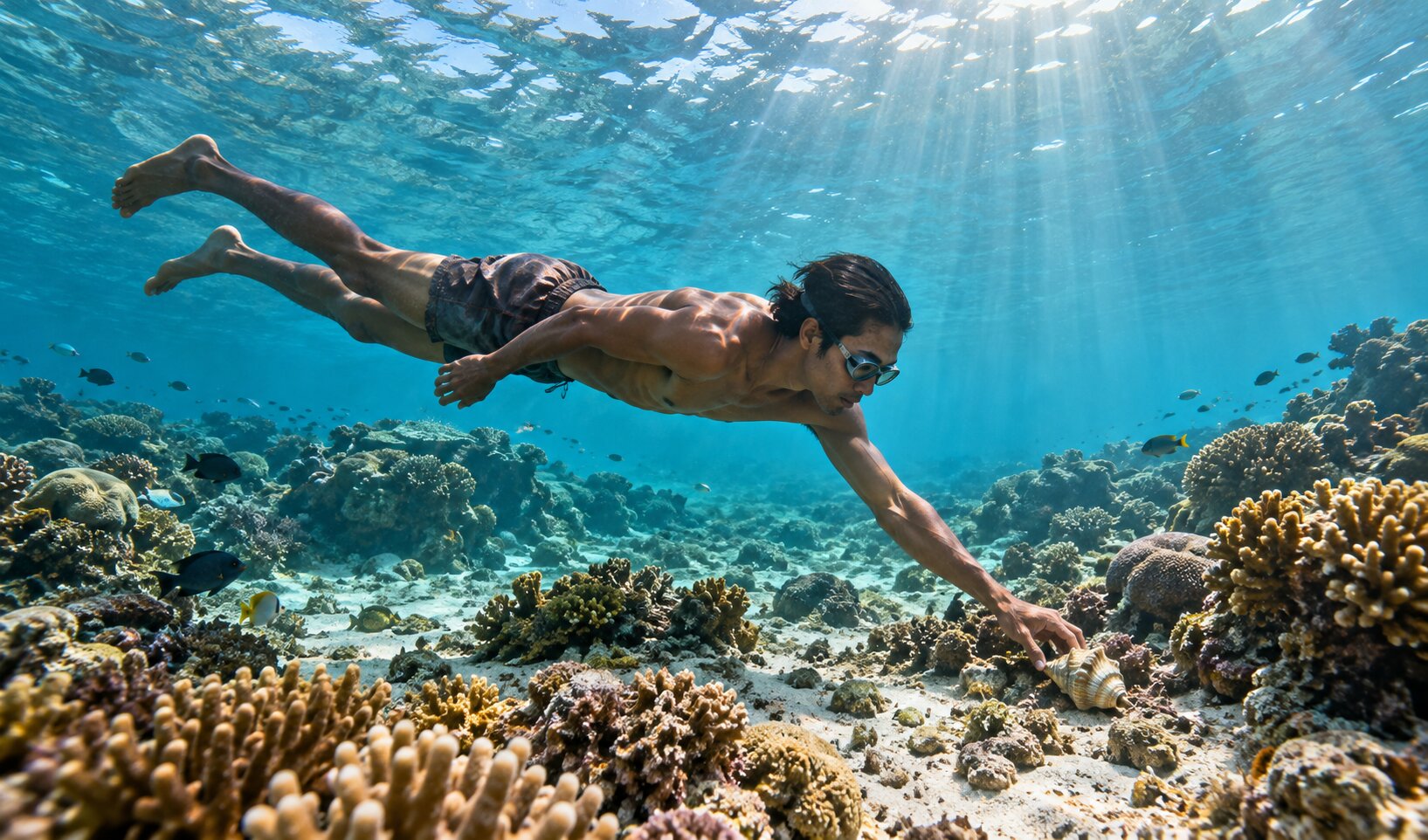
When a diver holds their breath, the lungs are not the body’s only oxygen reserve. The spleen contracts, releasing stored red blood cells into circulation and temporarily increasing the blood’s oxygen-carrying capacity.
Among the Bajau of Southeast Asia, generations of underwater food gathering may have strengthened this reserve.
A 2018 study used ultrasound and genetic comparisons to investigate Bajau people and their non-diving Saluan neighbors. The Bajau had larger spleens—including individuals who did not dive themselves—suggesting that practice alone could not explain the difference. Researchers also identified evidence of natural selection near PDE10A, a gene associated with spleen size and thyroid-hormone regulation. nielsen-lab.github.io
Well supported: spleen contraction contributes to the human diving response, and the sampled Bajau population had larger spleens associated with genetic variation.
Supported but still uncertain: underwater foraging favored inherited variants that increased spleen size. The combined physiological and genetic evidence makes this a strong adaptation hypothesis, but researchers have not directly demonstrated that those variants increased ancestral survival or reproductive success. The precise biological pathway also needs further testing.
This illustrates how culture can influence evolution: a community’s way of obtaining food may create selection pressures that gradually change its descendants’ bodies.
The Bajau’s diving skill is learned—but part of their underwater advantage may be inherited.


