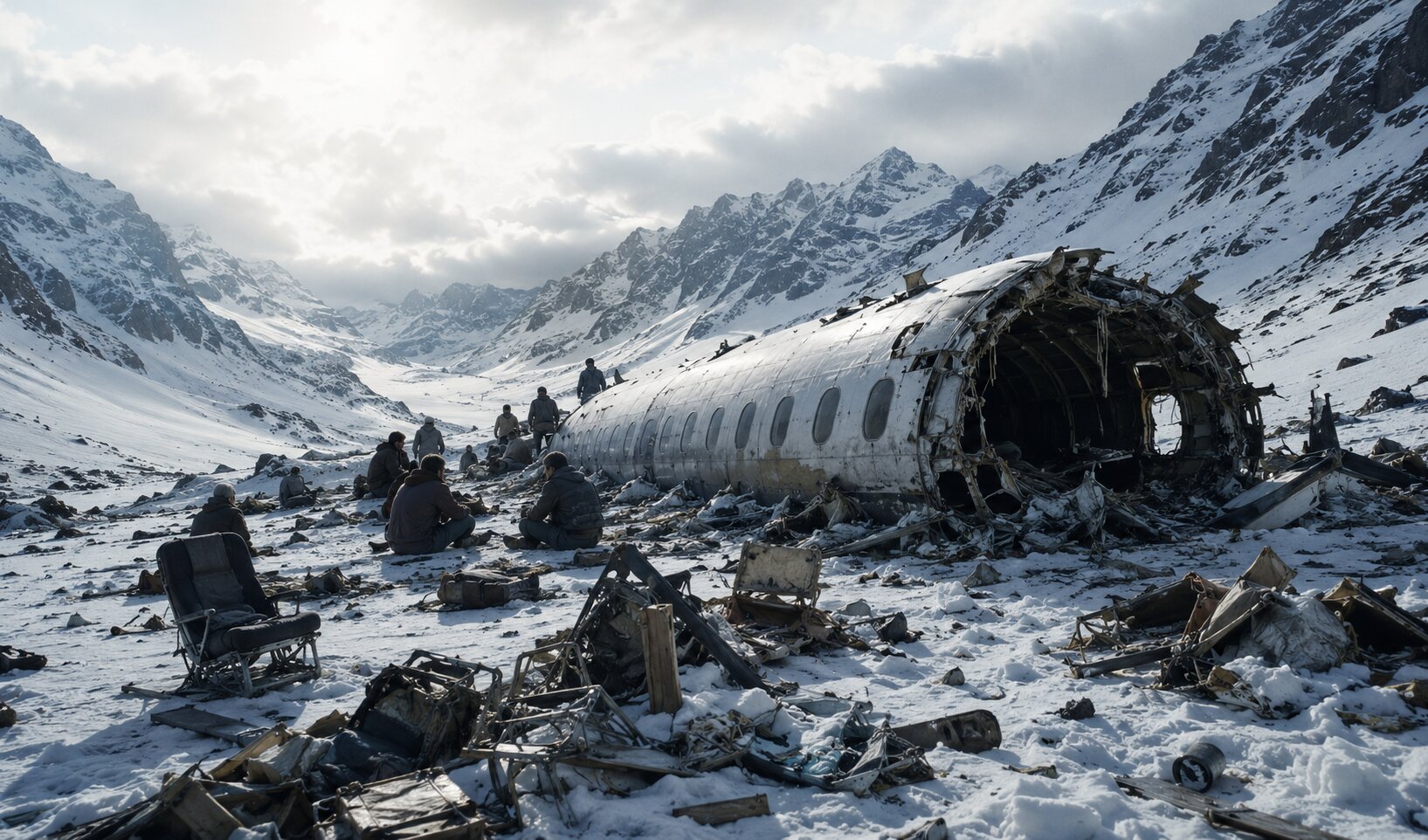
In 1972, a plane carrying a Uruguayan rugby team and their friends and family was flying to Chile when it crashed high in the Andes Mountains.
It was October, and conditions in the mountains were brutal—freezing temperatures, deep snow, extreme altitude, and almost no food. Fifteen people died in the initial crash, while the survivors were left stranded in one of the harshest environments imaginable.
They remained trapped in the Andes for 72 days.
With no realistic source of food and little hope of rescue, the survivors eventually made the horrifying decision to eat the bodies of those who had died. It was not a choice made lightly; it was an extraordinary act of survival under unimaginable circumstances.
What fascinates me most about this story is that physical strength alone did not determine who survived. Some of the strongest people died, while others survived because they were mentally resilient, adaptable, cooperative, and capable of making difficult decisions under extreme pressure.
In a way, this illustrates one of the most important ideas associated with Darwinian evolution: survival is not necessarily about being the strongest. The dinosaurs which were the strongest perished. But small animals such as turtles, frogs, snakes, lizards, crocodiles and alligators survived.
It is about being sufficiently adapted to the environment and responding effectively when conditions change.
The story was dramatized in the 1993 film Alive, which I found both fascinating and very well made. They remade the movie “Alive” as “Society of the Snow” in 2023.
Interestingly, I thought about “Alive” again today while watching the Movie “Escape Room” on Netflix. Although the circumstances are obviously very different, both stories made me think about the same question:
When people are placed in extreme situations, what ultimately determines who survives?
Very often, it may not be physical strength.
It may be adaptability, resilience, clear thinking, and the will to keep going.