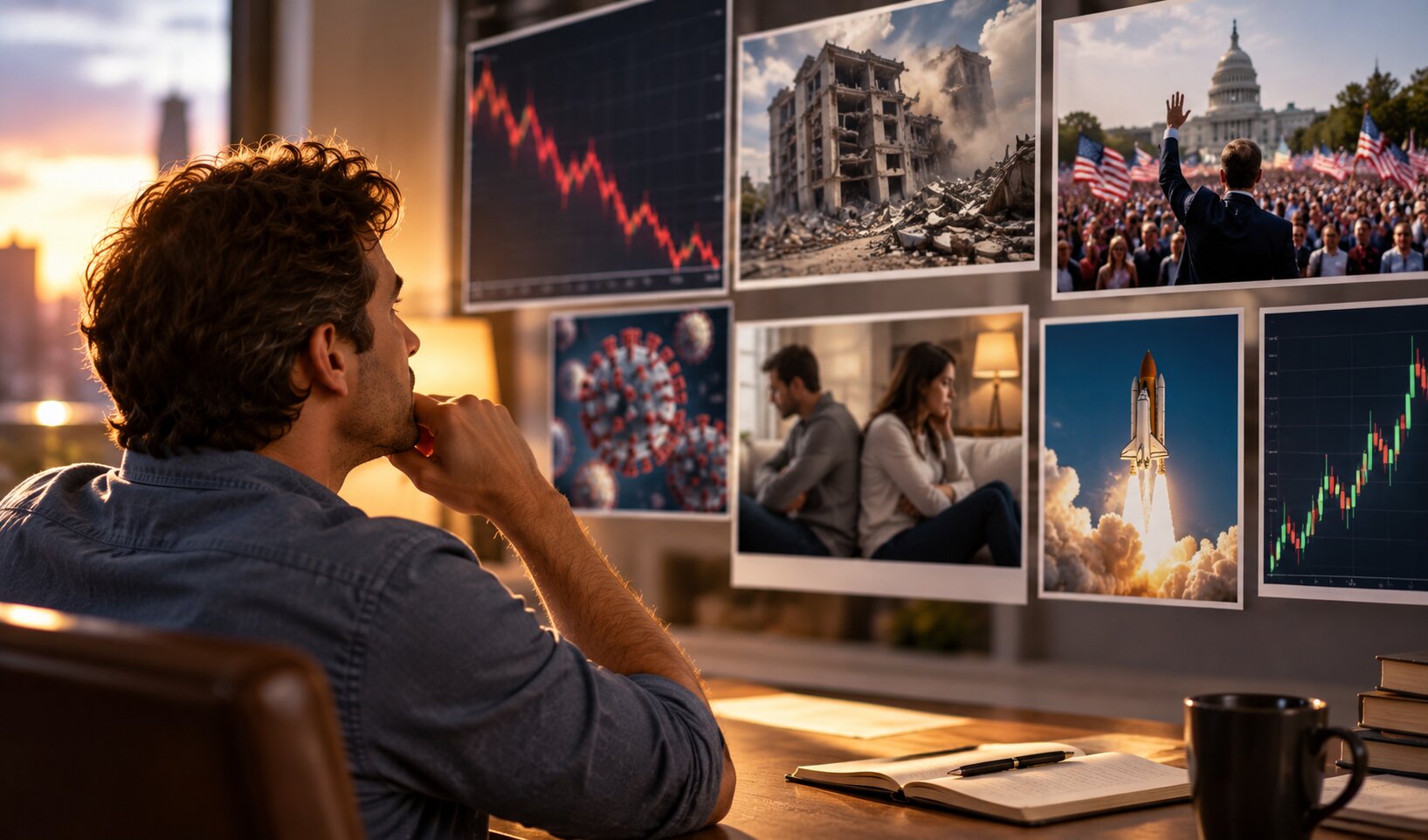
Why the Past Looks More Predictable Than It Really Was
Why do unpredictable events only seem predictable after they occur?
After a stock crashes, someone says:
“It was obvious this was going to happen.”
After an election, another person says:
“I knew that candidate would win.”
After a relationship fails:
“You could see it coming from the beginning.”
This is hindsight bias—our tendency to believe, after an event happens, that we knew it was going to happen all along.
The problem is that before the event, the future was much less certain.
There were competing possibilities, missing information, and genuine uncertainty.
But once we know the outcome, our brains quietly rewrite the story.
We remember the clues that pointed toward what happened and forget the clues that pointed somewhere else.
The result?
The past starts to look obvious.
This can be dangerous in investing, business, medicine, and everyday judgment because it makes us overestimate how predictable events really were.
The lesson
When you catch yourself saying:
“I knew it all along,”
ask:
“Did I actually predict it beforehand—or does it only seem obvious now that I know the answer?”
Knowing what happened can create the illusion that we always knew what would happen.


