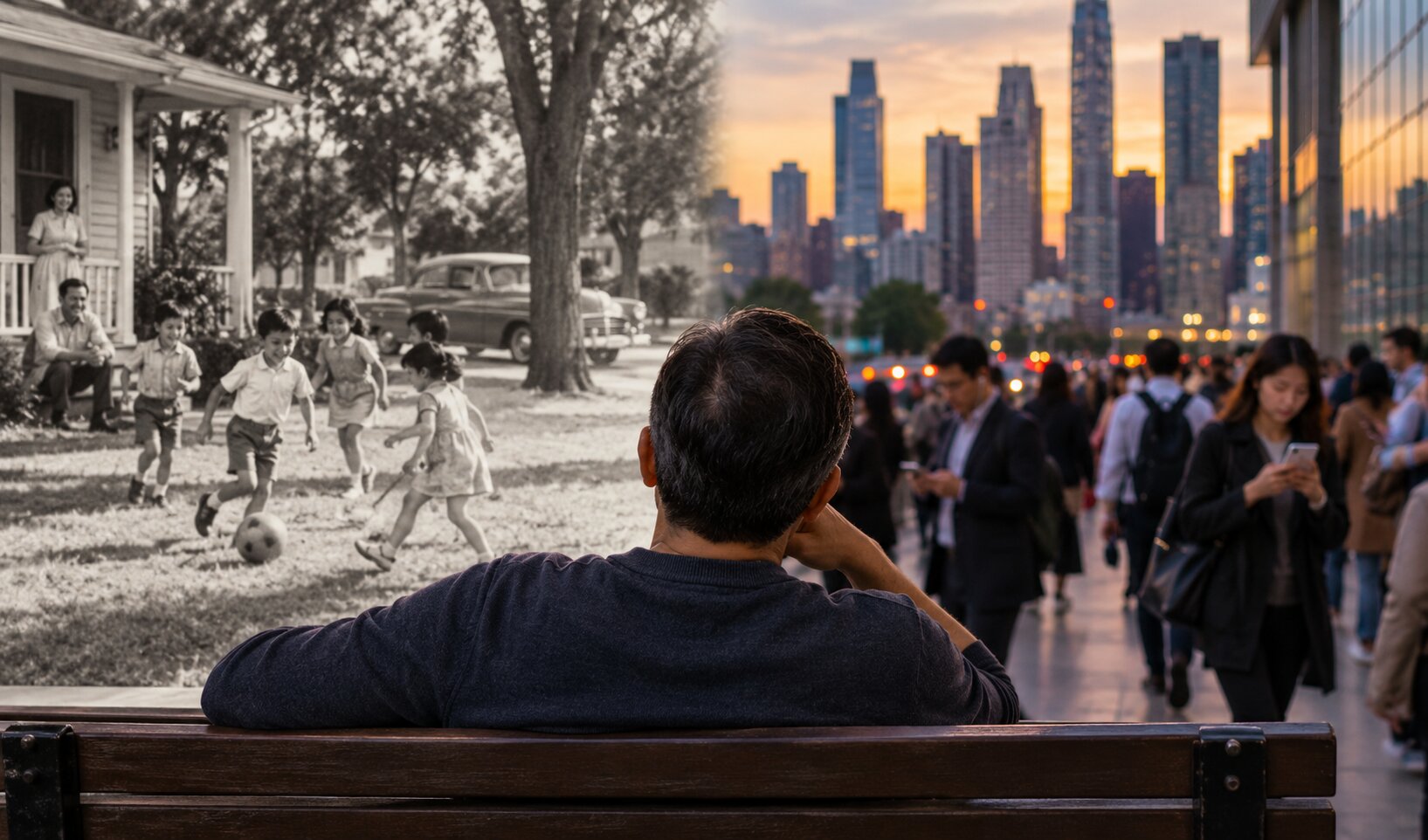
Why We Think the Past Was Better
Why do we think the past is better than the future?
Have you ever heard someone say:
“People were better behaved when I was young.”
Or:
“Society is getting worse every year.”
That way of thinking is called declinism—the tendency to believe that society, culture, morals, intelligence, or quality of life are steadily deteriorating from a better past.
The strange part is that every generation seems to say it.
Why?
One reason is memory bias.
We tend to remember the best parts of the past and forget the boredom, fear, inconvenience, discrimination, disease, and instability that also existed.
At the same time, today’s problems are constantly in front of us—especially through news and social media.
So the comparison becomes unfair:
The past is filtered through nostalgia.
The present is experienced in full resolution.
Declinism doesn’t mean real decline never happens. Economies weaken, institutions fail, crime can rise, and cultures can genuinely change for the worse.
The bias appears when we assume decline without checking the evidence.
The lesson
Whenever you think:
“Things were much better back then,”
ask:
“Am I comparing reality today with reality in the past—or reality today with my best memories of the past?”
Sometimes the world has declined.
But sometimes it’s simply our memory that has improved it.


