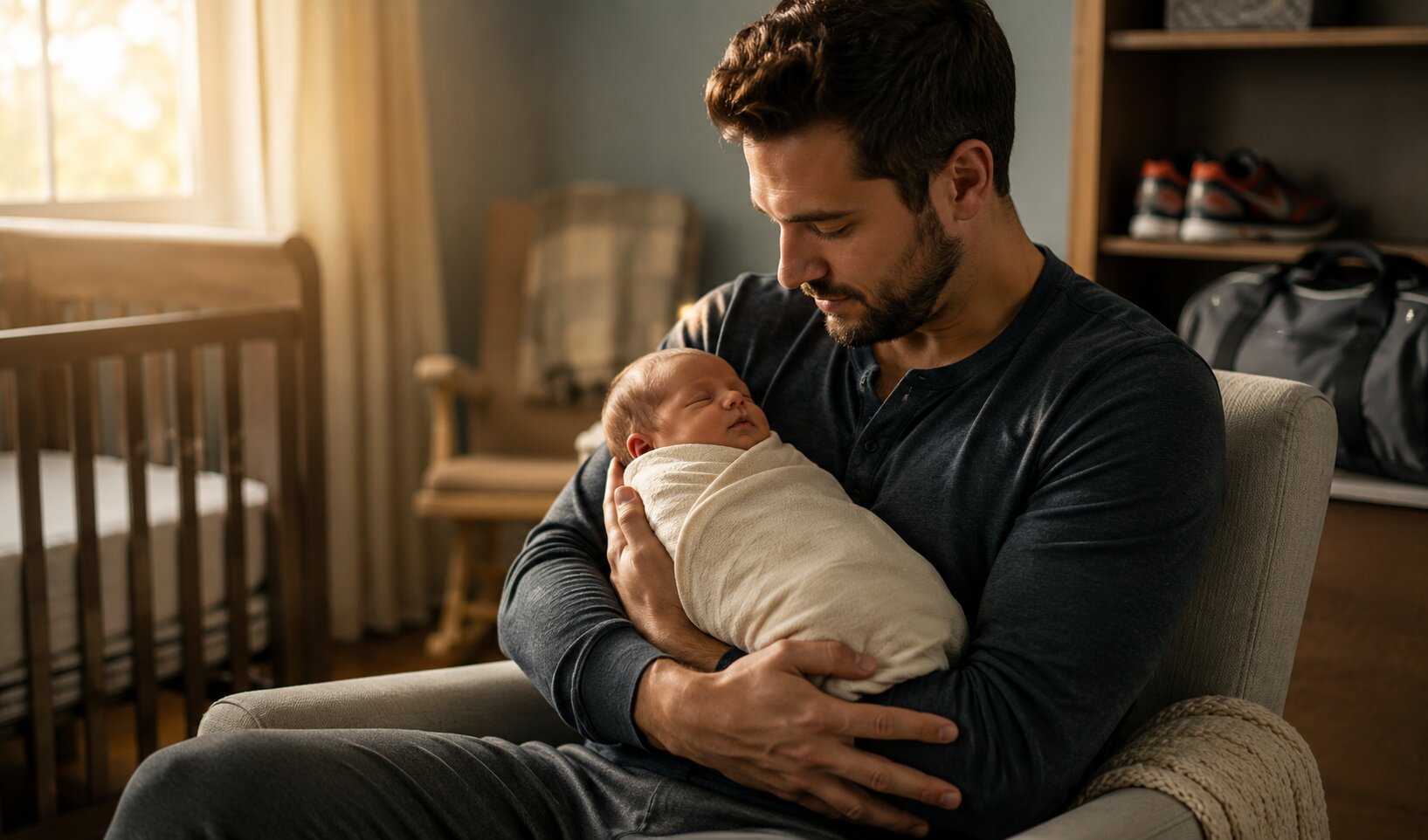
Becoming a father changes more than a man’s schedule. It can alter his hormones.
Life-history theory proposes that organisms must divide limited energy between mating effort—finding and competing for partners—and parenting effort. Testosterone may help regulate that balance in human males.
The strongest evidence comes from a study that followed 624 young Filipino men for 4.5 years. Single men with higher waking testosterone were more likely to acquire partners and become fathers.
After becoming partnered fathers, however, their waking testosterone fell by a median of 26%, while evening levels declined by 34%—substantially more than among men who remained single and childless.
Fathers providing at least three hours of daily childcare also had lower testosterone than fathers reporting no direct care.
The differences persisted after researchers adjusted for sleep quality and psychological stress.
Well supported: fatherhood—particularly active caregiving—is associated with reduced testosterone in many human populations. Hormonal state and family behavior probably influence each other.
Plausible but debated: natural selection specifically created this hormonal shift to redirect men from competition and courtship toward patience, bonding and childcare.
Culture, relationships, disrupted sleep and lifestyle changes may also contribute, and results vary among societies.
This does not mean that fathers become weak or develop a medical testosterone deficiency. It suggests something more interesting: male biology may remain flexible enough to shift priorities when reproductive success depends less on finding a mate—and more on helping a child survive.