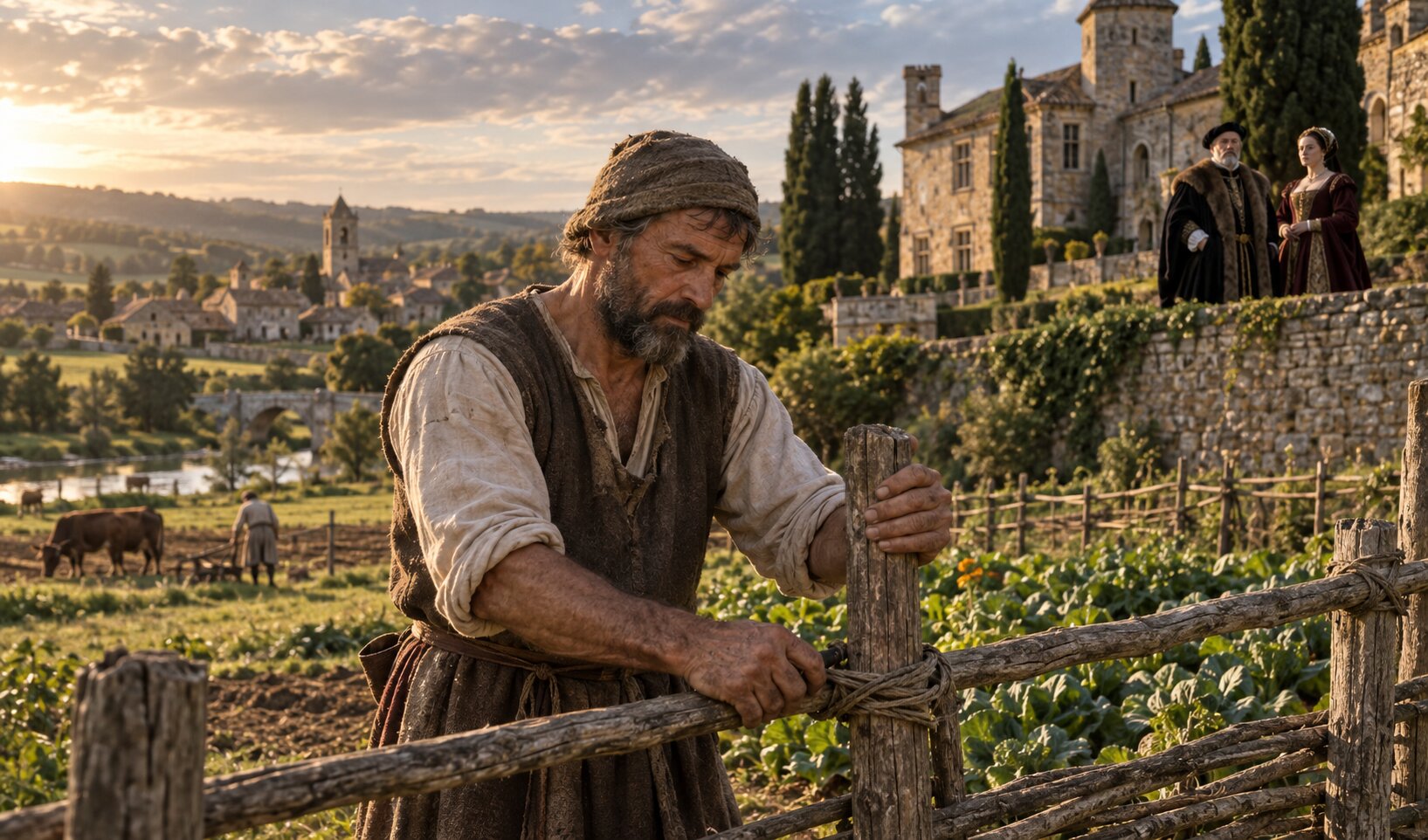
The First “Villain” Was Just a Farm Worker
Today, a villain is an evil character—the person plotting against the hero. But the word originally described someone working on a farm.
It comes from Medieval Latin villanus, meaning an inhabitant or worker on a villa. In classical Latin, a villa was a country house or agricultural estate. Over time, it could also mean a rural settlement—which is why villa, village, and villain belong to the same linguistic family.
The word passed into Old French as vilain, referring to a peasant or commoner, and then entered Middle English.
So how did an ordinary villager become evil?
The transformation reflects medieval class prejudice. Aristocrats associated courtly manners with virtue and viewed rural laborers as crude, ignorant, and badly behaved. Consequently, a word describing someone’s social position gradually became an insult describing character. Villain shifted from “farm worker” to “uncouth person,” then to “scoundrel” or “criminal.”
By the nineteenth century, it had acquired its familiar storytelling meaning: the evil character opposing the hero.
Here is the memorable surprise: the elegant vacation villa, the peaceful village, and the murderous movie villain all grew from the same rural estate.
The word’s history therefore reveals more about the people naming the villain than about the supposed villain himself. The original villain committed no crime—except, in the eyes of the powerful, being poor, rural, and insufficiently polished. Merriam-Webster


