The Word That Began as a Weight of Silver
Today, when we say someone has “talent,” we mean they have a natural ability—a talent for music, mathematics, writing, or sports.
But “talent” originally had nothing to do with ability.
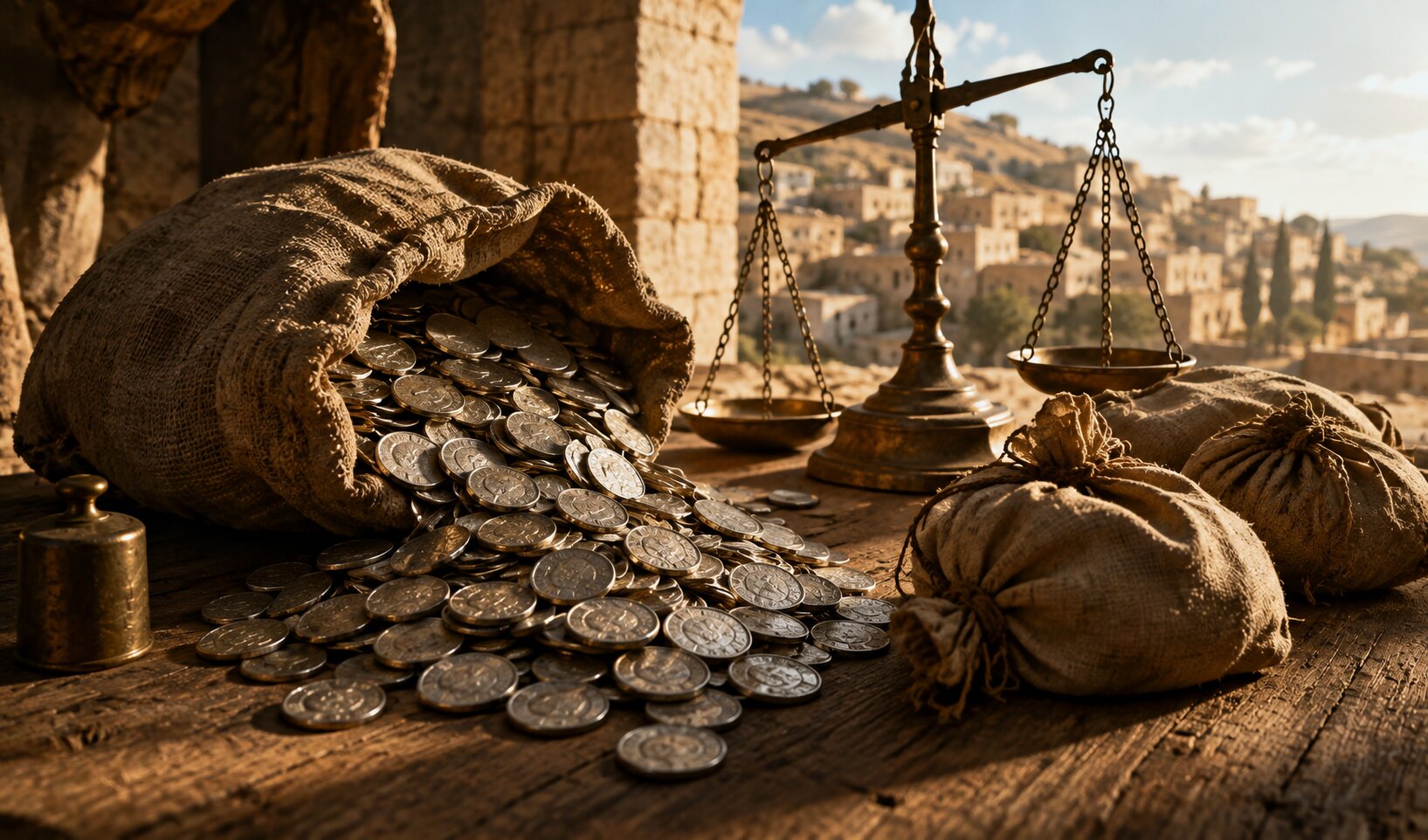
The English word comes through Latin talentum from the ancient Greek talanton, meaning a weight or measure. In the ancient world, a talent was a large unit used to weigh precious metals such as silver and gold. It was not a coin. In the world of the New Testament, one talent could represent roughly 6,000 denarii—around 20 years of a laborer’s wages.
The remarkable transformation of the word is closely connected with Jesus’ Parable of the Talents in Matthew 25.
In the story, a master entrusts his servants with five talents, two talents, and one talent. Two servants put the money to work and increase it. The third, afraid of losing his master’s money, buries his talent in the ground.
Over centuries, Christians interpreted the story more broadly: Don’t waste what has been entrusted to you—your gifts, abilities, and opportunities.
Gradually, “talent” moved from money to metaphor. By the Middle Ages, it could refer to a person’s abilities and gifts. Eventually, that became its dominant meaning.
So whenever we say,
“Don’t waste your talent,”
we are using a word whose journey began with weighing precious metal—and was transformed by a 2,000-year-old parable.