“School” Originally Meant Leisure
For many students, school feels like the opposite of free time. Yet the word originally meant leisure.
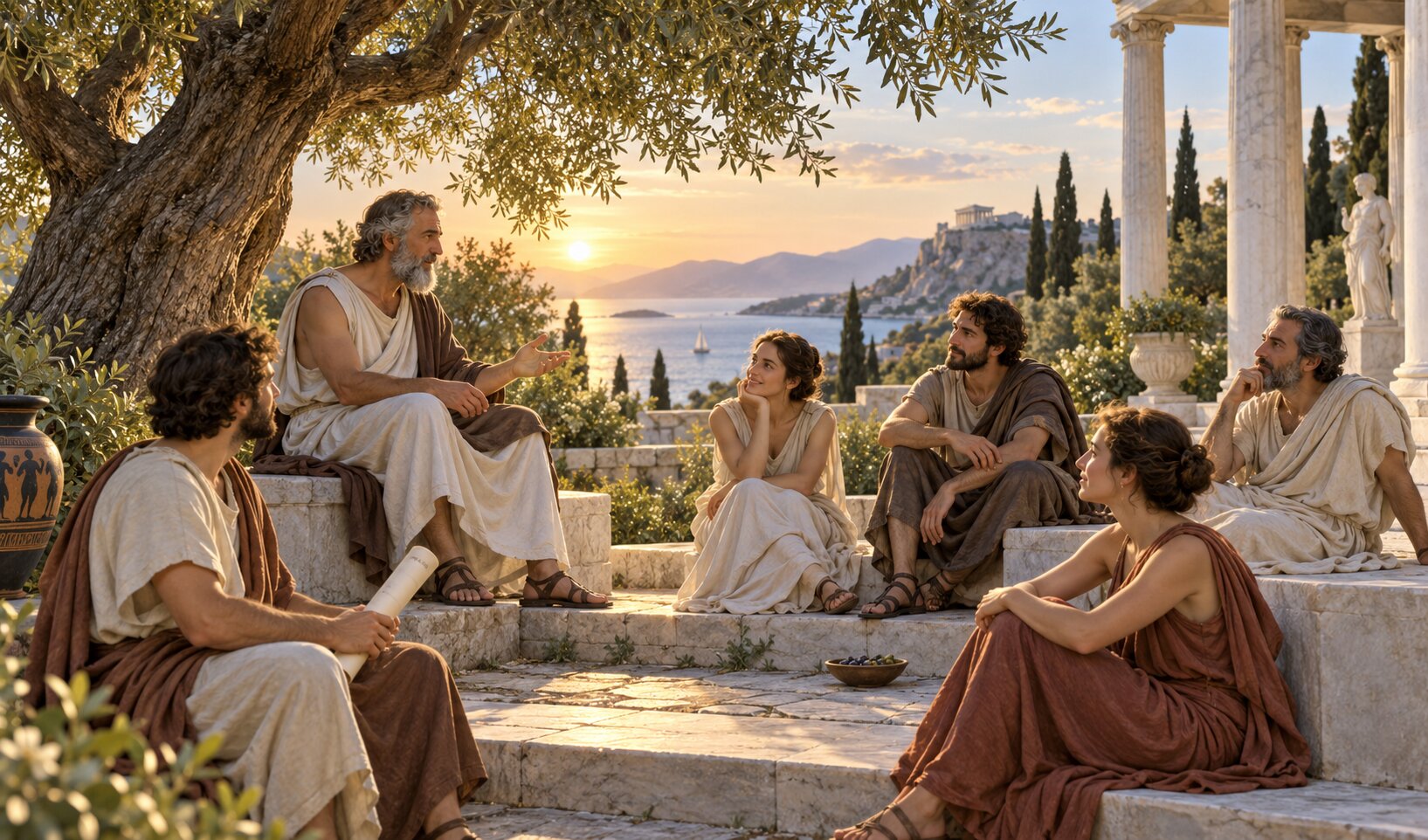
It comes from the ancient Greek scholē, meaning free time, rest, or freedom from necessary labor. But educated Greeks did not always imagine leisure as idleness. If someone was free from farming, trading, or other daily obligations, that person could spend time discussing philosophy, studying literature, or pursuing knowledge.
Because learning often happened during leisure, scholē gradually came to mean a learned discussion or lecture. It then expanded to describe the group attending those discussions—and eventually the place where instruction occurred.
The Romans borrowed the word as Latin schola. It later entered Old English as scōl, giving us the modern word school. Its meaning had therefore traveled from free time, to learning conducted during free time, to an institution devoted to learning.
The same family produced scholar, scholarly, and scholarship.
Here is the memorable surprise: a school of fish has an entirely different origin. That school comes from a Germanic word meaning a crowd or multitude and is related to shoal. The two kinds of school merely ended up with the same spelling.
So when students complain that school steals their leisure, language offers a delightful contradiction: school began as leisure itself—the freedom to stop working and start thinking. Merriam-Webster


