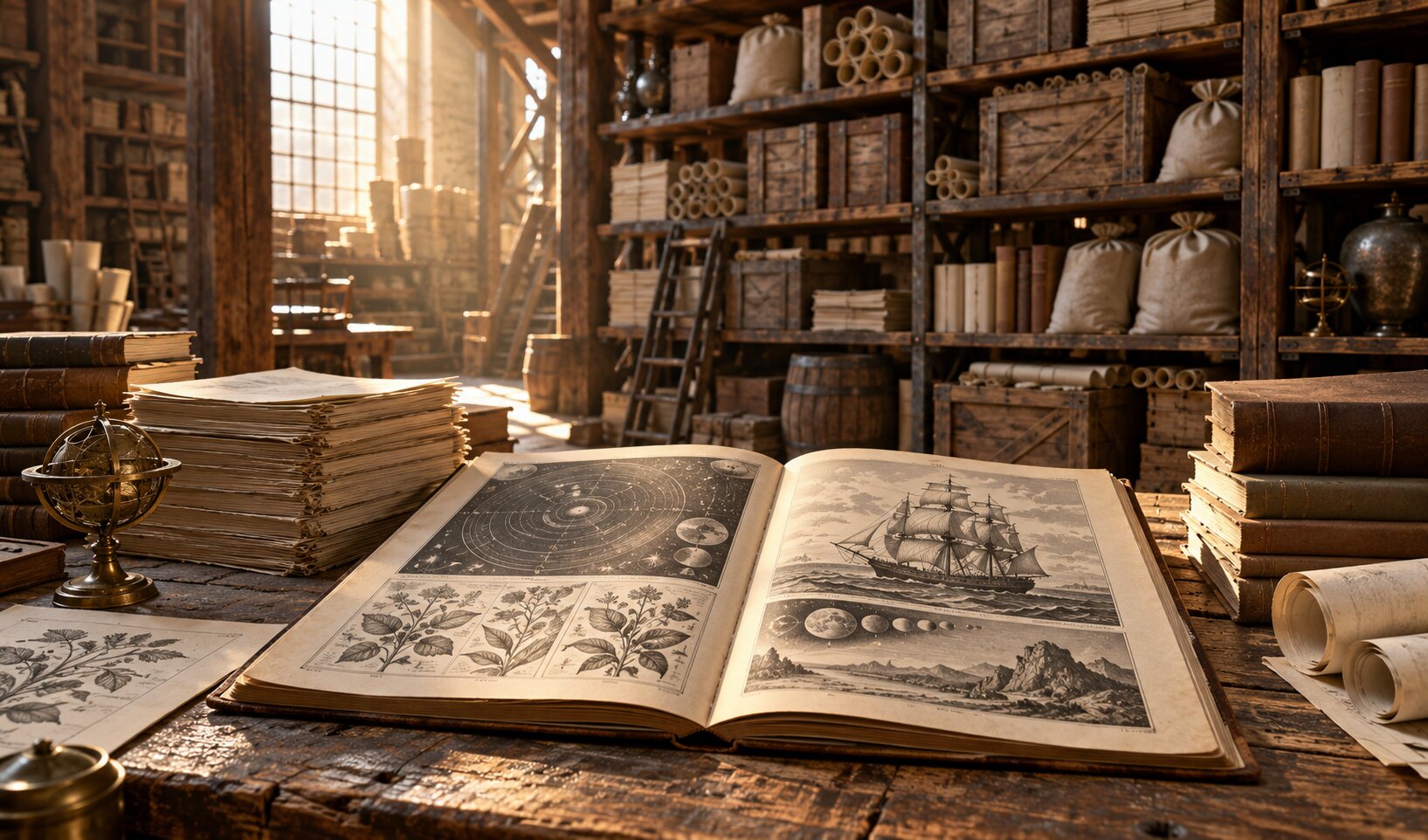
A “Magazine” Is a Warehouse You Can Read
A fashion magazine and an ammunition magazine seem worlds apart. Yet both began with the same idea: a place for storing things.
Magazine ultimately comes from Arabic makhāzin, the plural of makhzan, meaning “storehouse.” It traveled through Italian magazzino and French magasin before entering English in the late sixteenth century. Originally, an English magazine was a warehouse or depot, especially one containing military supplies. Etymology, Origin & Meaning
Then the warehouse became a metaphor.
In 1731, London publisher Edward Cave launched The Gentleman’s Magazine. His title suggested a storehouse filled with varied, useful material—except the supplies were articles, news, poetry, and information. Readers could open its pages and browse an intellectual stockroom. London Museum
That publishing sense caught on. Eventually, magazine became the familiar name for a periodical collecting writing and pictures on subjects ranging from gardening to astronomy.
Here is the memorable surprise: French magasin still means “shop” or “store.” While English readers browse magazines, French shoppers browse magasins. The two words preserve different branches of the same storage history. Etymology, Origin & Meaning
So the next time you pick up a magazine, imagine opening a warehouse door. Its shelves have become pages, and its stock is something you carry away in your mind.


