A “Biscuit” Has Already Been Baked Twice
A biscuit’s name began as a recipe instruction: put it back in the oven.
The word reached English through Old French bescuit, ultimately from Latin bis coctus: bis meant “twice,” and coctus meant “cooked.” A biscuit was literally twice-baked bread.
The second baking served a practical purpose. It dried out the bread, helping it keep longer—especially useful on journeys when fresh food was hard to obtain. What sounds like an extra culinary flourish was really a preservation technique. Merriam-Webster
Over time, the name became detached from the method. Bakers could call something a biscuit without baking it twice. In Britain, the word became familiar for the crisp treats eaten with tea. In the United States, it also came to describe a soft, risen quick bread—a meaning recorded by 1818. One name now covers strikingly different textures. Online Etymology Dictionary
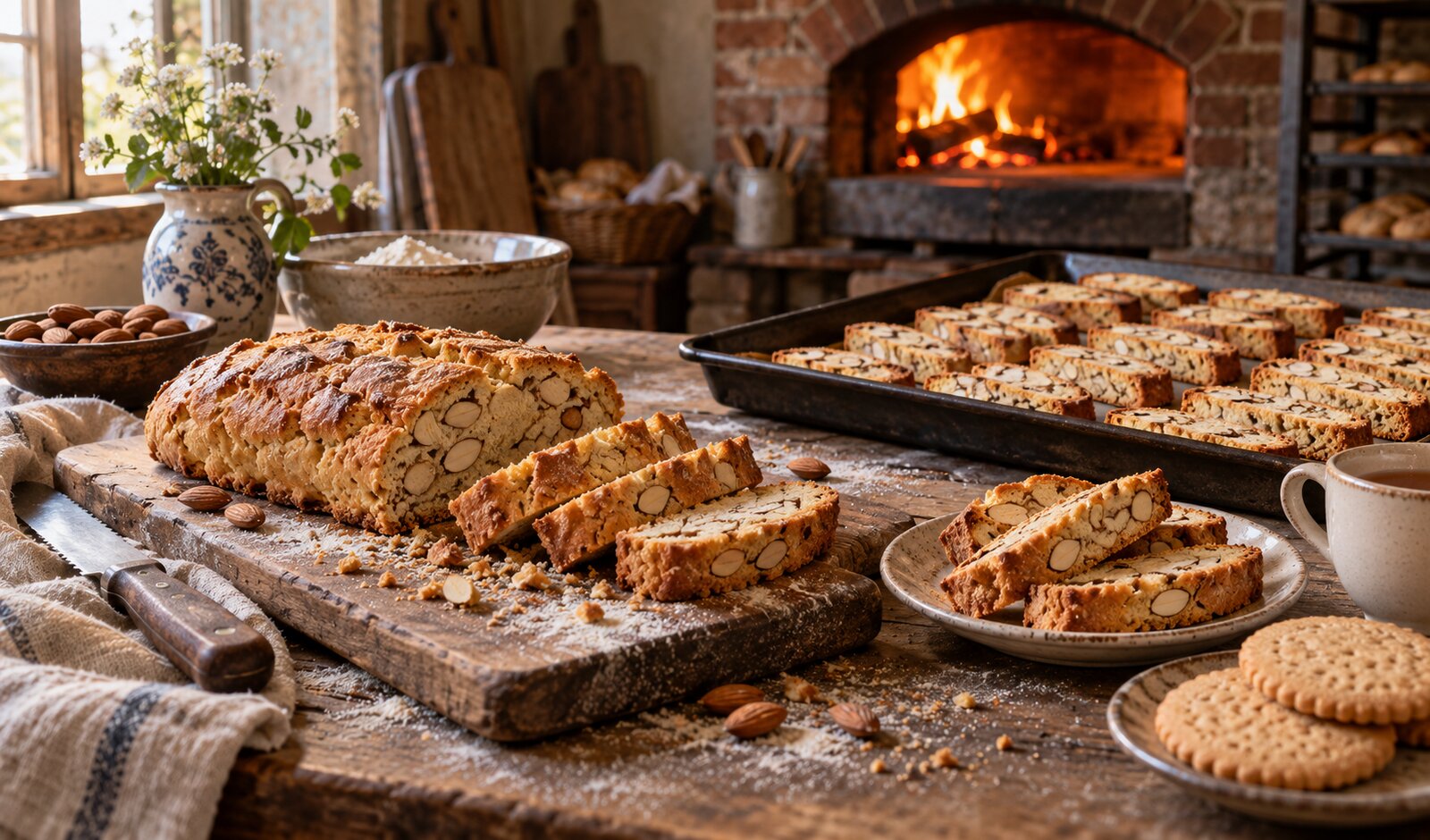
Here is the delicious connection: Italian biscotti comes from the same Latin expression. Those crunchy companions to coffee preserve the old idea particularly well: a baked loaf is sliced and baked again.
So the biscuit beside your tea and the biscotti beside your espresso are linguistic relatives. Their shared ancestor carried a simple message from the kitchen: once more into the oven.


