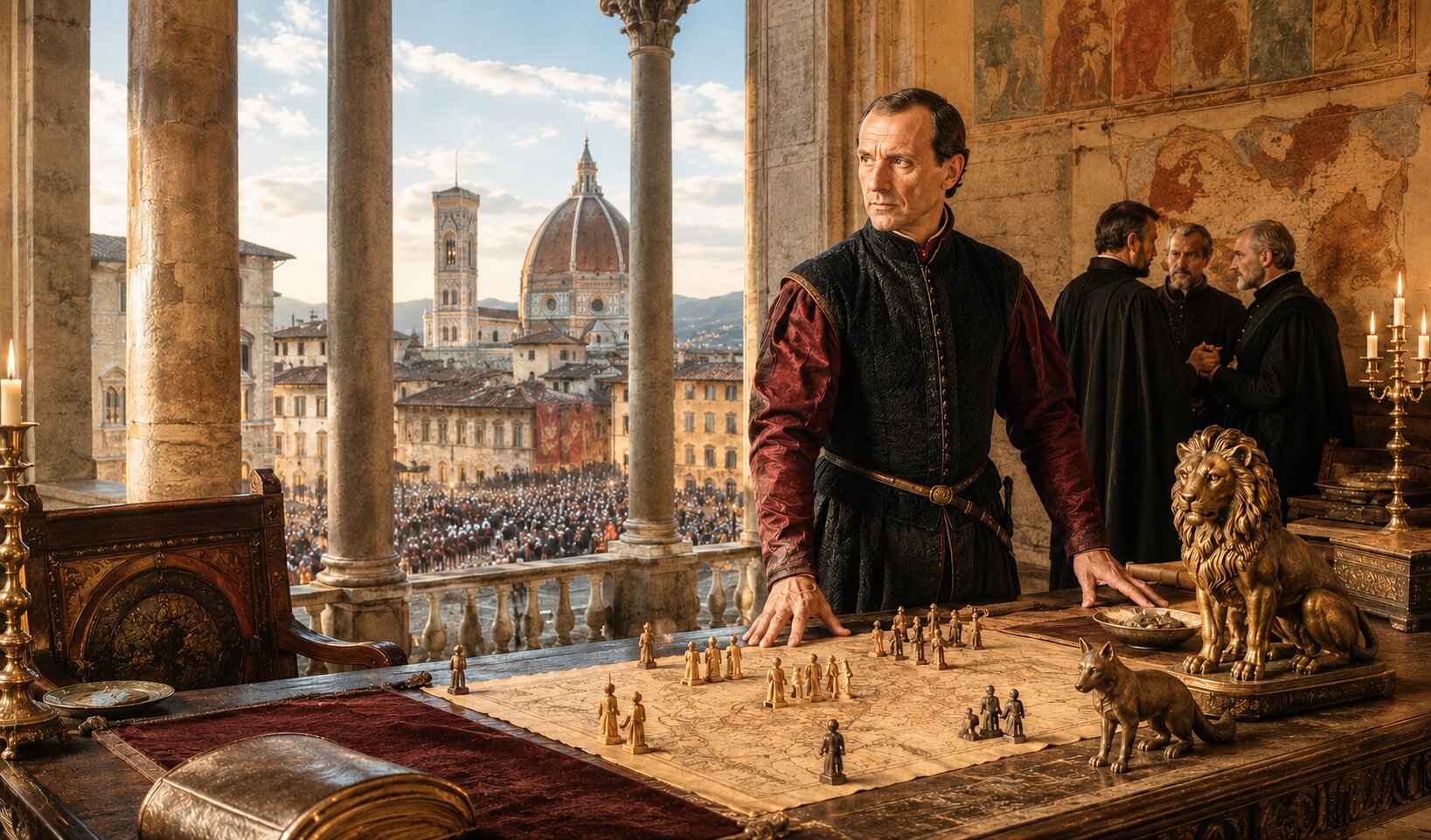
Why Machiavelli Still Makes Us Uncomfortable
What does it really take to lead?
Is it kindness? Honesty? Generosity? Moral principles?
Niccolò Machiavelli’s The Prince, written more than 500 years ago, gives an answer that many people find disturbing: leadership is not mainly about being good. It is about being effective.
Machiavelli was not writing a book on how to become a saint. He was writing for rulers trying to survive in a dangerous political world filled with invasions, betrayals, rival families, shifting alliances, and public unrest. His central question was simple: How can a ruler gain power, keep it, and protect the state?
That is why The Prince remains one of the most controversial books ever written.
The World as It Is—not as We Wish It Were
Machiavelli begins with a hard-headed view of human nature. People, he suggests, are often self-interested, unreliable, and quick to change sides when circumstances change. They may praise a leader during good times, but abandon that leader when danger arrives.
This does not mean every person is bad. But it means a ruler who blindly assumes loyalty, gratitude, or morality may be setting himself up for failure.
Machiavelli’s advice is therefore practical: a leader must govern based on reality, not idealism. Good intentions alone cannot defend a country, control rivals, or prevent rebellion.
This is the heart of Machiavellian thinking: results matter.
Is It Better to Be Loved or Feared?
The most famous idea from The Prince is that it is safer for a ruler to be feared than loved.
Love, Machiavelli argues, depends on emotion, gratitude, and mutual benefit. It can disappear when people no longer find the relationship useful. Fear, on the other hand, is more dependable because people understand the consequences of crossing a powerful ruler.
But Machiavelli adds an important warning: a prince should be feared, but never hated.
A feared leader may be obeyed. A hated leader may be overthrown.
This distinction is crucial. Cruelty for its own sake is foolish. Taking people’s property, humiliating them, or threatening their families can create deep resentment. Machiavelli is not recommending random brutality; he is saying that discipline, punishment, and authority must be used carefully and decisively.
In modern terms, a leader must be strong enough to maintain order—but not so abusive that everyone begins waiting for a chance to remove him.
The Lion and the Fox
Machiavelli says that a successful prince must learn from both the lion and the fox.
The lion represents strength. A leader needs courage, force, and the ability to confront open threats. But the lion cannot recognize traps.
The fox represents cunning. A leader must understand deception, recognize danger, read people’s motives, and avoid political traps. But the fox alone cannot scare away wolves.
So, a capable leader needs both qualities:
- The strength of the lion
- The cleverness of the fox
A leader who is only forceful may be manipulated by smarter opponents. A leader who is only clever may appear weak and lose respect. Real leadership requires the ability to know when to negotiate, when to wait, when to strike, and when to walk away.
Appearance Matters Almost as Much as Reality
Machiavelli understood something modern politicians, CEOs, celebrities, and social-media influencers understand very well: people judge what they can see.
A ruler should appear compassionate, honest, religious, generous, and principled. But Machiavelli warns that the ruler may sometimes need to act against those virtues to protect the state.
This is one of the book’s most uncomfortable ideas. Machiavelli is not saying virtue is useless. He is saying that leaders cannot always behave ideally in a world where rivals may be dishonest, ruthless, and ambitious.
The public wants to see confidence, wisdom, fairness, and strength. A leader who looks weak, indecisive, wasteful, or confused can quickly lose support.
Image is not everything—but it is never nothing.
Why New Leaders Have a Harder Time
Machiavelli makes an important distinction between hereditary rulers and new rulers.
A hereditary ruler inherits power. People are already used to that family, its traditions, and its authority. Unless the ruler is exceptionally incompetent, maintaining control is relatively easier.
A new ruler, however, faces a much harder challenge. Newly conquered territories may have different customs, laws, languages, and loyalties. The old ruling family may still have supporters. Powerful elites may quietly wait for an opportunity to bring back the previous regime.
Machiavelli’s advice is blunt: when acquiring a new territory, remove serious rivals, understand local customs, and establish control quickly.
His point is that uncertainty invites resistance. If a leader looks hesitant, rivals gain confidence. If a leader is clear and decisive, people begin to adjust to the new reality.
Never Depend Entirely on Other People’s Strength
One of Machiavelli’s strongest lessons is about military power.
A ruler who depends on mercenaries—hired soldiers—is taking a dangerous risk. Mercenaries fight for money, not loyalty. If a better offer comes along, or if the battle becomes too dangerous, they may disappear.
He is equally suspicious of auxiliary forces: troops borrowed from another powerful ruler. These may be even more dangerous. If they win, the prince becomes dependent on the foreign power. If they lose, the prince is left weak and exposed.
Machiavelli believed that the safest defense comes from one’s own citizens and one’s own resources.
The modern lesson is broader: do not build your success entirely on borrowed strength. A country, company, or individual who relies completely on outsiders can lose independence very quickly.
Generosity Can Become a Trap
At first, generosity looks like an excellent leadership quality. People love a generous ruler. But Machiavelli points out the hidden problem.
To keep giving generously, a ruler needs money. Eventually, taxes must rise or resources must be drained. Then the same people who enjoyed the gifts may resent the cost.
Machiavelli argues that it is often better to be financially disciplined than excessively generous. A leader who protects resources can avoid burdening the public later.
This does not mean a ruler should be miserly or uncaring. It means means that generosity without limits can create expectations that are impossible to sustain.
Sometimes the leader who says “no” today is preventing a much bigger crisis tomorrow.
Fortune Helps—but Bold Action Matters More
Machiavelli uses the word fortuna to describe luck, chance, and the unpredictable forces of life.
A person may gain power because of timing, inheritance, war, opportunity, or the mistakes of others. But luck alone is not enough. When conditions change, the leader must be ready to change too.
Machiavelli admired decisiveness. He believed that people who act boldly and adapt quickly are more likely to shape events rather than be crushed by them.
In other words: we cannot control everything, but we can control our preparation, judgment, courage, and response.
Fortune may open the door. But only action can carry us through it.
The People Matter More Than the Powerful Few
Machiavelli also makes a sharp distinction between nobles and ordinary people.
The powerful elites often want more influence, more wealth, and more control. They may become rivals to the ruler. Ordinary people, however, usually want something simpler: safety, fairness, and freedom from oppression.
For that reason, Machiavelli argues that a ruler is often safer when supported by the people than when dependent on a small group of powerful elites.
This is a lesson that still applies today. A leader may have wealthy donors, influential advisors, or powerful allies. But if the broader public loses trust, the foundation becomes unstable.
Why The Prince Still Matters
Many people reduce Machiavelli’s ideas to one phrase: “The ends justify the means.”
That exact sentence does not appear in The Prince, but the book does raise a difficult question: can a leader sometimes do morally questionable things to prevent greater chaos, violence, or destruction?
There is no easy answer.
Machiavelli forces us to confront the gap between moral ideals and political reality. He reminds us that leadership is not only about saying the right things. It is about making difficult decisions under pressure, dealing with flawed people, managing threats, and protecting what has been entrusted to you.
That is why The Prince continues to fascinate readers. It is not a book that tells us what leadership should look like in a perfect world. It tells us what leadership may require in an imperfect one.
Its message is unsettling—but impossible to ignore:
Be virtuous when you can. Be practical when you must. And never confuse good intentions with effective leadership.