An “Insect” Is Literally “Cut Into”
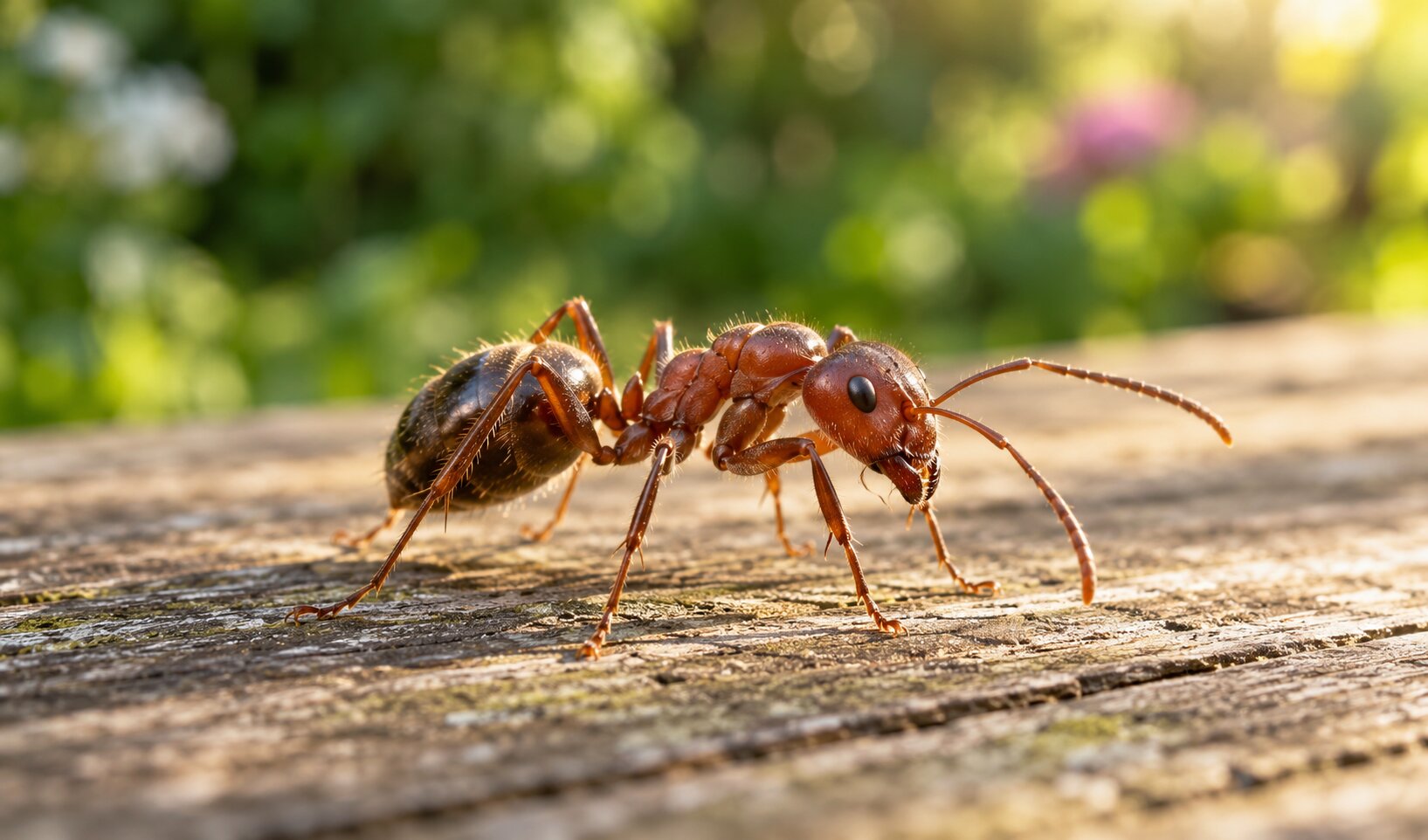
Watch an ant walking across a table. Its narrow waist makes it look almost as though someone has pinched—or cut—its body into separate pieces. That appearance gave insect its name.
The word comes from Latin insectum, meaning “cut into” or “notched.” Behind it is insecare: in- meaning “into,” and secare meaning “to cut.” The name described the divisions in the animal’s body, rather than any actual injury. ahdictionary.com
When insect entered English around the beginning of the seventeenth century, it covered a broader collection of small creatures with segmented bodies. As scientific classification became more precise, its meaning narrowed. Today, insects form a specific group whose adults have six legs and three main body regions: head, thorax, and abdomen. A spider therefore falls outside the scientific definition. oxfordlearnersdictionaries.com
Here is the surprise: entomology, the study of insects, preserves the same picture in Greek. Greek entomon also meant a creature that was “cut into.” Latin translated that Greek name rather than simply borrowing its sound. Etymology, Origin & Meaning
So insect and entomology describe the same tiny creature through two ancient languages—both noticing the seams.
The next time an ant interrupts your picnic, take a closer look. Its name is a miniature anatomical sketch.


