Why Random Events Don’t Owe You a Correction
Why do we think a random event is more or less likely to occur if it happened several times in the past?
Imagine flipping a fair coin five times.
It lands:
Heads. Heads. Heads. Heads. Heads.
What do you think comes next?
Many people instinctively say:
“Tails is due.”
But it isn’t.
The next flip is still roughly 50/50.
This mistaken belief is called the gambler’s fallacy—the tendency to think that after a streak of one outcome, the opposite outcome becomes more likely, even when each event is independent.
Casinos are full of this thinking.
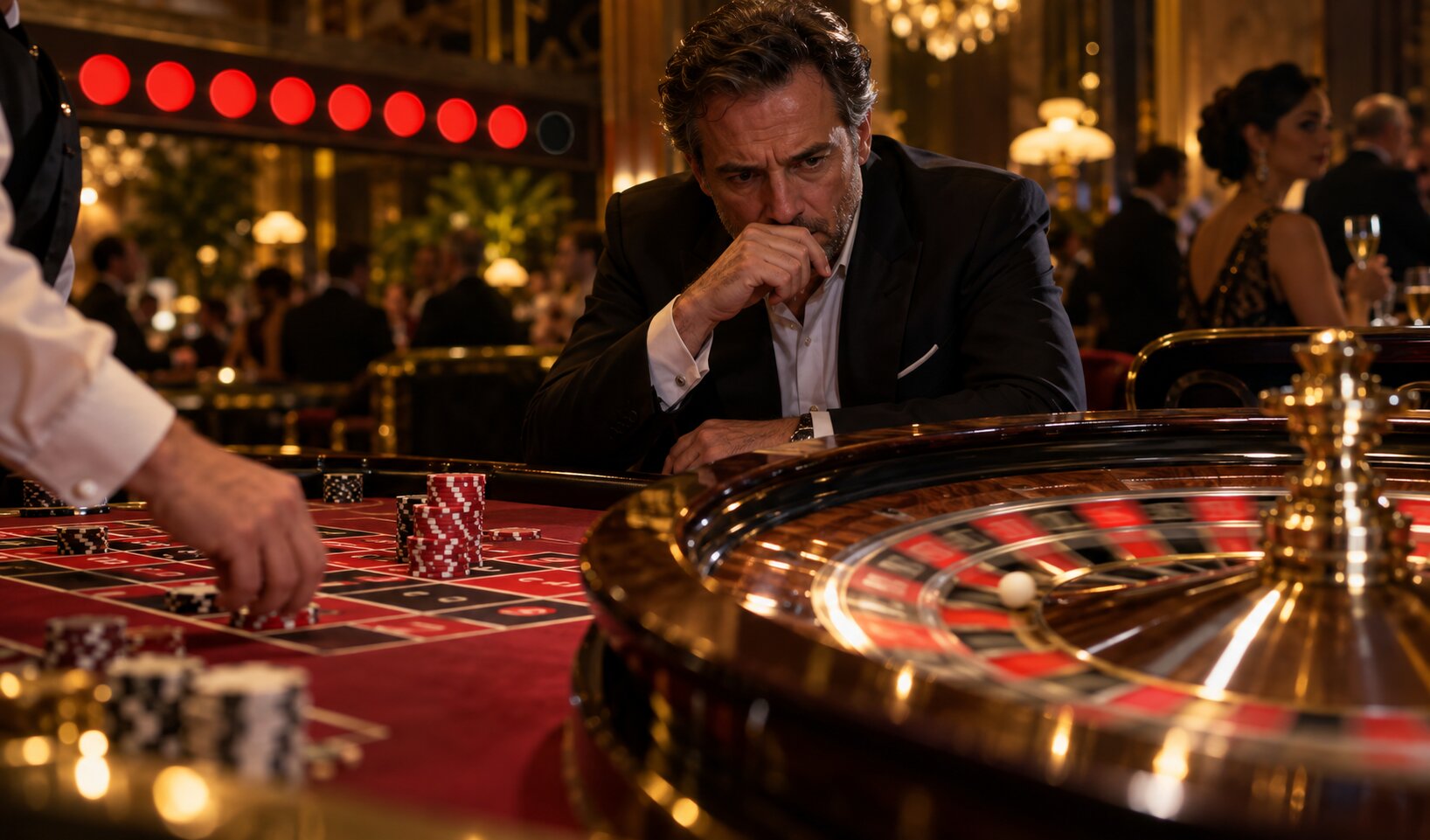
A roulette wheel lands on black six times in a row, and players suddenly pile money onto red.
They think:
“It has to balance out.”
But the wheel has no memory.
The previous spins do not force the next one to “correct” the streak.
The same mistake appears outside gambling.
People may think a stock that has fallen several days in a row is “due for a bounce”, or that a team that has lost repeatedly is “bound to win soon.”
Sometimes that happens.
But the streak alone doesn’t make it more likely.
The lesson
Randomness often looks less random than we expect.
Long streaks can happen naturally.
So when you catch yourself thinking:
“It can’t keep happening,”
ask:
“Does the next event actually depend on the previous ones?”
If not, probability doesn’t owe you a reversal.


