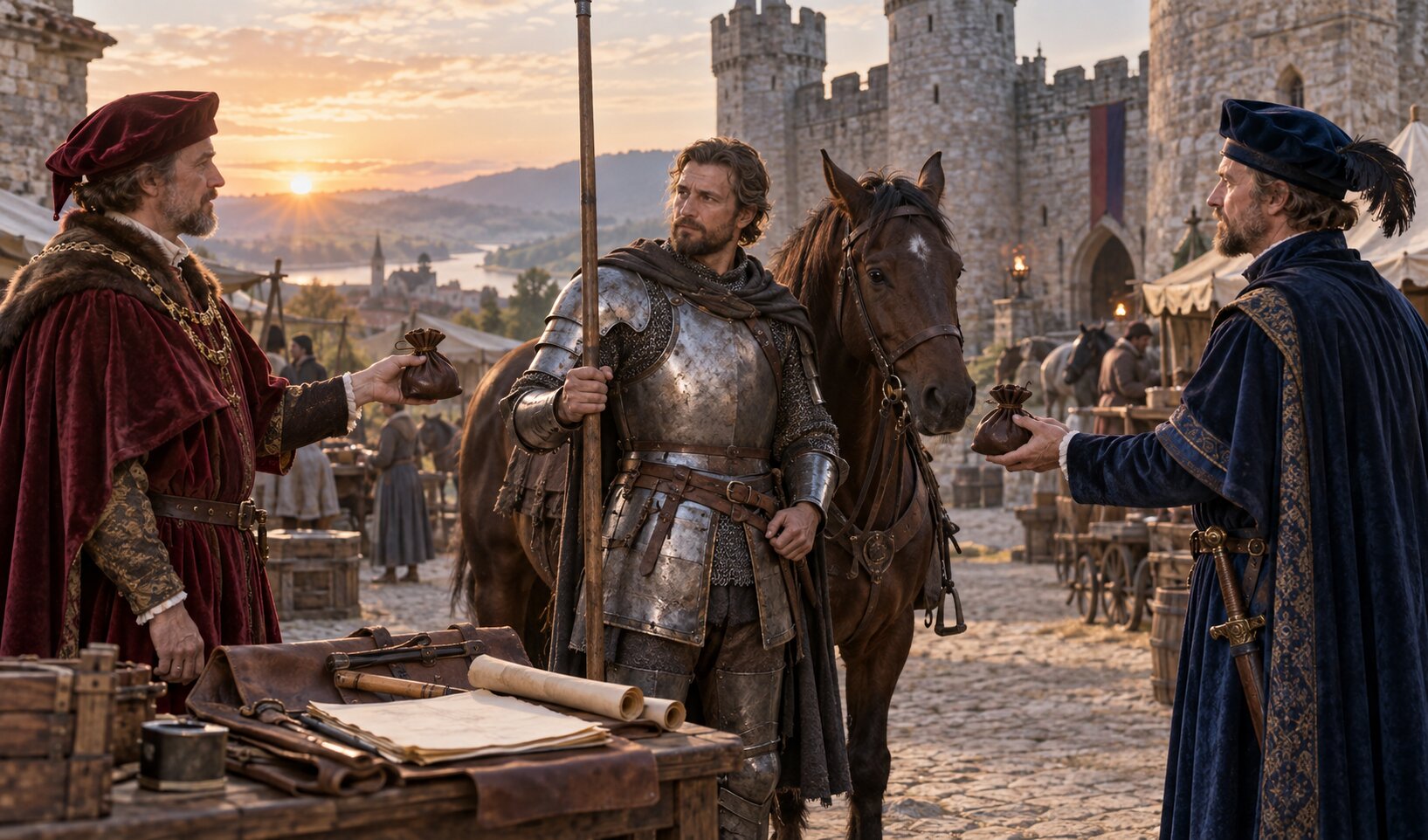
A “Freelancer” Was Once a Mercenary Knight
Today, a freelancer might design websites, write articles, or manage databases from a laptop. The original freelancer, however, carried a weapon and sold his services on the battlefield.
The word combines free with lance. A “free lance” was a mercenary warrior whose lance was not permanently committed to a particular king or feudal lord. He was free to fight for whichever employer offered suitable payment.
The earliest known written example appears in Sir Walter Scott’s 1820 historical novel Ivanhoe. In the story, a feudal lord boasts about having assembled an army of “Free Lances” for hire.
During the nineteenth century, the expression escaped the battlefield. It began describing people who worked independently in politics and journalism rather than serving one organization. Eventually, it expanded to include artists, photographers, consultants, programmers, and countless other self-employed professionals.
The spelling also evolved: free lance became free-lance and finally freelance. The word now functions as a noun, adjective, and verb: someone can be a freelancer, accept freelance work, or simply freelance.
Here is the memorable surprise: the free never meant that the work cost nothing. It meant the worker’s lance—and therefore his loyalty—was available for hire.
So modern freelancers have traded armor for laptops and battlefields for online marketplaces, but the underlying arrangement remains remarkably similar: their skills belong to no permanent master. Merriam-Webster


