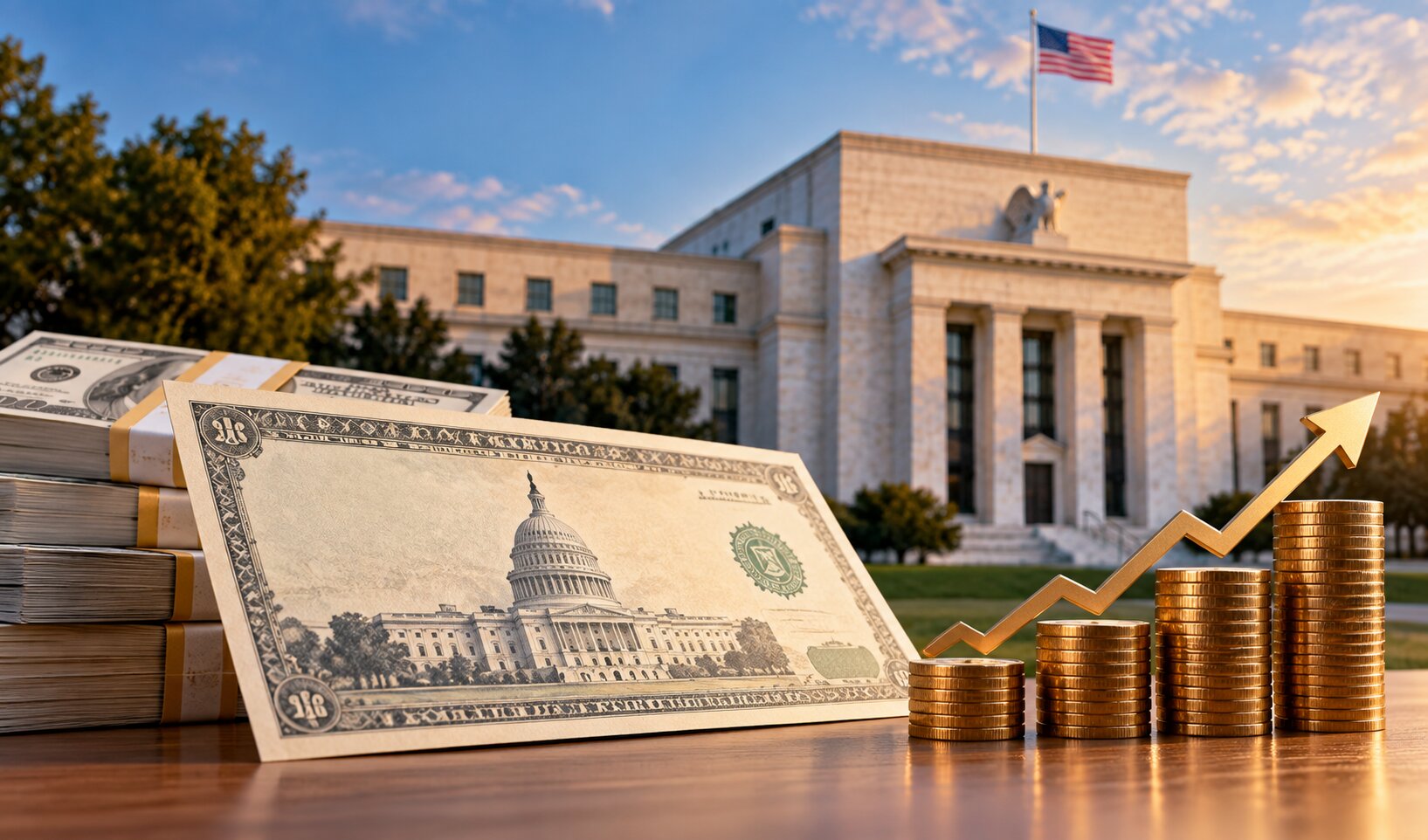
What Is Quantitative Easing (QE)?
When an economy is weak, central banks usually try to stimulate it by cutting interest rates. But what happens when rates are already near zero and borrowing is still sluggish?
That is when they may use Quantitative Easing, or QE—a policy often described as “money printing,” though the reality is more technical.
QE is the central bank’s attempt to make money abundant, borrowing cheaper, and investors more willing to take risks.
How QE Works
Under QE, a central bank—such as the U.S. Federal Reserve—creates new bank reserves electronically and uses them to buy large quantities of assets, usually government bonds and sometimes mortgage-backed securities.
This has several effects:
- Bond prices rise and yields fall.
When the Fed becomes a huge buyer of Treasury bonds, their prices tend to increase. Because bond prices and yields move in opposite directions, long-term interest rates fall. - Borrowing becomes cheaper.
Lower long-term rates can reduce mortgage rates, corporate borrowing costs, and other financing costs. This can encourage households to buy homes and businesses to invest. - Investors move into riskier assets.
If safe bonds pay very little, investors may shift toward stocks, real estate, corporate bonds, or private investments in search of better returns. - Confidence can improve.
QE signals that the central bank is determined to prevent a financial collapse or a long economic slump. During a panic, that reassurance itself can matter.
Why QE Can Feel Like Magic
QE does not put cash directly into everyone’s wallet. Instead, it begins inside the financial system: banks receive reserves, bond holders receive cash, and asset prices often rise.
That is why QE can make stock markets surge even while ordinary people still feel worried about jobs, rent, and inflation. It works fastest through financial markets—and only later, and less evenly, through the broader economy.
The Catch
QE can stabilize a crisis, but it has side effects. By lifting asset prices, it may widen the gap between people who own stocks and real estate and those who do not. If used too aggressively for too long, it can also contribute to inflation, speculation, and dependence on cheap money.
In short, QE is like an economic defibrillator: extremely useful when the patient is in danger, but not something you want connected forever.