From Pebbles to Calculus: The Rocky Family Behind “Calculate”
Long before calculators had screens or buttons, people calculated with stones.
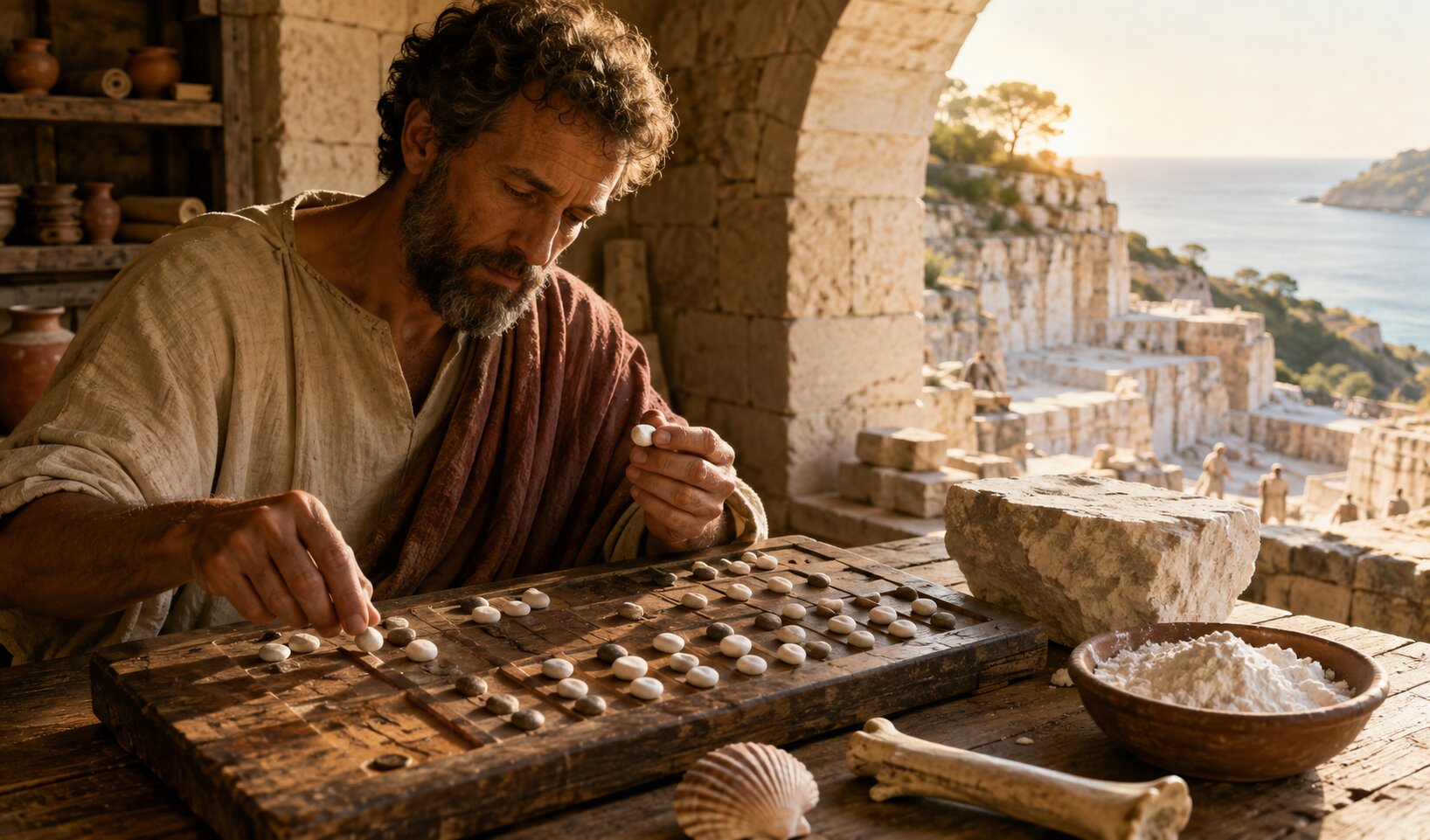
The word calculate comes from Latin calculare, meaning “to reckon using counters.” It developed from calculus, meaning “small pebble.” Romans placed pebbles on counting boards and moved them around to perform arithmetic—much like using beads on an abacus.
But the word family goes even deeper. Calculus was probably formed from the Latin calx—meaning lime or limestone. That same root produced several familiar words:
- Calcium was named after calx because the element occurs abundantly in limestone.
- Calcify combines calc- with -fy, meaning “to make.” Something calcifies when calcium salts accumulate and make it hard or stone-like.
- Calculus still means a bodily stone in medicine, such as a kidney calculus, and it can also mean hardened dental tartar.
- Calculate developed because small stones were used as counting tokens.
Over time, calculate escaped the counting board. We now calculate distances, risks, consequences—and even how someone might react.
Here is the memorable surprise: calcium, calcification, calculus, calculation, and chalk all belong to the same rocky linguistic family.
So advanced mathematics, a kidney stone, hardened arteries, and chalk on a blackboard share an ancient ancestor: a small piece of limestone.