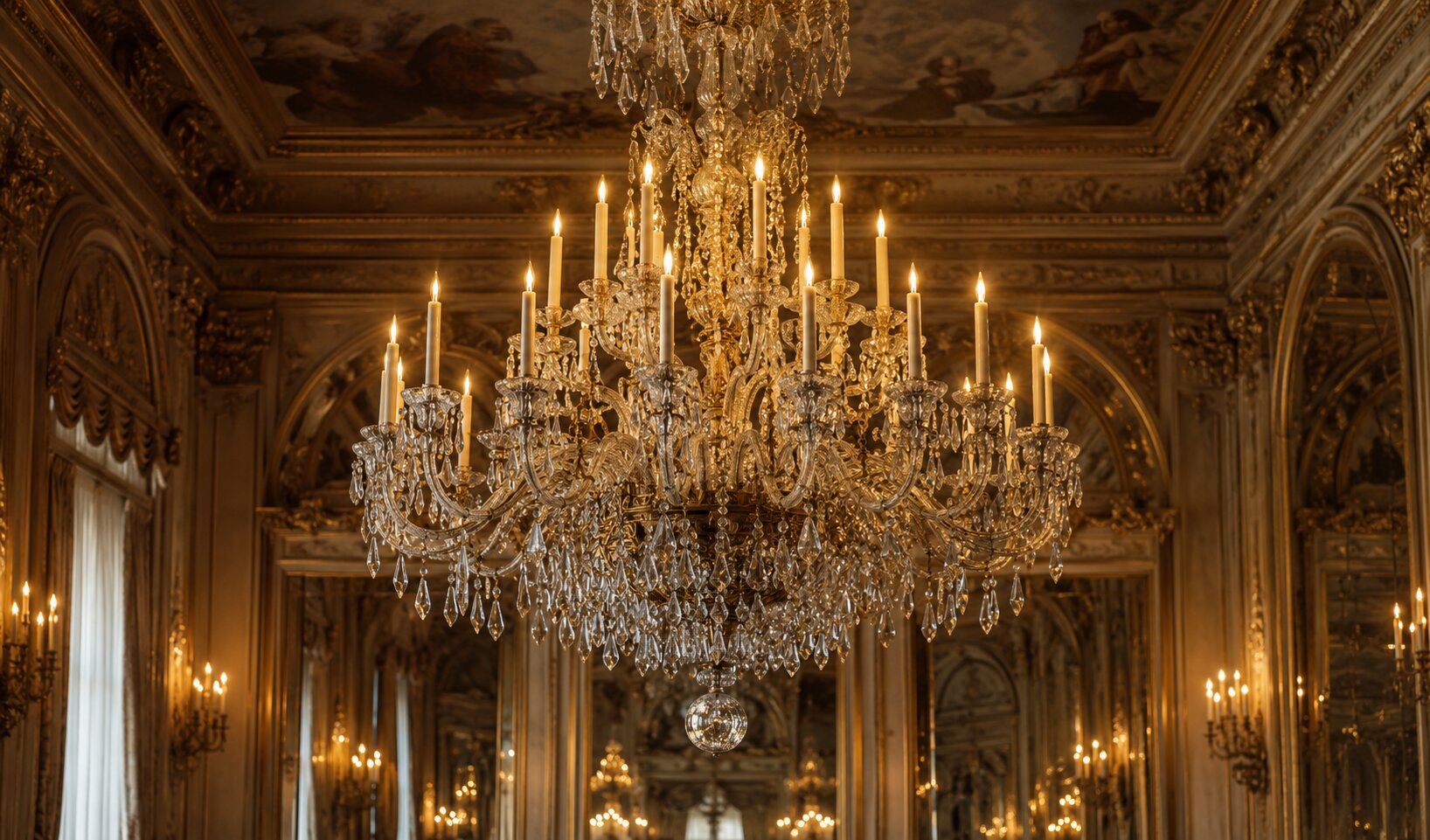
Chandelier: From a Simple Candle to a Symbol of Luxury
Today, the word “chandelier” makes us think of sparkling crystals, grand ballrooms, luxury hotels, and enormous lights hanging from palace ceilings.
But its origin is surprisingly simple: a candle.
The English word chandelier came from the French chandelier, meaning a candleholder. The French word itself developed from the Latin candela, meaning “candle.”
That same Latin root also gave English words such as candle and candelabra.
Early chandeliers were nothing like the glittering fixtures we know today. In medieval Europe, they were often just wooden or metal frames holding several candles, suspended from the ceiling. They provided practical illumination in churches, castles, and large halls.
As craftsmanship improved, wealthy families began commissioning elaborate chandeliers made from bronze, glass, and eventually crystal. By the 17th and 18th centuries, chandeliers had become unmistakable symbols of wealth, status, and elegance.
Then electricity arrived.
The candles disappeared—but the old name survived.
So whenever you look at an enormous crystal chandelier illuminated by dozens of electric bulbs, remember: hidden inside that glamorous word is the humble Latin candela.
A chandelier is, historically speaking, simply a candleholder that became spectacular.