A complete protein is a food that contains all nine essential amino acids in sufficient amounts.
Your body needs 20 amino acids to build and repair muscles, enzymes, hormones, skin, and other tissues. It can make 11 of them, but the remaining nine must come from food—so they are called essential amino acids.
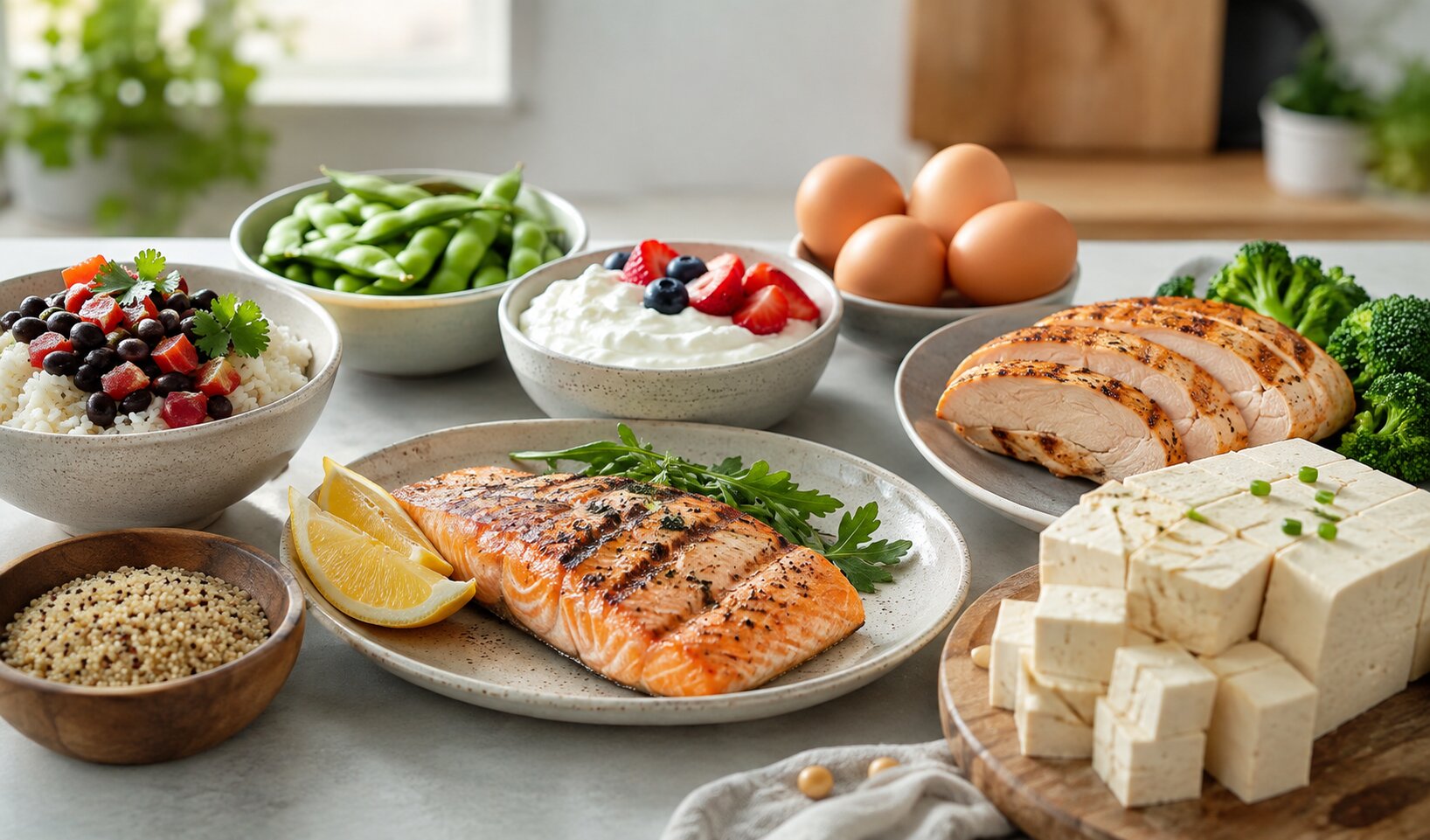
Common complete-protein foods
Animal sources
- Eggs
- Milk, yogurt, and cheese
- Fish and seafood
- Chicken, turkey, and meat
Plant sources
- Soy foods such as tofu, tempeh, edamame, and soy milk
- Quinoa
- Buckwheat
- Amaranth
Most beans, lentils, grains, nuts, and seeds are sometimes described as “incomplete” because one or more essential amino acids are relatively low. However, you can combine different plant foods over the course of the day—for example:
- Rice + beans
- Whole-wheat bread + peanut butter
- Lentils + barley
- Hummus + whole-grain pita
They do not have to be eaten in the same meal. A varied diet throughout the day generally supplies the amino acids your body needs.
Nine Essential Amino Acids
The nine essential amino acids are amino acids your body cannot make in sufficient amounts, so you must obtain them from food:
- Histidine
- Isoleucine
- Leucine
- Lysine
- Methionine
- Phenylalanine
- Threonine
- Tryptophan
- Valine
Foods containing all nine in adequate proportions are called complete proteins. Examples include eggs, milk, yogurt, meat, fish, soy, quinoa, and buckwheat.
Among these, leucine, isoleucine, and valine are known as branched-chain amino acids, or BCAAs, and are especially important for muscle repair and growth.